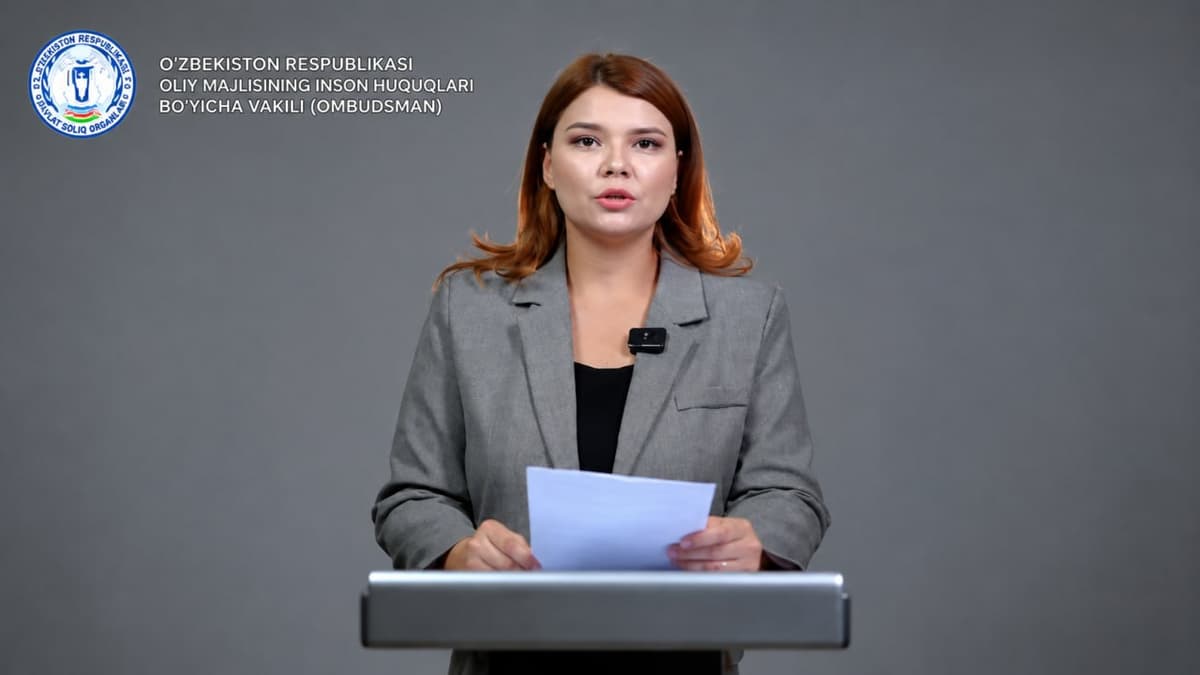

On December 26, a joint session of the Councils of the Oliy Majlis Chambers heard the report of the commission investigating the facts and events of July 1–2, 2022, in Karakalpakstan.
The commission was established on July 15, 2022, by the Senate and the Legislative Chamber to conduct an independent investigation into the Nukus events. It was chaired by Ombudsman Feruza Eshmatova. The commission also included 14 deputies, senators, representatives of non-governmental organizations, and members of the public.
"The commission assessed the causes, chronology, and consequences of the events in Karakalpakstan, the actions of government bodies and law enforcement agencies in addressing the unrest, and monitored court sessions involving participants in the events," the report stated.
At the commission's request, 30 individuals under trial were released from custody in the courtroom. The commission conducted monitoring visits to detention centers where suspects were held and observed the social and economic changes implemented in Karakalpakstan following the events, according to the commission chair.
The commission members visited more than 50 government and non-governmental organizations, conducting interviews with 590 employees and 334 individuals who had served prison sentences.
Of the 168 individuals taken into custody in connection with criminal cases, 107 (including two women) were returned to their families at the commission's request.
The commission collaborated with the UN Office of the High Commissioner for Human Rights, the OSCE Office for Democratic Institutions and Human Rights, and other international organizations. It also engaged with international non-governmental organizations and media outlets.
According to the commission, 943 participants in the events were issued warnings for committing violations, 6,135 were fined administratively, 2,639 were sentenced to administrative detention, and 61 were found guilty of crimes.
The report noted that the July 1–2, 2022, unrest resulted in severe injuries and deaths among citizens and law enforcement personnel, as well as significant material damage (6.8 billion UZS) to public and government property.
"To disperse and contain the unrest away from administrative buildings and to prevent attempts to seize administrative facilities and strategic sites, law enforcement agencies employed internationally accepted measures (such as water and colored liquid cannons and special tear gas grenades)," the report stated.