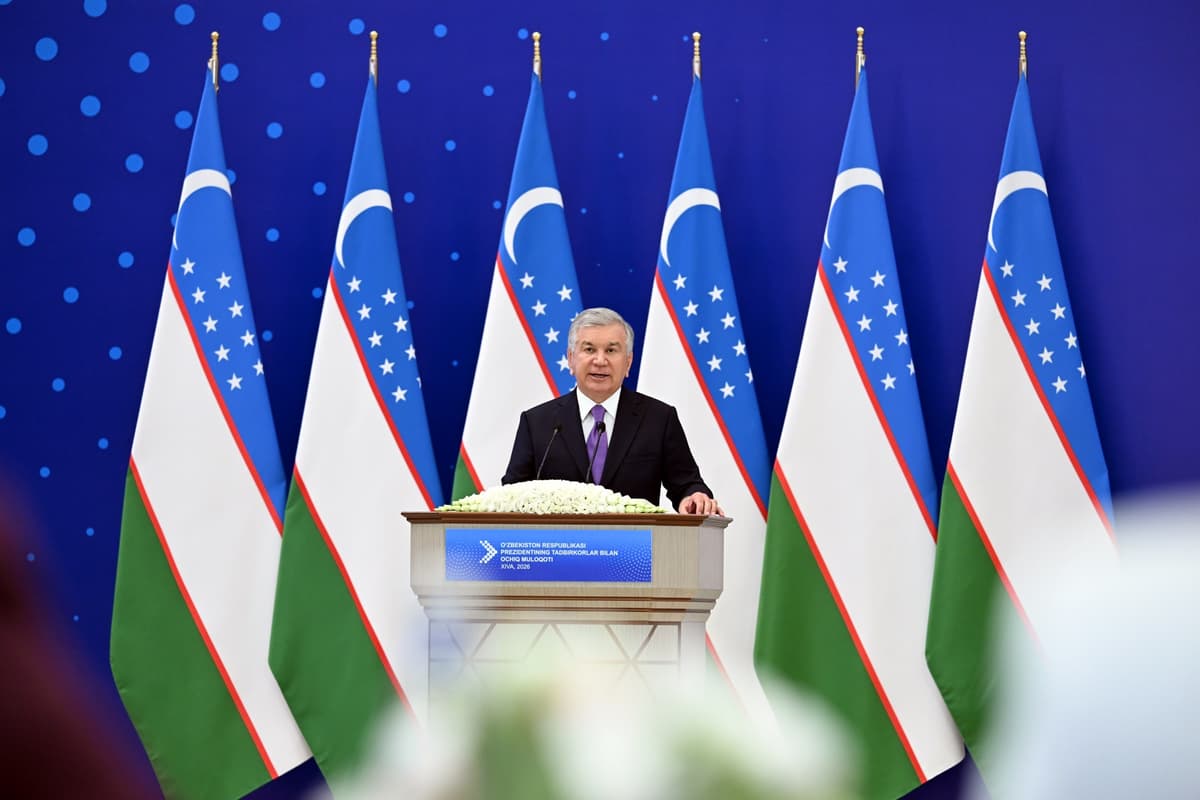

At a meeting held on April 18, President Mirziyoyev gave directives to continue reforms in taxation and customs, while taking into account the impact of taxes on business activities.
He noted the need to consider how increasing coefficients used to calculate land tax and rent payments could affect entrepreneurship.
“Revenue growth should not come from raising tax rates. On the contrary, if we support entrepreneurs and expand the tax base, revenues will increase and business owners will also be satisfied,” the president said.
In this regard, a decision was made to allow entrepreneurs to pay assessed taxes in two stages over the course of the year.
The meeting also underlined that the current state of tax and customs administration necessitates further reforms. The president instructed that proposals to improve tax and customs policy and governance should be developed with the involvement of qualified experts, academics, and representatives of the business community.
Additionally, Mirziyoyev stressed the importance of clearly defining the authority of ministers to issue directives and other departmental documents within their respective fields.
“The most stable relationships are governed by law, new reforms by presidential decrees, and sectoral and regional development by government decisions. Departmental documents are only issued for implementation. This way, the outcomes of reforms will reach our people more quickly,” said the President.
He also noted that criticisms directed at certain agencies are equally applicable to other ministries and regions. According to him, several government bodies – including the Ministries of Ecology, Agriculture, Construction, Energy, and Higher Education, as well as the Cadastre Agency, the Roads Committee, the Industrial Safety Committee, and the Construction Inspectorate – continue to operate with excessive bureaucracy.
The heads of these agencies were instructed to simplify services for the public and entrepreneurs.
The Prime Minister, his deputies, ministers, and regional governors were tasked with establishing regular dialogue with producers and exporters, and swiftly resolving complaints and emerging issues.