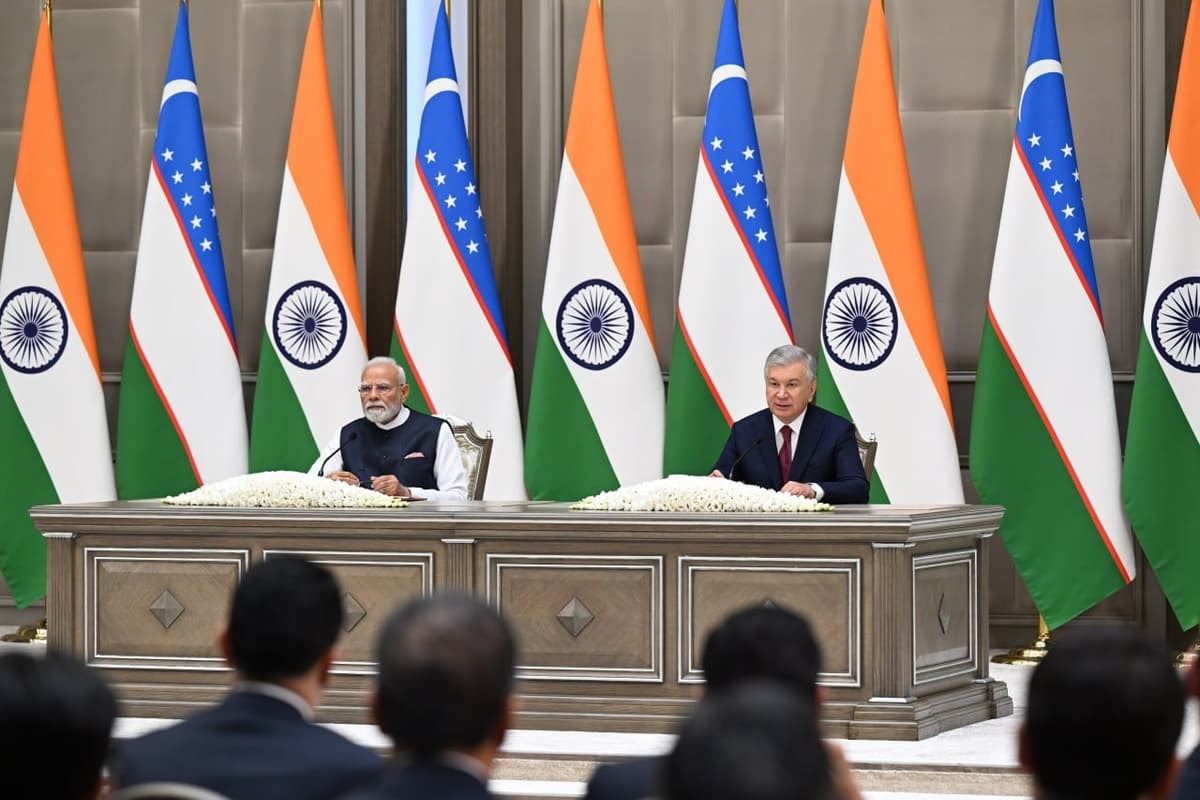

“It would not be an exaggeration to say that Khorezm is a crossroads where our glorious history meets our new reforms. Despite being far from logistics chains and having limited natural resources, we have every reason to call last year the ‘Year of Small and Medium Businesses’ in this region,” said the president.
In 2024, 7,000 new entrepreneurs started businesses in the province, 47 enterprises transitioned from small to medium-sized, and the turnover of more than 10 entrepreneurs exceeded 200 billion UZS. As a result, 290,000 people were employed in the province within a year.
However, despite significant changes, poverty in the province remains around 12%, 45,000 citizens are unemployed, and only one enterprise has a turnover exceeding 1 trillion UZS.
Therefore, it was emphasized that the province’s leadership and the heads of its 13 districts must act with determination and responsibility to turn every opportunity into projects, create new jobs, further enhance the potential of industry, services, tourism, agriculture, and exports, and address issues in the social sector and infrastructure.
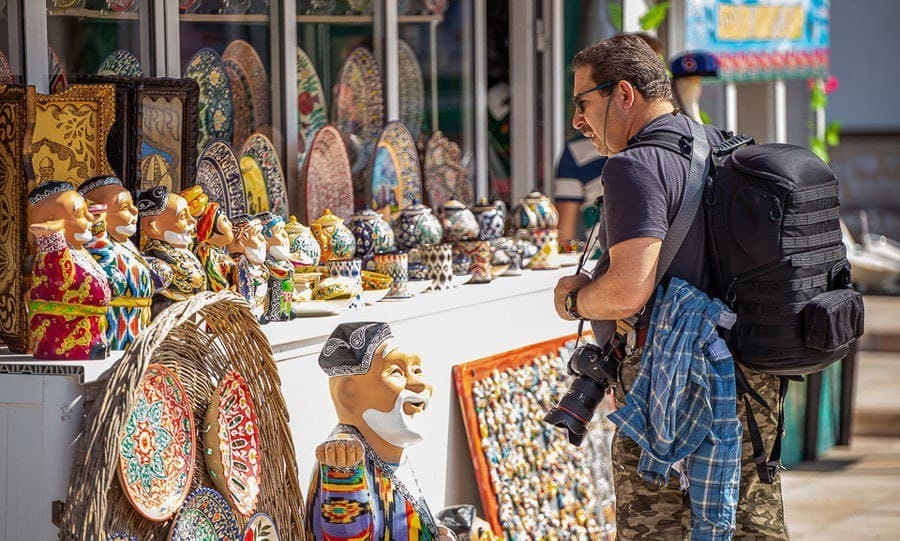
It was highlighted that while the tourism export potential in our country is $10 billion, $2 billion of this pertains specifically to Khorezm. However, this potential is not being fully utilized. Last year, only 1.3 million foreign tourists visited, and exports did not even reach $400 million.
Yet, it was noted that the authorities have sufficient opportunities to transform Khorezm into one of the leading tourist centers in the region.
The province is home to a total of 263 cultural heritage sites. Many entrepreneurs are effectively utilizing these to organize tourism services. However, it was pointed out that the heads of Khiva city and the Khiva and Yangiaryk districts are not working to transform 14 high-potential sites into tourist destinations in collaboration with entrepreneurs.
Moreover, many cultural monuments in Khorezm remain unexplored. There is little information about historical sites such as the “Sulaymon Fortress” in Hazorasp, the “Qalajik Fortress” in Bogot, the “Khan Garden” in Yangiaryk, and the “Apple-Shooting Fortress.”
To this end, it was decided that the Khorezm branch of the Uzbekistan Historians’ Society will be funded from the state budget.
Officials were tasked with attracting experienced archaeologists from abroad and initiating practical work to identify and restore historical monuments.
A four-day “Fortress Tour” route connecting eight ancient fortresses in Khorezm and Karakalpakstan will be developed. Service facilities around these fortresses will be launched based on a master plan.