





Additional features
-
Night mode

Uzbekistan moves to cut informal economy share to 29% of GDP
President Shavkat Mirziyoyev has instructed the authorities to ensure full statistical coverage of e-commerce, while Deloitte has been engaged to support the reform of the National Statistics Committee.
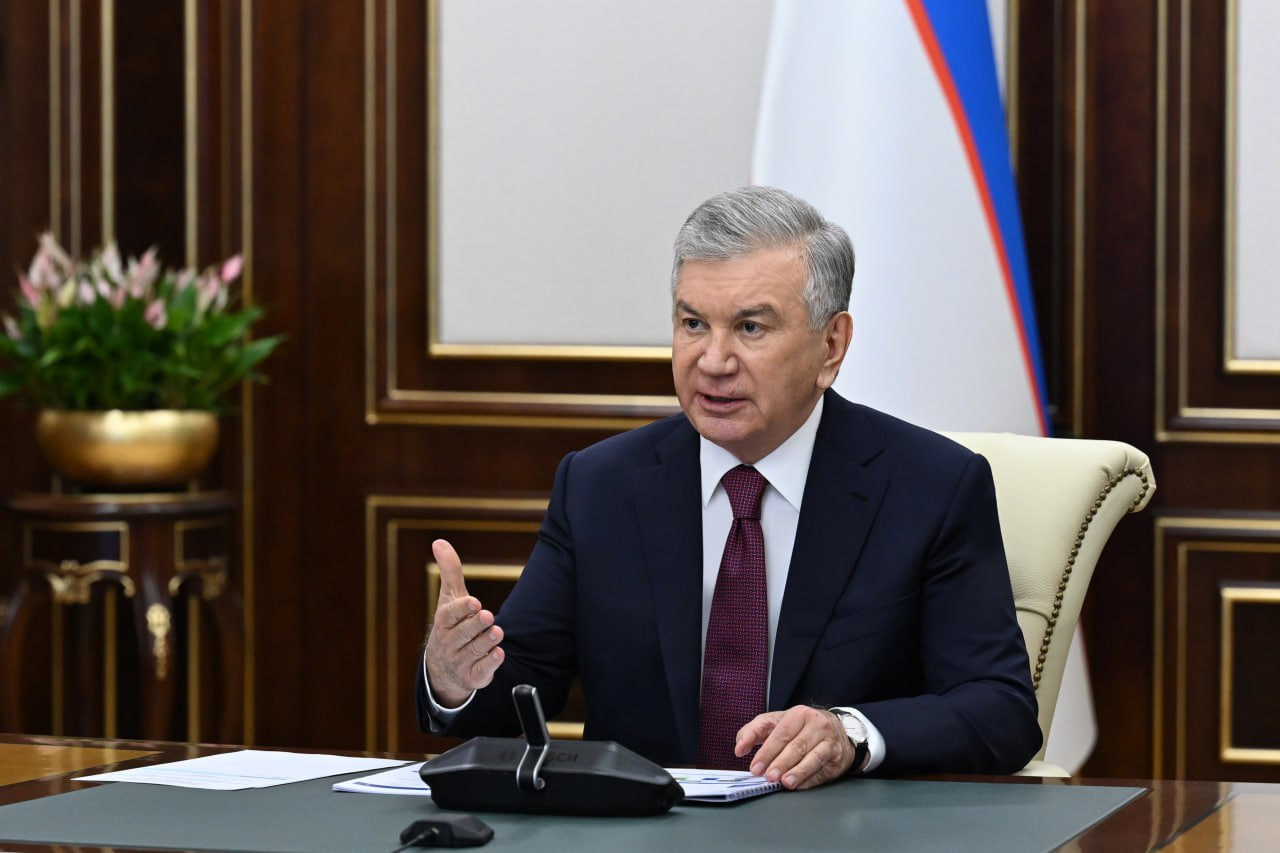
On 27 November, the president reviewed a report presented by the National Statistics Committee, the presidential press service said.
Thanks to expanded inter-agency data exchange and the introduction of 60 digital integrations, the reporting burden on businesses has been reduced by 27 percent. Online tax cash register data, electricity and natural gas consumption records, and information on agricultural planting areas and crop yields are now transmitted automatically.
The meeting also presented the committee’s work on improving the calculation of nominal gross domestic product. By increasing statistical coverage of market services, construction, agriculture, industry and budget expenditures, an additional UZS 81 trillion in value added was accounted for. As a result, Uzbekistan’s GDP for 2024 increased from $115 billion to $121.4 billion.
The share of the shadow economy has fallen from 50 percent in 2017 to 35 percent in 2024. In the near future, the authorities expect to incorporate another UZS 79 trillion of informal economic activity into official statistics, reducing its share to 29 percent.
The president noted that global e-commerce volumes are rising rapidly. Uzbekistan is also expected to see strong growth – at a rate of 9–11 percent. IT services, remote services, freelancing and other new sectors are developing quickly. The national statistical system now faces the task of fully capturing data from these areas as well.
Mirziyoyev stressed the need to end manual data collection for calculating the consumer price index and gradually transition to IT-based solutions and artificial intelligence technologies.
The meeting also reviewed efforts to transform the national statistical system into a modern, internationally aligned structure.

Deloitte has developed 23 initiatives and 70 projects, whose phased implementation is expected to improve the accuracy, efficiency and transparency of statistical data. Uzbekistan, together with the World Bank, is also drafting a National Statistics Development Strategy through 2030.
Preparations for the 2026 population census, which will begin in January, were also discussed. Organizational plans for 9,008 neighborhoods have already been approved, and special training courses have been held for more than 60,000 members of the “neighborhood seven” and other responsible participants.
The census will be carried out electronically through a dedicated portal. Enumerators will record data using tablets during door-to-door visits, with the process monitored through a geographic information system. Geolocations of all residential buildings and housing units subject to registration have been created for this purpose.

The president was briefed on regional readiness. Remaining tasks include improving census procedures, strengthening digital platform skills, developing solutions for counting citizens working, studying or on assignment abroad, and integrating data collected via door-to-door and online surveys.
Relevant officials were instructed to ensure that both the population census and the agricultural census are conducted at a high organizational level.
Related News
10:32 / 12.12.2025
Uzbekistan introduces stricter rules for e-services, imports, and VAT compliance
19:33 / 11.12.2025
Central Bank keeps key rate unchanged at 14 percent
12:20 / 10.12.2025
Uzbekistan aims to cut poverty rate to 4.5 percent next year
16:13 / 09.12.2025