



Additional features
-
Night mode

“They tricked me into signing” – Uzbek migrant worker recounts forced recruitment into Russian military
A 25-year-old man from Surkhandarya who fought in Russia’s war against Ukraine has been convicted. He sustained severe injuries after a shell explosion during the fighting. In court, he stated that Russian law enforcement officers deceived him into signing a military service contract, claiming it was “deportation documents”. “They forced me to sign without allowing me to read it,” he told the court.
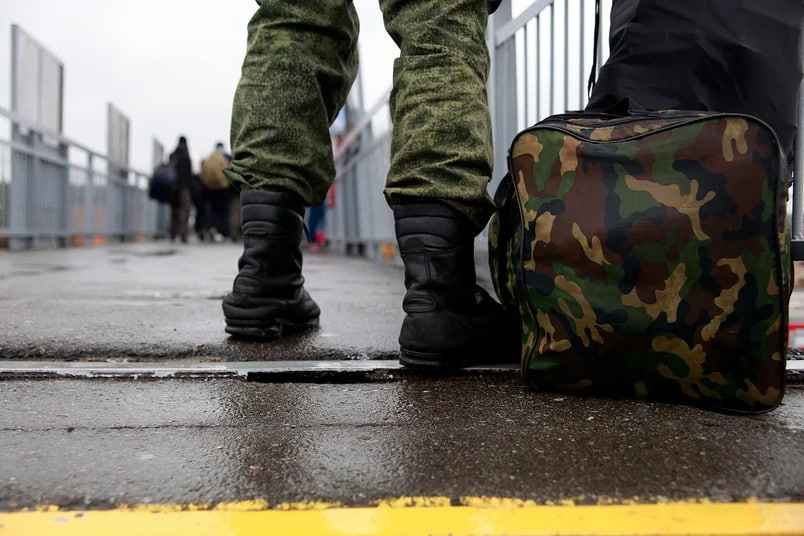
A Surkhandarya court has issued a verdict against the young man recruited into the Russian army. Kun.uz has reviewed the court ruling.
According to the verdict, S.B., born in 2000 in Uzun district, had been travelling to Russia for work since 2019. On 22 April 2023, he departed for Russia via Tajikistan. While working in Moscow Oblast, he was recruited into the Russian army in April 2025 and participated in the war against Ukraine.
In court, S.B. fully admitted his guilt and said he had gone to the war under coercion, claiming that law enforcement officers deceived him into signing a contract.
“I worked at an automotive plant in Krasnogorsk, Moscow Oblast, until 26 March 2025. After that, I was dismissed because my temporary residence documents in the Russian Federation had expired.
“On 1 April 2025, while looking for another job, police officers detained me and placed me in a detention facility due to the lack of documents. Seven other labor migrants from different countries were held there as well. On 2 April, a police officer told me I could be deported and offered me to take part in the war against Ukraine. They promised that if I served for one year in the Russian army under contract, I would be paid 3 million rubles and granted Russian citizenship.
“I said I did not want to go to war. On 3 April, police officers forced me to sign what they called ‘deportation documents’ without allowing me to read them, but in fact they made me sign a contract for military service in the Russian army. On 4 April, convoy and special forces personnel arrived and took me by bus to Voronezh,” he said in his testimony.
After that, S.B. and others were taken to a military unit, where they underwent field training for a month. They were threatened with lengthy imprisonment if they refused to serve.
“During the training we were taught to use firearms and communication devices, and to provide first aid. People from various countries were there. When the training ended, I and three others were selected from about 50 recruits and taken by bus to the area of Ukraine occupied by Russia.
“Until 29 April 2025, we continued military training as part of a platoon formed from new arrivals. After that, 18 of us were taken by bus to a forested area called Kreminna. The next day, they distributed extra ammunition and weapons – they placed various types of ammunition, weapons, grenades and medical kits in front of us and told us to take what we needed because we were about to enter combat.
“They said our mission was to seize a bridge used to supply Ukrainian troops and to eliminate the soldiers guarding it. They showed us the location using a map and drone images.
“The next day, we set off. On the way, a Ukrainian drone targeted us and began dropping shells. When a shell exploded, shrapnel struck me and I was seriously wounded. I injected myself with painkillers, applied a tourniquet to my left arm and left leg, and radioed that I was injured. They told me to retreat because an evacuation team could not reach my position. So, despite my injuries, I walked back three kilometers,” he testified.
S.B. was first taken to a military hospital in Donetsk and later to one in Belgorod. On 24 August, he was granted leave. Taking advantage of this, he returned to Uzbekistan on 4 September 2025.
S.B. told the court that he had not gone to war voluntarily and asked for leniency, saying he had been forced into it.
By the verdict of the Uzun district criminal court dated 14 November 2025, S.B. was found guilty under Article 154-1, Part 2 of the Criminal Code (recruitment into the military service or security, police, military justice or similar structures of a foreign state). He was sentenced to three years in prison, to be served in a settlement colony.
Earlier, a man from Namangan who had been recruited by the Russian army for money and participated in fighting against Ukraine was sentenced to three years and one month in prison.
Related News
16:26 / 11.12.2025
Drone attacks disrupt flights between Uzbekistan and Russia
17:11 / 09.12.2025
Uzbekistan and Russia agree on flexible pricing for international train services
13:08 / 04.12.2025
President Mirziyoyev receives Russian delegation led by Denis Manturov
13:09 / 01.12.2025