





Additional features
-
Night mode

Central Bank identifies main risks leading to an increase in inflation in the economy
The risks leading to an increase in inflation in the coming months remain low, the Central Bank says in a statement.
It is noted that the main risks are related to short-term trends in the food market. The rise in food prices under the influence of seasonal factors, competitive conditions, as well as the conjuncture of world food markets can be considered as main risks leading to an increase in inflation in the near future.
“From this point of view, it is important to ensure a stable level of supply of goods in the domestic market. At the same time, there is an opportunity to achieve a further reduction in prices for essential consumer goods by easing tariff and non-tariff restrictions for this group of goods.
In some industries, rising prices may be caused by growing costs and temporary shutdowns due to disruptions in energy supplies to producers.
In addition, there is an acceleration in the growth of the credit load in the economy (the ratio of credit investments in GDP). By the end of the year, this figure is expected to reach 48-50% of GDP,” the CB said.
It is noted that by the end of 2020 the annual inflation rate is expected to be around 11-11.5%.

Related News
12:28
World Bank: Uzbekistan could attract up to $6.4 billion in private investment through sector reforms
12:19
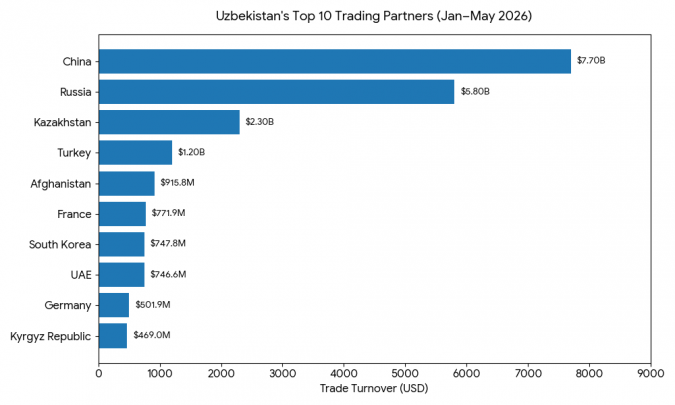
China remains Uzbekistan's largest trading partner in Jan–May 2026

18:04 / 09.07.2026
Central Bank says Tax Committee’s proposal to monitor large P2P transfers violates Constitution

12:15 / 09.07.2026