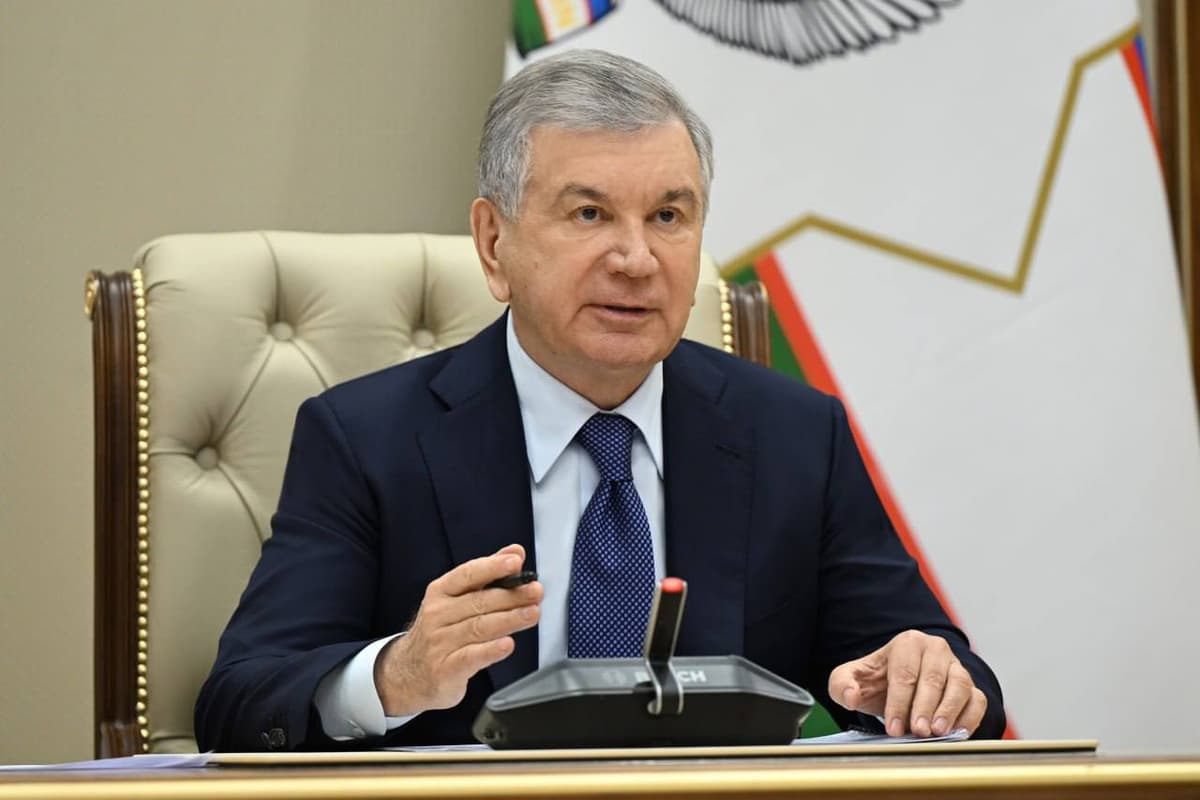
The proposal was made during a meeting held on 1 December, where the president reviewed environmental sustainability measures, waste processing initiatives, fire safety, and winter preparedness reports from relevant agencies.
At the start of the meeting, the head of state heard a report from a special commission tasked with improving environmental conditions in Tashkent. Officials outlined ongoing efforts to combat air pollution, identify and eliminate pollution sources, and implement stabilization measures such as inspecting greenhouses and construction sites, controlling vehicle emissions, shutting down illegal operations, and increasing street washing and canal cleaning across the city.
Mirziyoyev instructed officials to maintain these measures not only in the capital but throughout the regions, ensure rapid responses to identified violations, and keep all pollution-generating activities under strict oversight.
The president also reviewed progress on waste-to-energy projects worth $933 million underway in six regions – Andijan, Namangan, Fergana, Samarkand, Kashkadarya and Tashkent. However, he noted that other regions have shown insufficient progress, while investors in existing projects still lack proper access to infrastructure such as roads, electricity and water. Regional authorities and the National Ecology Committee were tasked with correcting deficiencies and launching similar projects nationwide next year.
Uzbekistan aims to reduce household waste landfills by 50 percent by 2030. Although 47 landfills have been closed and rehabilitated in recent years, returning 243 hectares of land to nature, most of the remaining 132 sites still lack protective walls, green belts, water supply and basic environmental safety structures. The president stressed the need to transform landfills into environmentally safe areas and emphasised the priority of gaining public trust and satisfaction.
Officials were instructed to repurpose rehabilitated landfill sites for green spaces and investment projects, and to create green belts around all existing landfills. Half of the planting work must be completed in spring and the remaining half in autumn. Starting from 2026, the state budget will allocate at least UZS 150 billion annually for these efforts.
The meeting also highlighted progress in processing industrial and hazardous waste, which has reached 4.5 percent after being neglected for many years. Authorities were told to audit all sites where such waste is generated or stored, launch at least one recycling or disposal project per location, and introduce a unified digital monitoring platform for hazardous waste oversight.