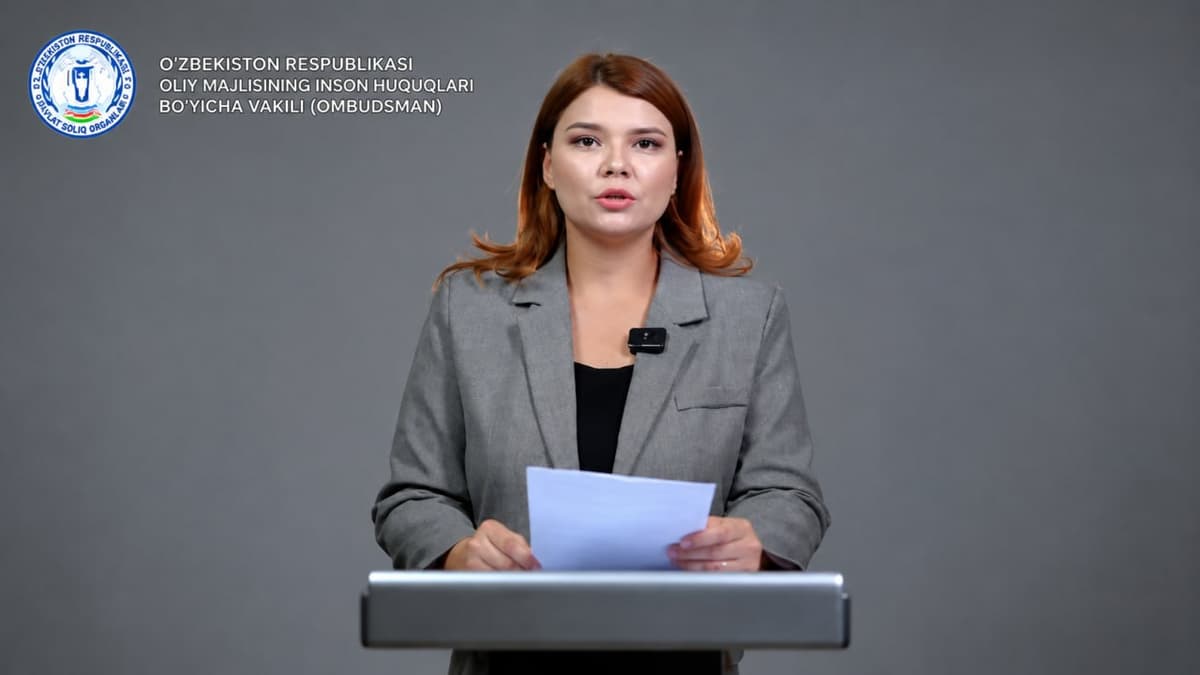
According to the ombudsman’s press service, the appeals came from Uzbek and foreign citizens, stateless persons, ombudsman offices in other countries, public organizations and legal entities.
The number of appeals stood at 9,800 in the first half of 2025.
Economic issues accounted for the largest share of appeals at 28.4%, followed by social issues at 21.8% and personal rights at 21.7%. Another 12% concerned the detention of people whose freedom of movement had been restricted, while 7.7% related to the rights of women and children. Environmental rights accounted for 0.7% of appeals, while 7.7% concerned other matters. Twelve appeals were submitted anonymously.
Based on the review of appeals and monitoring visits, the ombudsman submitted 70 measures to government bodies and courts. These included 27 statements of claim, 18 conclusions, 17 submissions, seven demands and one warning. Criminal cases were opened in 12 instances.
The total amount of money recovered or ordered to be recovered in citizens’ interests with the ombudsman’s assistance reached UZS 26.849 billion. Almost all of this amount, UZS 25.937 billion, was related to wages and employment-related disputes.
By comparison, 100 measures were submitted during the same period in 2025, resulting in the recovery of more than UZS 3.8 billion in citizens’ interests.
More than UZS 304.6 million was recovered for citizens following the review of appeals concerning debts owed to citizens, health-related harm, material and moral damages and other compulsory payments.
The ombudsman’s requests also resulted in more than UZS 435.9 million in alimony payments being recovered to support women’s minor children.
In addition, more than UZS 171.2 million in unjustified debts owed by citizens was written off. Restrictions imposed on the land plots of four citizens were also lifted.
Fourteen officials responsible for human rights violations were subjected to disciplinary or administrative measures, including reprimands, fines and dismissal.
Eight women who had suffered violence were issued protection orders, while criminal cases were opened by internal affairs authorities against five alleged perpetrators.