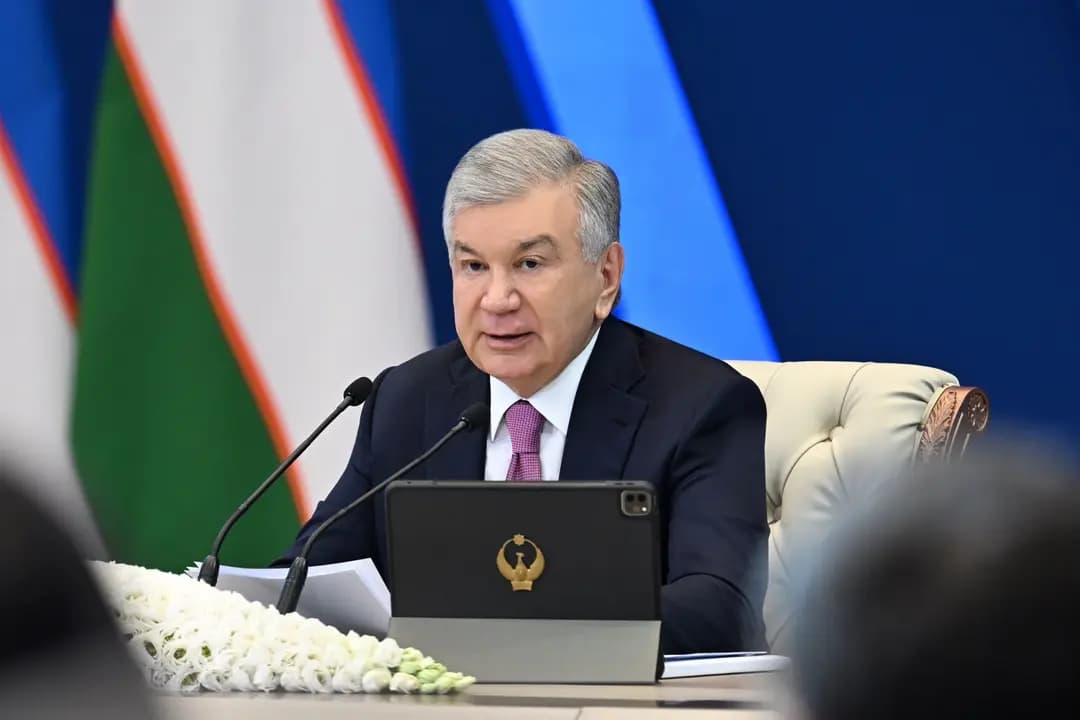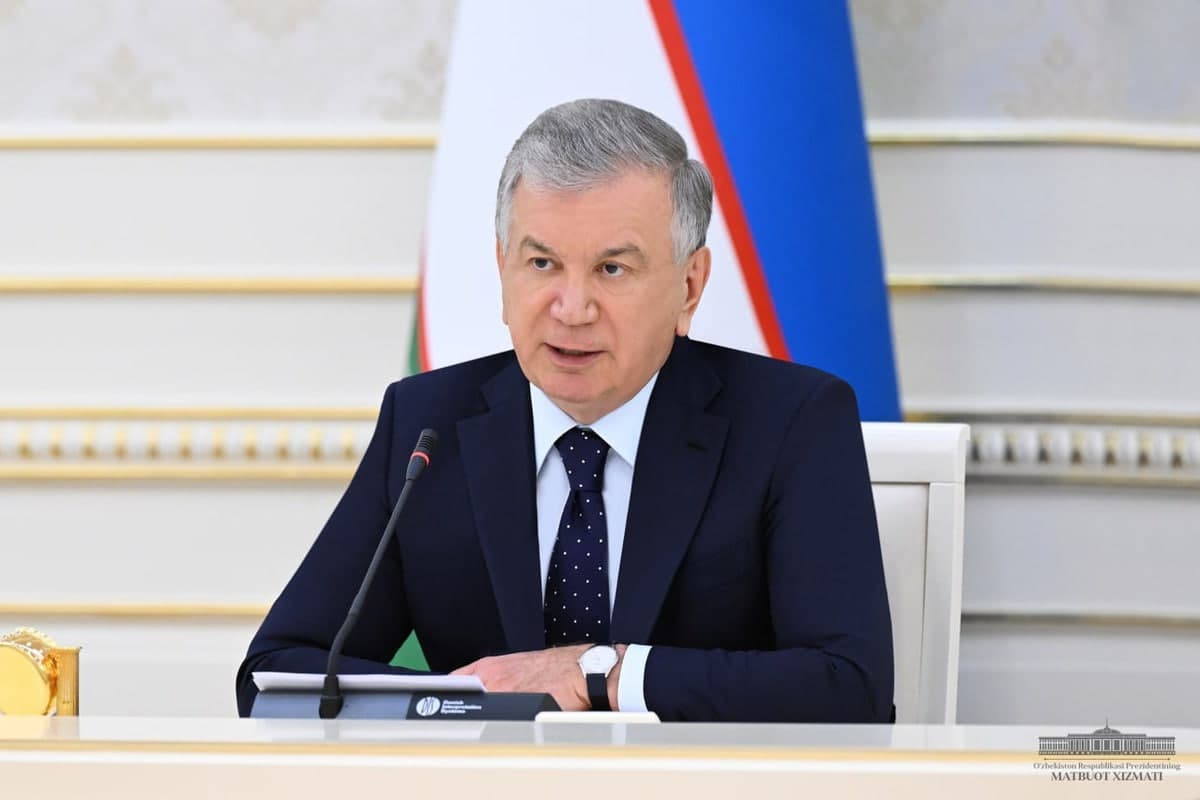
The issue was raised on August 18 at a meeting of the Legislative Chamber of the Oliy Majlis, where lawmakers considered a draft law on radioactive waste management in its first reading.
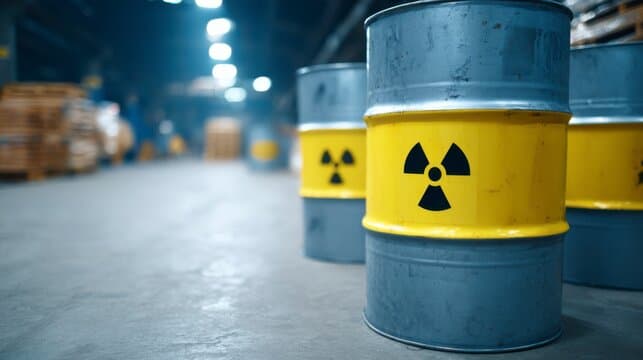
Four of the 10 storage facilities at the Republican Center for Radioactive Waste Storage are already full, while the remaining facilities are between 50% and 92% occupied, Sardorbek Yakubekov, deputy chairman of the committee, said.
“Four of the center’s 10 storage facilities are already full, while the others are 50% to 92% occupied. The remaining capacity should be enough to receive radioactive waste for another four to five years,” Yakubekov said.
About 176 entities in Uzbekistan currently use radioactive sources, with around 2,500 sources in operation, according to the official. Spent radioactive sources are transferred to the Republican Center for Radioactive Waste Storage.
The government is seeking to establish a comprehensive legal framework for radioactive waste management as Uzbekistan expands its nuclear sector, including the construction of new nuclear power facilities.
New law would regulate entire radioactive waste cycle
The draft law is designed to establish rules covering the entire lifecycle of radioactive waste – from generation and processing to storage, transportation and disposal.
The proposed legislation comprises six chapters and 48 articles. It would establish safety requirements, define the powers of state bodies and the rights and responsibilities of individuals and organizations, and introduce the “polluter pays” principle.
The bill also provides for public participation, compliance with international standards and the creation of a national operator responsible for radioactive waste management. It sets requirements for the siting, design, construction, commissioning, operation and decommissioning of facilities involved in radioactive waste management.

The government says the law would not require additional funding from the state budget. The draft has been coordinated with 31 ministries and government agencies, subjected to public consultation and received a positive scientific assessment from the Institute of Nuclear Physics of the Academy of Sciences.
Uranium legacy remains a challenge
Lawmakers also discussed the environmental legacy of Uzbekistan’s Soviet-era uranium industry.
According to Yakubekov, more than 57 million tonnes of uranium waste accumulated at the tailings facility of Hydrometallurgical Plant No. 1 as a result of operations by the Navoi Mining and Metallurgical Company between 1964 and 1994.
Between 2023 and 2025, uranium legacy sites in Yangiabad and Charkesar were rehabilitated with a €9 million grant from the European Bank for Reconstruction and Development.
However, Yakubekov said the lack of a legal framework for the long-term monitoring of buried radioactive waste limits the scope for further rehabilitation of similar sites, including projects that could receive EBRD financing.
Uzbekistan already operates a nuclear research reactor and is building its first nuclear power plant, but does not yet have dedicated legislation comprehensively regulating radioactive waste management, according to the report presented to lawmakers.
Bill raises questions over ownership of radioactive waste
The draft law was developed with reference to International Atomic Energy Agency standards, international conventions, relevant European Union directives and legislation from several countries.
According to information presented during the parliamentary session, 81 of the IAEA’s 181 member states have adopted legislation specifically regulating radioactive waste management.
The Uzbek draft takes into account the experience of the United States, Belgium, Germany, France, Sweden, South Korea, Russia and Kazakhstan. Six foreign experts from international organizations and regulatory bodies in Italy, Spain, Lithuania and Russia, along with eight Uzbek specialists from ministries and government agencies, also provided assessments during the drafting process.
During the discussion, lawmaker Zafar Khudoyberdiyev questioned a possible inconsistency between two provisions of the draft.
One provision refers to “orphan radioactive waste”, while another states that radioactive waste containing nuclear materials is exclusively state property.
Yakubekov explained that “orphan waste” includes, among other things, sites left behind by uranium mining operations during the Soviet period.
He also clarified the provision on state ownership under Article 36. Organizations whose activities generate radioactive waste may temporarily store it on their premises until it is transferred to a specialized long-term storage facility in Parkent district. The specialized permanent storage facility itself would be state-owned.
The bill’s authors agreed to review this and other disputed provisions before submitting the draft for its second reading.
Following the discussion, the Legislative Chamber approved the bill in its first reading.