Investment gold can serve as a defensive asset and help reduce risks associated with:
- inflation;
- depreciation of the national currency;
- geopolitical instability;
- financial market crises.
At the same time, gold itself does not generate cash flow. It does not provide rental income, pay dividends or give you a share in business profits.
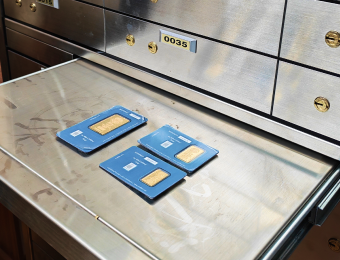
Gold is primarily considered part of a diversified investment portfolio. Depending on your goals and risk level, a gold allocation of around 5–10% of total wealth is often considered one possible approach to asset allocation. In Uzbekistan, those interested in investing in physical gold can purchase 999.9-purity gold bars through banks. For example,
Hamkorbank offers gold bars in different weights.
For many families, keeping 5–10% of their savings in gold may be a reasonable approach. An allocation of up to 10–15% can be considered a higher level when there is an additional need for gold or a specific financial goal.
A significantly larger share is no longer so much about protecting wealth as about excessive concentration in a single asset that does not generate current income.
A young family that does not yet have significant wealth can gradually build a small gold reserve. For example, it could set a goal of accumulating 50 grams. However, this is not a universal financial rule. Such savings should not come at the expense of an emergency fund, money for housing or education, or income-generating investments.
The risk is not only that the
price of gold may temporarily decline.
A much more serious risk is spending another ten years treating jewellery as an investment, regularly losing money when selling and replacing it, while at the same time keeping too large a share of family wealth in an asset that does not generate current income.