SOCIETY | 13:35 / 07.01.2026
954
9 min read

 “Mubashshir Ahmad’s health condition is serious. He cannot serve his sentence” – lawyer

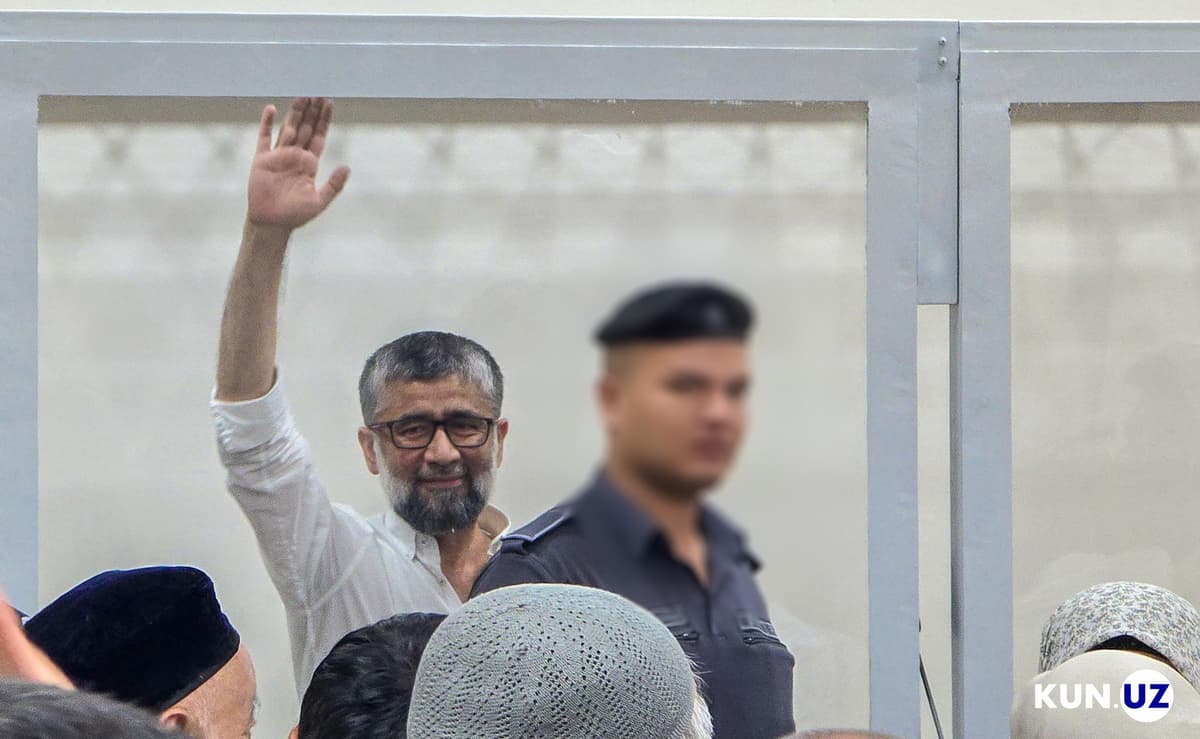
Religious scholar Alisher Tursunov, better known as Mubashshir Ahmad, is currently serving a prison sentence in a correctional colony in Navoi region. According to his defense attorney, Abdulloh Sodiq, Tursunov has been diagnosed with type 2 diabetes mellitus requiring insulin and arthrosis of the left leg. Despite severe swelling in his legs and the appearance of various ulcers on his body, he has not been permitted to undergo proper medical treatment, the lawyer said.

Photo: KUN.UZ

The scholar was sentenced on October 8, 2025, to two and a half years of imprisonment. At the time, Judge Bobur Rahimov of the Uchtepa District Criminal Court found him guilty under all three articles brought by the investigative authorities.

Following the verdict, Mubashshir Ahmad decided not to file an appeal. He is currently serving his sentence at Penal Colony No. 5 of the Department for the Execution of Sentences under the Ministry of Internal Affairs, located in Qiziltepa district, Navoi region.

According to Abdulloh Sodiq’s statement to Kun.uz, Alisher Tursunov’s health is in poor condition. In particular, during both the investigation and court proceedings, the defense repeatedly informed the authorities that the defendant had been suffering from type 2 diabetes for many years and submitted formal motions to that effect. However, these circumstances were not taken into account when deciding on preventive measures or sentencing. It is reported that Tursunov’s health problems have continued while he has been in prison.

“On November 26, 2025, when lawyers met Alisher Tursunov in person at Penal Colony No. 5, it became clear that his blood pressure had repeatedly exceeded 180 mm, his kidneys were functioning poorly due to diabetes, his legs were severely swollen, and other accompanying illnesses posed a serious threat to his health and life,” the lawyer said.

This information was also confirmed in an official letter provided by the Department for the Execution of Sentences of the Ministry of Internal Affairs in response to a lawyer’s inquiry.

The letter states that Alisher Tursunov underwent outpatient treatment three times in November alone with diagnoses of type 2 diabetes mellitus and related illnesses. Specifically:

  • On November 5–6 – diagnosed with “type 2 diabetes mellitus, arthrosis of the left leg”
  • On November 10–14 – diagnosed with “upper respiratory tract infection, panaritium of the first toe of the right foot”
  • On November 24–30 – diagnosed with “type 2 diabetes mellitus requiring insulin, stable angina pectoris (ischemic heart disease), functional class II, heart failure class II, arterial hypertension stage II, risk category IV,” and received outpatient treatment

According to lawyer Abdulloh Sodiq, the deputy head of the department and the head of medical services provided the lawyers with inaccurate information regarding Tursunov’s health. In particular, when lawyers met with Alisher Tursunov again on December 26, 2025, he stated that he had not received any of the treatments listed in the letter, that he had only undergone a medical examination, had not been hospitalized, had not been provided with medication, and had not even been allowed basic rest.


“Moreover, while serving his sentence, A. Tursunov is being forcibly assigned to work at one of the brick factories located in Qiziltepa district. Given his severe health condition, he is forced to stand and work for up to 16 hours a day. Knowing full well that Alisher Tursunov is in poor health, suffers from diabetes, has swollen legs, impaired kidney function, and developing ulcers on his body, what is the purpose of forcing him to work in harsh and cold weather?” the lawyer said.

According to the attorney, the fact that a prisoner transferred on October 28, 2025, received medical treatment three times within one month and suffers from diabetes, arthrosis, angina pectoris, and other accompanying illnesses indicates that this individual is unable to serve a sentence involving deprivation of liberty.

Alisher Tursunov also told his lawyers that under the law, having served one-third of his sentence, he should be transferred to a settlement colony on March 11, 2026. However, he fears that pressure may be exerted on him, that minor infractions may be formally recorded, and that his transfer may be deliberately delayed.

In addition, Tursunov stated that he is not being treated on an equal basis with other inmates by the facility’s staff.

“For example, if someone has a common cold, they are treated at the medical unit for five or six days. Yet despite his numerous illnesses, severe swelling in his legs, darkening ulcers that appear to be progressing toward gangrene – in short, despite his critical condition – he is not permitted to receive treatment. Instead, he is simply forced to go to work,” his lawyer said.

Tursunov has also reported that his complaints about pain in his legs and ulcers are being ignored and that pressure is being applied to limit his meetings with lawyers.

“Alisher Tursunov says that his complaints about pain in his legs and ulcers are being disregarded. He is only given pain-relief injections, which are a temporary measure, and even then he continues to have difficulty walking. In this condition, he is forced to sleep on an upper bunk on the second tier. Each time he climbs up or down, the ulcer on his leg causes him severe pain and has even led to several falls.

Most distressingly, A. Tursunov is being pressured and told that his lawyers should visit less frequently or, if possible, not come at all,” Abdulloh Sodiq said.

According to the lawyer, formal complaints have been submitted to the Ministry of Internal Affairs, the Prosecutor General’s Office, and other relevant bodies seeking the restoration of his client’s violated rights.

Article 75 of the Criminal Code

For reference, under Part One of Article 75 of the Criminal Code of Uzbekistan, a person who, after sentencing, develops a serious illness that prevents the serving of a sentence must be released from serving the punishment.

The illnesses that fall under this provision are specified in the joint resolution of the Ministry of Internal Affairs and the Ministry of Health titled “On approving the rules for conducting medical examinations of seriously ill convicted persons and submitting them for release from serving a sentence due to illness,” which explicitly provides for such cases.

In particular, the diagnosis of type 2 diabetes mellitus confirmed in the case of religious cleric Mubashshir Ahmad is included in the list of illnesses that constitute grounds for submitting a convicted person for release from serving a sentence due to illness, as provided for in the joint resolution.

Such precedents are not alien to Uzbekistan’s legal system. For example, on March 19, 2024, Salim Abduvaliev was found guilty of illegal handling of firearms under Article 248 of the Criminal Code and sentenced to six years of imprisonment.

After about ten months, on January 12, 2025, Salim Abduvaliev was released from serving his sentence and freed under the procedure established by Article 75 of the Criminal Code due to illness.

Дониёр Тухсинов
Prepared by Дониёр Тухсинов
Follow Kun.uz news on Google News
+ Subscribe

Related News