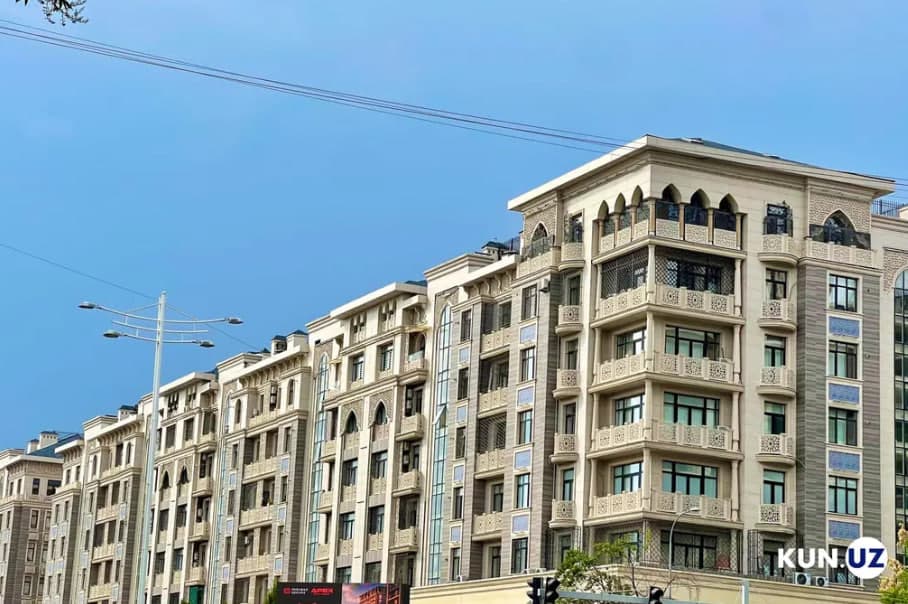
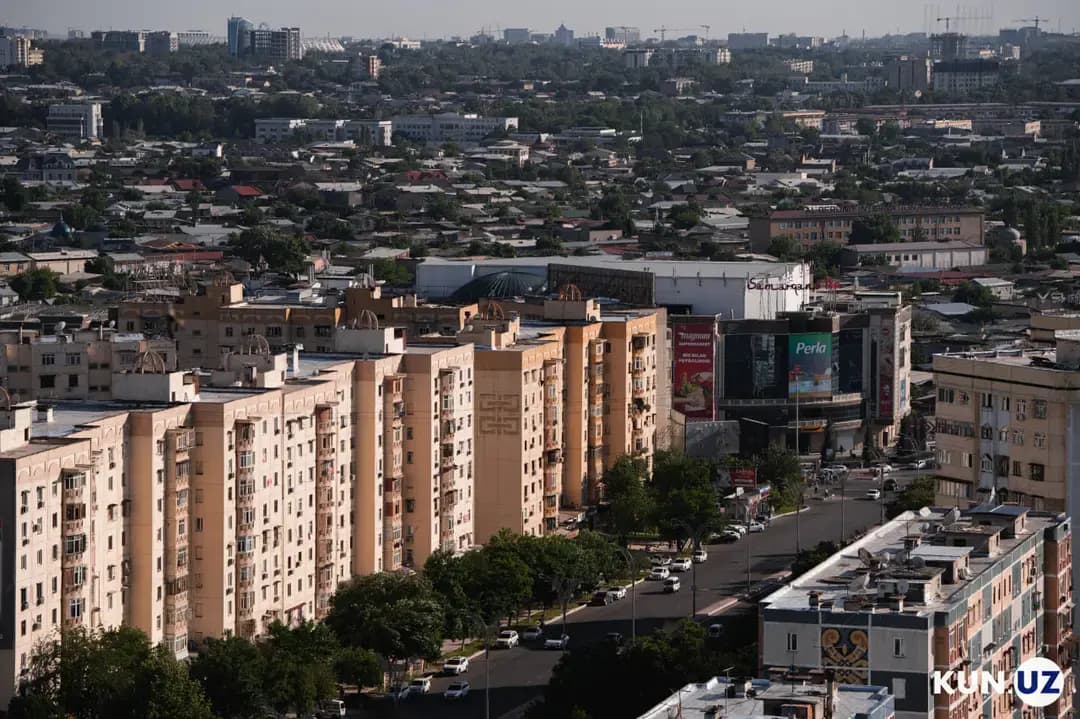
The valuation put the combined value of the apartments at UZS 426.7 trillion, compared with a current cadastral value of UZS 57.7 trillion – a difference of nearly 7.4 times.
For more than 213,000 private houses, the gap was even wider. Their current cadastral value totals UZS 39 trillion, while the mass valuation put their combined value at UZS 587 trillion, or nearly 15 times higher.
The figures were presented during an open dialogue at the Ministry of Economy and Finance, Spot reported.
Why the figures differ
One of the main reasons for the discrepancy is that existing cadastral values do not fully reflect the value of the land on which private homes are located.
Under the mass valuation system, a private house is assessed as a single property, with the land plot and all buildings and structures on it valued together. The methodology takes into account factors such as location, the size of the land plot and buildings, year of construction, number of floors, construction materials, and access to transport and social infrastructure.
The assessment also draws on market listings, data from real estate agents and notarized transactions. Properties are grouped into price zones, with valuation models then developed based on the characteristics of each area and the individual features of the properties.
Property values vary widely across Tashkent
The preliminary results show a wide range in property values across the capital.
The estimated value of one square meter of apartment space ranged from UZS 4.6 million to UZS 36 million. The estimated value of one sotix (100 square meters) of land ranged from UZS 115 million to UZS 888 million.
The Ministry of Economy and Finance stressed that the figures are preliminary and do not represent the price at which a particular property will eventually be sold.
The aim of the mass valuation system is instead to establish property values that more closely reflect market conditions, using uniform criteria that allow properties to be compared on a consistent basis.