Under the proposed reforms, a new company, LPG-Trade LLC, would be established under HUDUDGAZTA’MINOT to purchase liquefied gas on the exchange and supply it to households in accordance with distribution rules.
Retail prices for liquefied gas would be aligned with sound economic principles, the press service said, adding that vulnerable households will receive a subsidy for every kilogram they buy.
The government expects that this approach will gradually smooth out the pricing system, while directing targeted support to lower-income families. Sending budget funds straight to individual buyers—rather than handing out across-the-board subsidies—is meant to make the whole system fairer and more efficient.
As part of the proposed changes, liquefied gas for social-sector facilities would be sold at exchange prices, while the republican budget would cover the difference between the exchange price and the price paid by households.
The proposed changes would also allow more private companies to enter the market. The Andijan region is set to launch a pilot project with private operators delivering liquefied gas. Operators would need the necessary licences and permits and would have to employ qualified engineering and technical staff. At least two operators would provide the service. Consumers would also have access to a mobile application and online services.
Distribution points would be sited according to the size of the consumer base and the spacing of local communities, and must meet all urban planning and fire-safety regulations. The authorities would later consider extending the model to other regions.
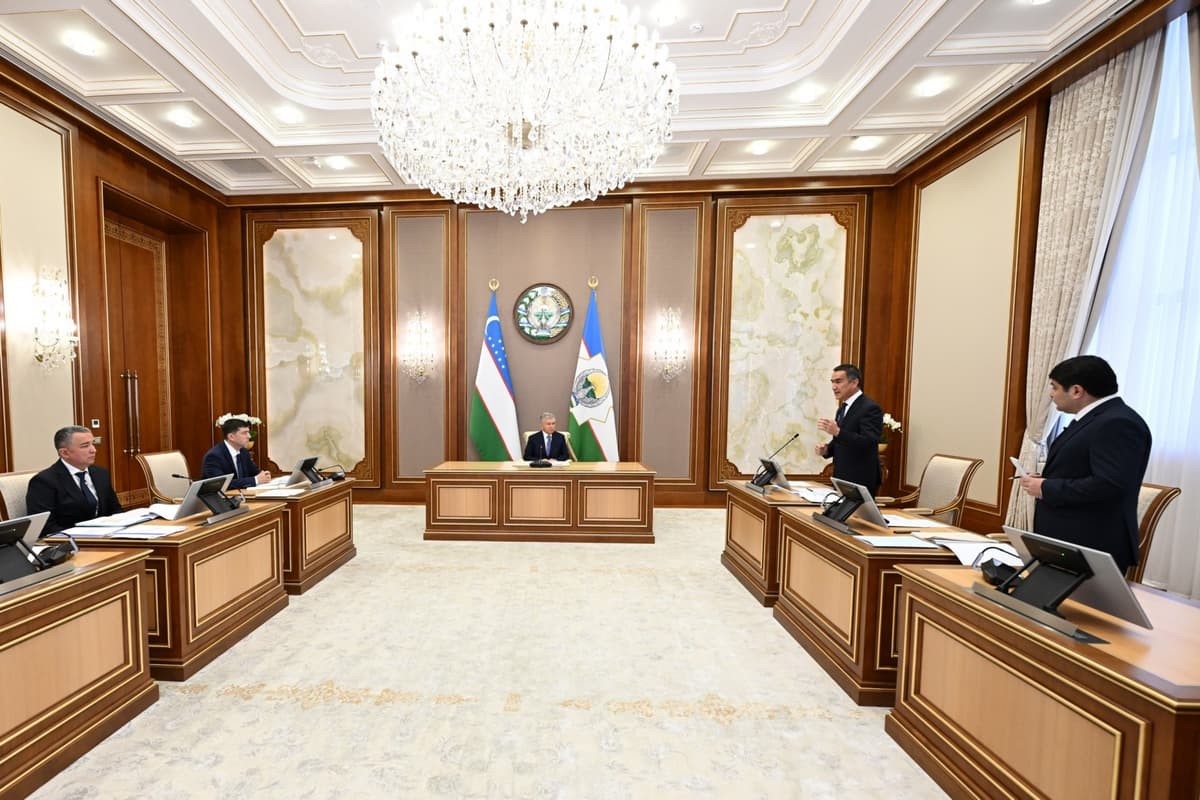
President Shavkat Mirziyoyev said the reforms should be carefully planned to ensure convenience for consumers and social fairness.
Officials were instructed to set clear delivery schedules for liquefied gas, introduce digital payments, make distribution more transparent, prevent artificial shortages and curb unjustified price increases. They were also told to ensure that compensation for socially vulnerable households is paid on time, that gas-filling facilities and transportation meet safety standards, and that private operators are properly supervised.