“Over the past four years under President Mirziyoyev, Uzbekistan has been on a path to reform. He granted more space for citizens to voice their concerns and grievances. Social media platforms, many of which had been blocked, were made available to the surprise and joy of Uzbekistan’s population and were many foreign news sites. New bloggers and websites mushroomed to fill in the gap in the country’s desolated media space. Social media, in particular, has become a public square that allows people to discuss openly the social and political issues of the day,” The Diplomat writes.
“However, four years into Mirziyoyev’s reforms, freedom of speech in Uzbekistan is far from a given. While the president has repeated on numerous occasions that journalists and bloggers should be free to criticize those in power, and improvements have been noted, Uzbekistan continues to languish at the bottom of many freedom of speech rankings,” the article reads.
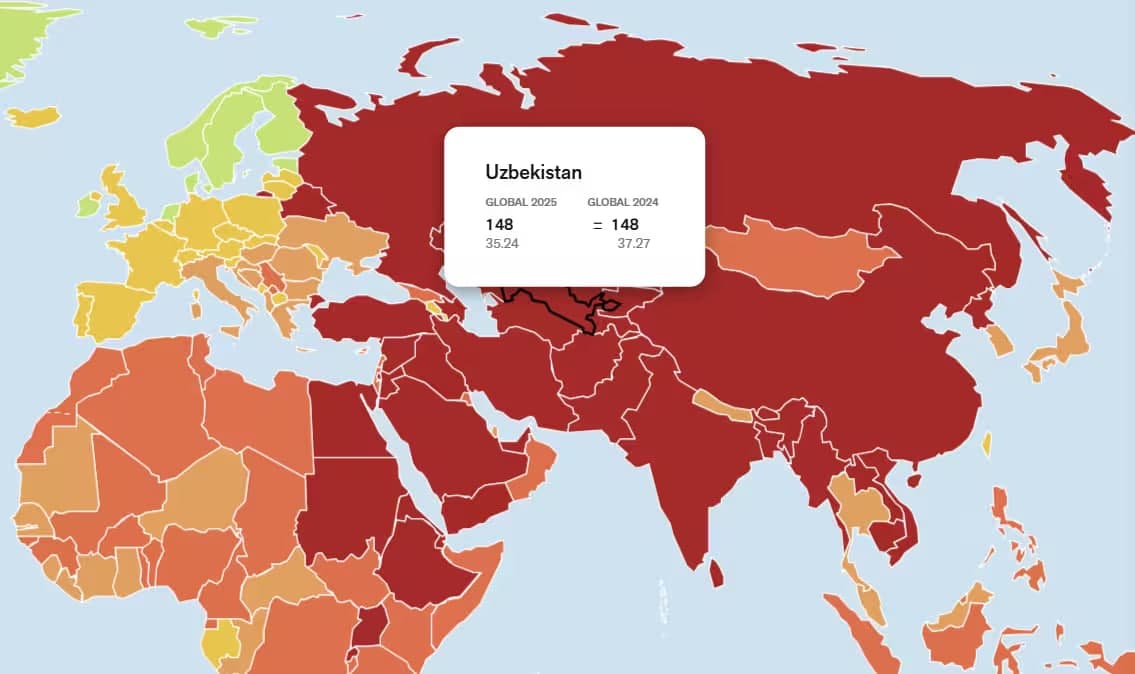
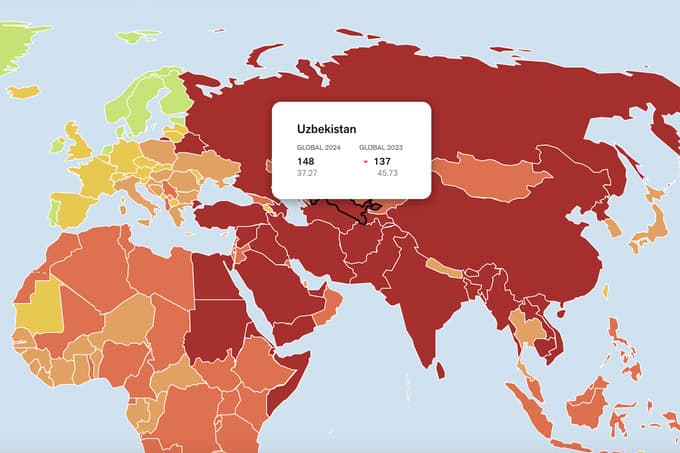
According to the Reporters Without Borders’ World Press Freedom rating, in 2020 Uzbekistan ranked at 156th place in the world (it was 166th in 2016), while Freedom House continues to label the country as “not free,” with a score of 10 out of 100 in 2020 (its score in 2017 was 3 out of 100).
In September, during an online Organization for Security and Co-operation in Europe (OSCE) conference marking the International Day for Universal Access to Information, Komil Allamjonov, chairman of the Board of Trustees of the Public Foundation for Support and Development of National Mass Media, commented on the country’s continuously low rankings.
“From 2017 to 2020 it rose by 13 positions. But are there any problems? Of course, there are. Do journalists and bloggers have no fear? Of course, they do, otherwise, the results would have been better. Censorship of certain people, self-censorship of journalists and bloggers, threats or pressure from government officials – naturally, such factors still exist and we are fighting them,” he said.
“These days, at the order of the president, another important document is to be adopted, that is a law aimed at increasing the responsibility for obstructing the activities of the media and putting pressure on journalists. We are waiting for this. We understand that we are still at the beginning of the path and that there will be mistakes and shortcomings along the way,” Allamjonov noted back then.
In the article, The Diplomat counted numerous cases related to violation of freedom of expression in Uzbekistan. In particular, the case with video blogger Shavkat Egamberdiyev who was forced to remove a satirical video that allegedly offended the reputation of Artel and Akfa, companies founded by the khokim of Tashkent, Jakhongir Artykhodjayev, the khokim’s threatening comments to journalists with public embarrassment (“I’ll put you in a gay taxi and in six seconds and you’re done!”) and physical violence (“Leave the house for two or three days without any reason, and you will be gone”) are among them.