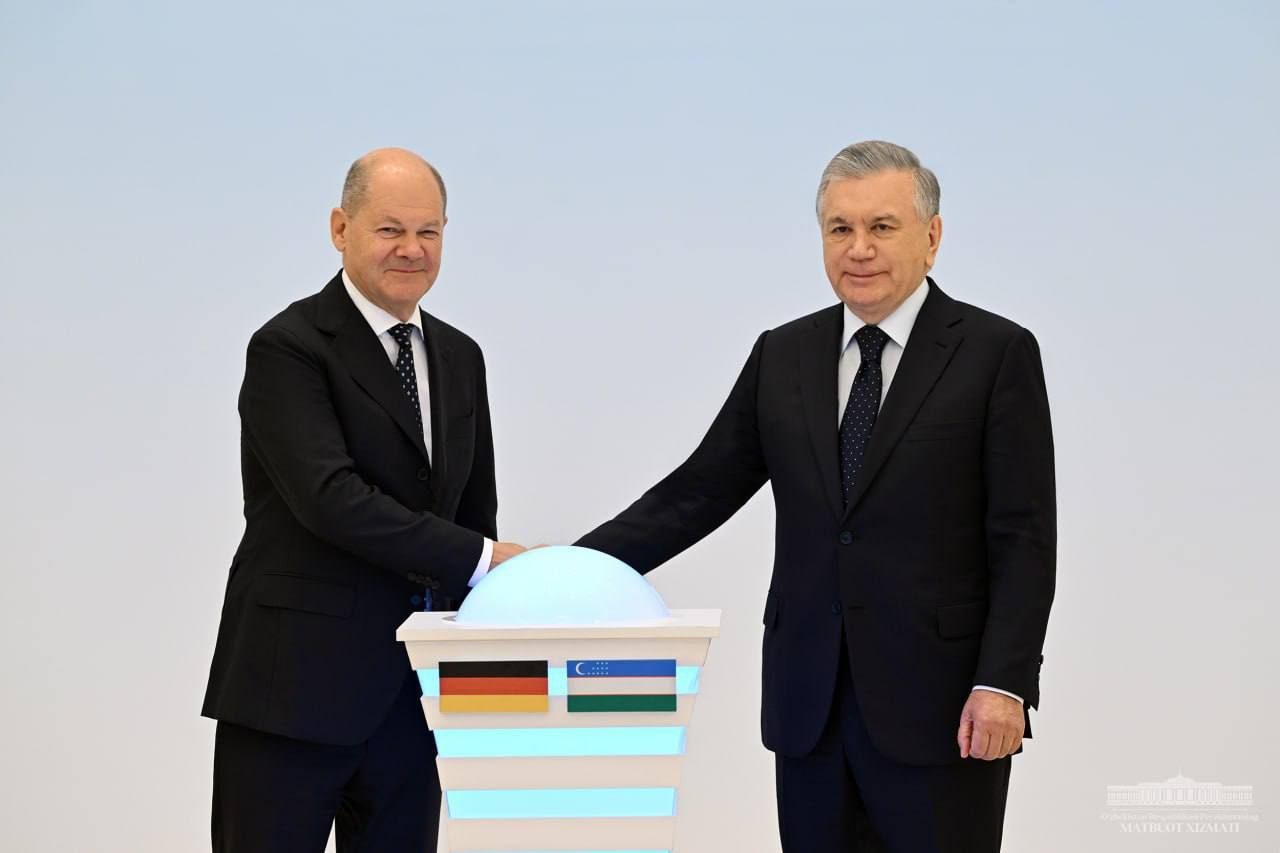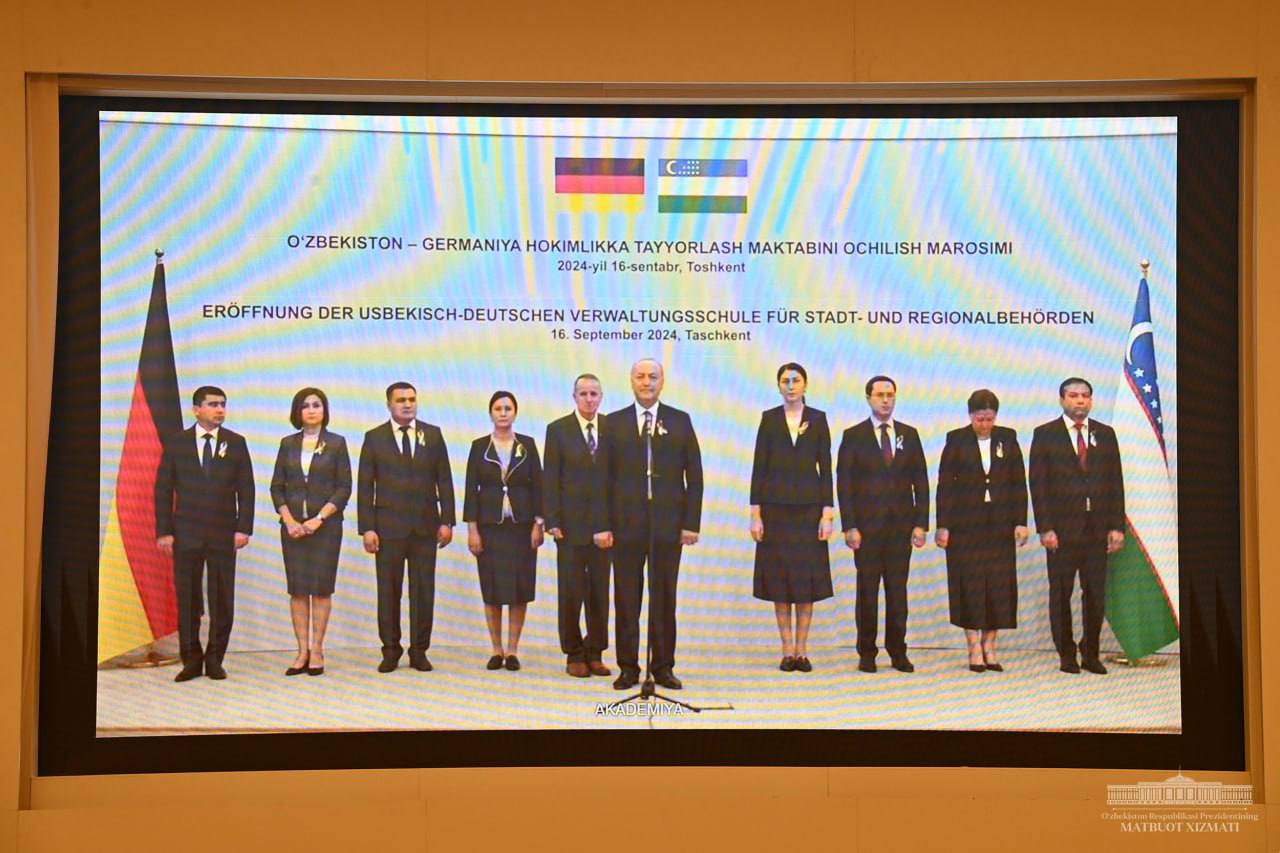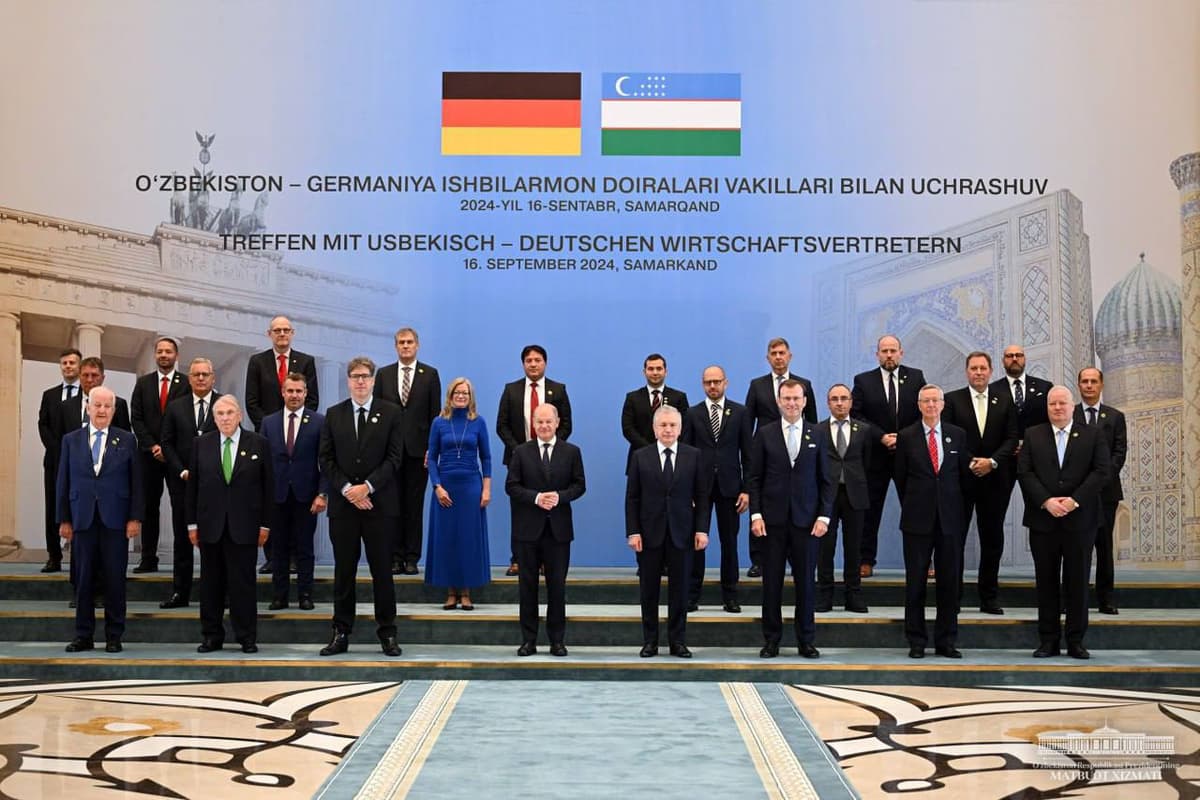
On September 16, President of Uzbekistan Shavkat Mirziyoyev and German Chancellor Olaf Scholz met with representatives of leading companies and banks from both nations in Samarkand.
The event was attended by Michael Kellner, Parliamentary State Secretary of the German Ministry for Economic Affairs and Climate Protection, Michael Harms, Managing Director of the German Committee on Eastern European Economic Relations, as well as leaders and representatives from prominent companies such as "KNAUF," "CLAAS," "Mangold Consulting," "Gunter Papenburg," "Siemens Energy," "Linde Group," "Aurubis," "FALK PORSCHE," "Metso," "Edison Technologies," "Ernst Klett," "Siemens Healthineers," "Herrenknecht," "DB Engineering & Consulting," "Svevind Energy Group," "Rhenus," "HMS Bergbau," "Textima," and banks like "KfW Development Bank" and "AKA Bank."
The President of Uzbekistan warmly welcomed the participants of the meeting, emphasizing the symbolic significance of holding the event in the historic city of Samarkand.
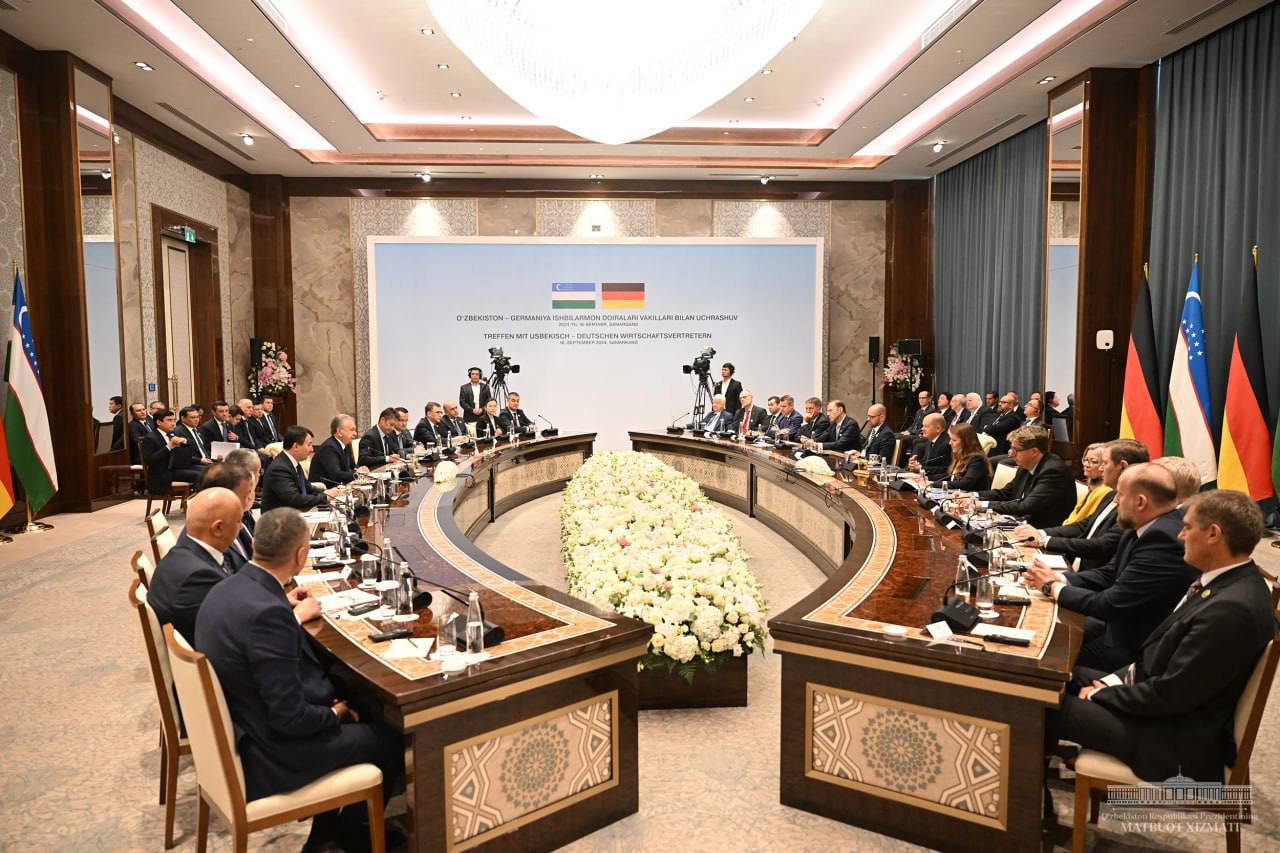
The highly productive high-level negotiations held the previous day were praised. It was noted that the main priorities of the New Uzbekistan’s economic sectors’ deep transformation and modernization were supported.
One of the main outcomes of the meeting was the agreement to develop comprehensive measures to support and accelerate joint investment projects and trade agreements within the framework of the strategic program for Industrial and Technological Partnership with Germany’s leading companies and banks.
Key areas of mutually beneficial partnership were outlined with the active and practical participation of the business circles from both Uzbekistan and Germany. These include industrial cooperation in "green energy," the chemical industry, "green hydrogen" production, mechanical engineering, electrical engineering, textiles, pharmaceuticals, and other sectors.
Additionally, the participation of German companies in the development and deep processing of critical mineral resource deposits, with the aim of producing high value-added products for export to Germany and other third countries, was identified as a promising direction.
Cooperation will also focus on the modernization of energy, transport-communication, utility, and tourism infrastructure facilities, participation in the privatization program of industrial and service enterprises, as well as the implementation of socially significant projects in healthcare, education, and ecology.