





Additional features
-
Night mode

Bribe or a small gift? Research reveals public perception of corruption in Uzbekistan
A recent study conducted under the joint initiative “Strengthening the National Anti-Corruption System in Uzbekistan” has shed light on how the public and government officials perceive corruption. The research, involving over 500 survey respondents and insights from anonymous government employees, was conducted by the Anti-Corruption Agency of Uzbekistan in collaboration with South Korea’s Anti-Corruption and Civil Rights Commission (ACRC), the UNDP Seoul Policy Centre, and the European Union.

Key findings: Public understanding of corruption
The study gathered data through targeted focus groups, expert interviews, and phone surveys across Uzbekistan’s 14 regions. A diverse pool of participants, including urban and rural residents of various age groups, contributed to the findings.
Most respondents associated corruption with bribery and nepotism:
- 54.8% identified abuse of official authority as corruption.
- 51.4% pointed to favoritism in hiring relatives.
- 49.6% considered financial gratuities to officials a form of corruption.
- 38.4% associated the acceptance of expensive gifts with corrupt practices.
Interestingly, while 88.4% condemned bribery and 68.4% opposed offering bribes, many viewed small gifts as a sign of gratitude rather than corruption. Terms such as “suyunchi” (reward), “to‘yona” (wedding gift), and “rahmat” (thanks) were seen by some as tokens of respect and appreciation.
Sectors most affected by corruption
Respondents highlighted health care, education, and local governance as the sectors most susceptible to corruption:
- 56.4% identified medical institutions.
- 39% named higher education institutions.
- 27.4% pointed to preschool education facilities.
- 25.6% mentioned local government offices.
For rural residents, corruption in road construction ranked significantly higher than for urban dwellers (22.2% vs. 12.8%).
Willingness to report corruption
The survey revealed that 74% of respondents were willing to report corruption, with 82.2% favoring electronic platforms or mobile applications for this purpose. However, hesitations remained:
- 24.8% believed reporting corruption would be futile.
- 20.4% were unsure whom to approach.
- 19.8% admitted benefiting from corrupt practices.
Nearly half expressed fear of repercussions, while 13.8% admitted to giving small gifts or money themselves. Men showed slightly higher readiness to report corruption (79.2%) compared to women (70.4%).
Enhancing public awareness and accountability
The study aimed to address misconceptions about corruption and understand why individuals hesitate to report it. The Anti-Corruption Agency emphasized the importance of protecting whistleblowers and strengthening accountability between citizens and government officials.
In its ongoing efforts, the agency has launched initiatives like “Transparent Cities” and “Honest Districts” to combat corruption at the local level and promote ethical governance.

Related News
12:37
Bribery, cover-ups and extortion remain key corruption risks in Uzbekistan's gas sector – Energy Ministry
11:51
Dozens of border personnel detained in anti-corruption operation at Kyrgyzstan–Uzbekistan crossings
11:55 / 03.07.2026
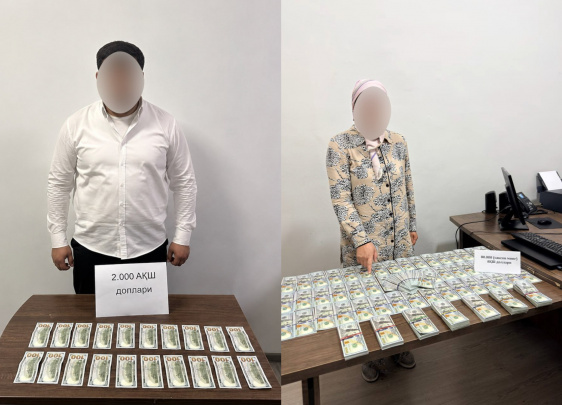
Officials foil $160K land fraud scheme in Andijan; cadastre officer arrested in Tashkent
11:53 / 30.06.2026