The draft law, initiated by the government, was put forward for public discussion in July–August last year. Although it addressed many critical issues, certain provisions sparked discontent among citizens and public activists.
Political parties also expressed active positions on the matter. Notably, the Uzbekistan Liberal Democratic Party (UzLiDeP) emphasized that renovation programs must not infringe on the inviolability of residential and non-residential properties owned by citizens and businesses. The "Adolat" party asserted that housing-related projects must rest on a solid legal foundation, with property owners' rights and interests reliably protected by law at every stage of renovation for effective implementation. The Uzbekistan Ecological Party stressed that any demolition or reconstruction must strictly adhere to environmental standards.
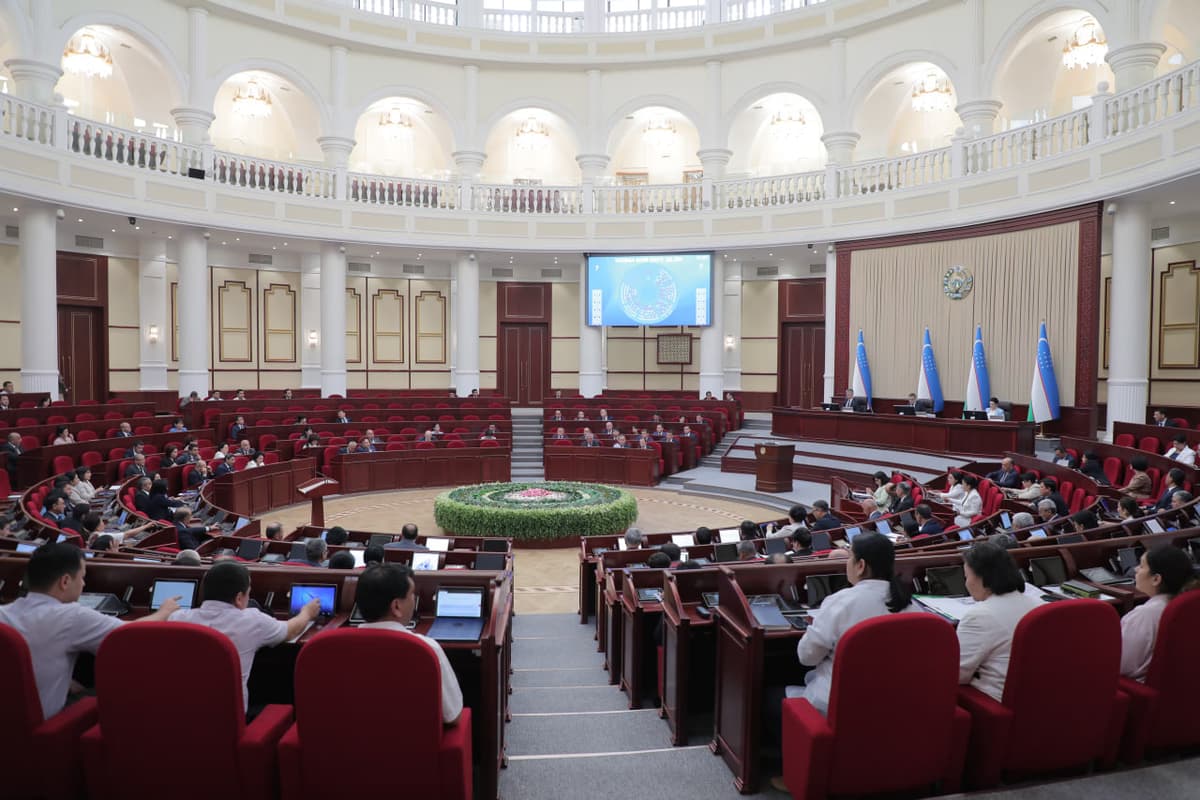
According to the rapporteur, Deputy Minister of Justice Makhmud Istamov, the draft's primary goal is to renovate outdated and dilapidated housing to enhance urban and neighborhood environments, modernize infrastructure, firmly protect property owners' rights and interests at the legislative level, and establish clear and transparent rules for investors and state authorities.
The draft was refined based on public feedback and objections received during discussions. Over 3,000 people participated, submitting 154 proposals and comments. Opinions, concerns, and objections expressed not only on the public discussion portal but also on social media and in mass media were thoroughly analyzed.
The rapporteur highlighted key points, noting that concerns about violations of property owners' rights during renovation were addressed. Proposals such as establishing fair compensation based on market value and defining clear criteria for renovation projects were incorporated.
Under the draft, renovation projects can be proposed by local authorities, residents, or private investors. However, proposals from residents or investors require the notarized consent of at least 80% of property owners in the area – meaning no proposal can proceed without the approval of four-fifths of the residents.
For context, renovation projects in other countries require varying levels of consent: 50% plus one vote in Turkey, 66% or two-thirds in South Korea, 70% in China, 60% in Brazil, 80% in Japan, and 50% plus one vote in New York and California, USA.
Importantly, this vote is solely for submitting a proposal. If approved, a suitable compensation option is negotiated with each property owner, and a tripartite notarized agreement is signed between the local authority, investor, and property owner. No construction or demolition will proceed without 100% property owner consent.