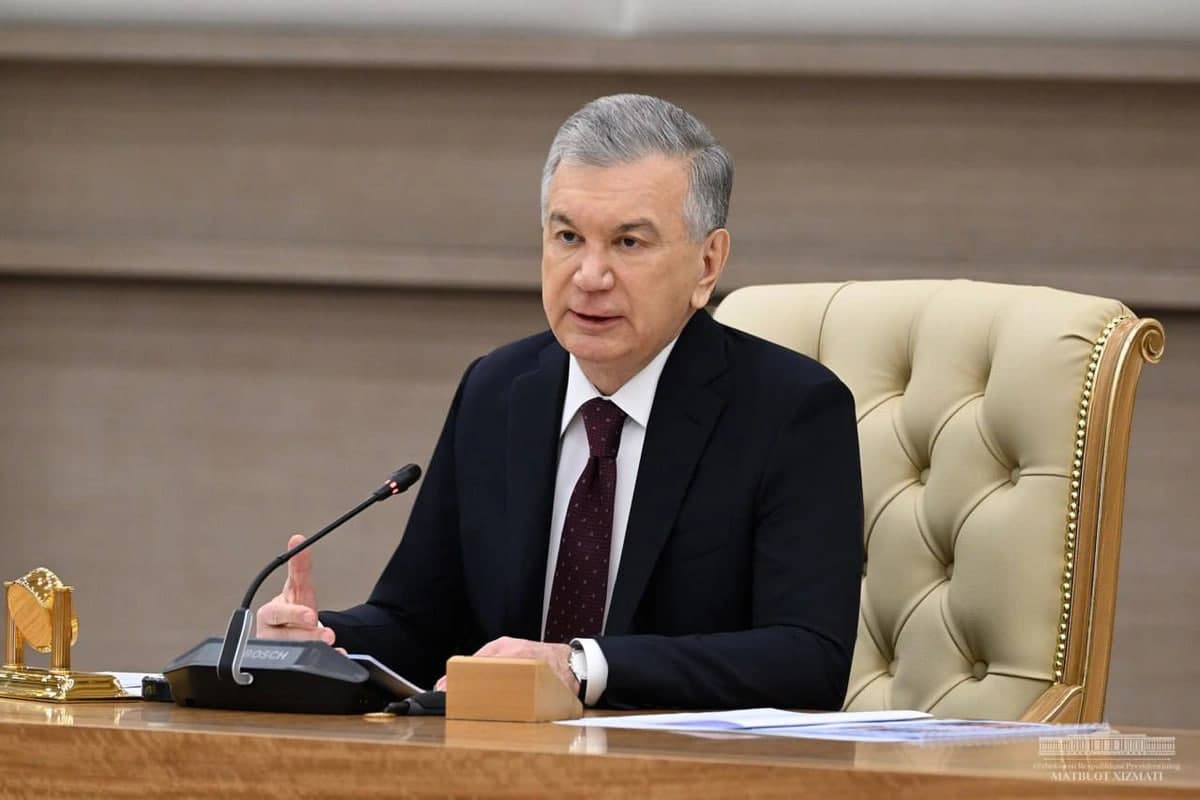
The announcement was made on 15 September during Mirziyoyev’s meeting with teachers and mentors in the Bostanlyk district of Tashkent region, his press secretary Sherzod Asadov reported.
The president stressed the fundamental role of school education in the country’s development.
“The future of our people begins with school. The longest and, one could say, the most decisive stage in the upbringing and education of our children is school education,” he said.
Currently, 6.5 million children study in Uzbekistan’s schools. This year, 720,000 first-graders were enrolled, while about 400,000 students graduated.
According to the president, over the past eight years nearly 500 new schools have been built and existing ones expanded, creating 1 million additional student places. More than 200,000 children study in private schools.
Mirziyoyev noted that from the 2026/2027 academic year, unified state exams will be introduced for grades 9 and 11. Their results will determine whether students are directed toward vocational or higher education, depending on their abilities.
It is expected that around 400,000 ninth-grade graduates will continue their studies at vocational colleges. For those aspiring to enter universities, schools will offer advanced instruction in core subjects. In other words, based on the final exam results, students will be able to enroll either in a vocational college or a university, Mirziyoyev said.
Currently, students must pass three separate exams: the school-leaving exam, university entrance exams, and subject exams for certification. These will be consolidated into one Unified State Exam, reducing redundant procedures and avoiding unnecessary bureaucracy.
At a meeting on 9 September, the president had drawn attention to the low enrollment of school graduates in vocational education.
“We have 598 vocational colleges with capacity for 450,000 students. This is a huge resource, an opportunity and a condition for our youth. But this year, while 608,000 students finished grade 9, only 182,000 enrolled in vocational colleges. From today, the Year of Vocational Education for Youth begins,” he stated.
Relevant ministries and regional governors were instructed to introduce modern educational standards in all 598 vocational colleges, drawing on the experience of presidential and specialized schools.