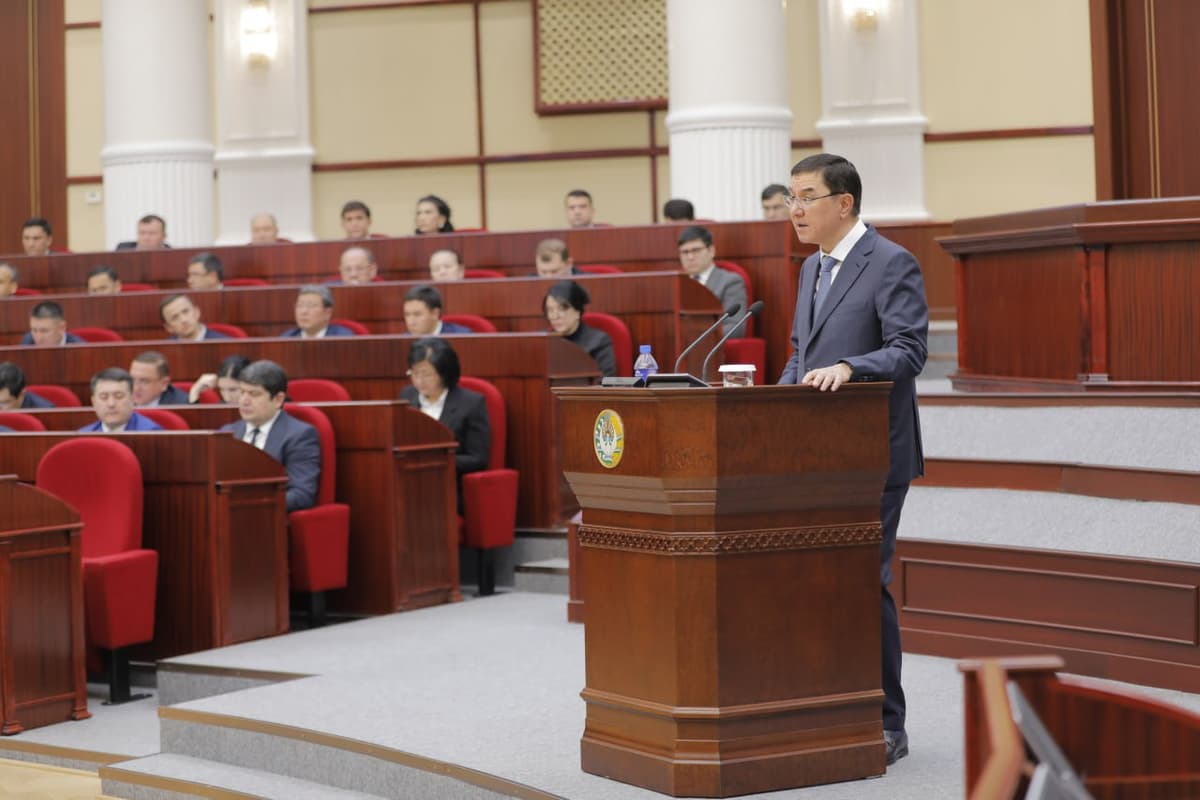
Deputy Prime Minister and Minister of Economy and Finance, Jamshid Kuchkarov, highlighted the budget’s key projections, including an expected economic growth rate of 6.6% and an increase in GDP per capita to $4,686. The services sector is forecast to expand by 14.5%, construction by 10.2%, industry by 6.4%, and agriculture by 4.2%.
The consolidated budget envisages total revenues of UZS 515.4 trillion and expenditures of UZS 567 trillion, resulting in a deficit equivalent to 3% of GDP. The ceiling for new external borrowing is set at $5 billion.
The draft budget outlines measures to support economic growth, maintain macroeconomic stability, and curb inflation, while also aiming to reduce unemployment and poverty. “Green” principles are set to be incorporated across key sectors.
Social spending will account for UZS 220 trillion, or 55% of total budgetary expenditures, with a quarter allocated to education and science, 12.1% to healthcare, and 4.2% to social protection.
The budget also includes steps to increase revenues for local governments, strengthen their fiscal independence, and enhance regional social services. Officials expect these measures to accelerate the resolution of regional social challenges and address existing shortcomings.
Of the 125 deputies present, 124 supported the draft law, with one abstention. For final approval, the budget must pass two more readings and receive Senate endorsement.