





Additional features
-
Night mode

“Buy a robot and get rich” – A new financial pyramid scheme gains popularity in Uzbekistan
A new fraudulent platform operating under the name FastAI has begun spreading across Uzbekistan, promising citizens high returns through the "purchase" of non-existent artificial intelligence robots. This latest scheme follows a string of financial pyramids that have collectively defrauded Uzbek citizens of trillions of UZS.
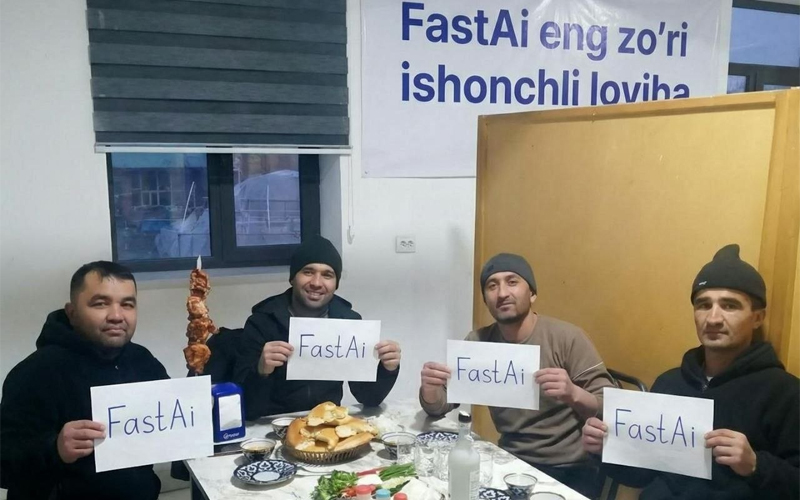
New "garb" for an old scam
In recent years, several financial pyramids in Uzbekistan relied on the false promise of earning money by liking social media posts or watching videos. As the public became more skeptical of these methods, scammers evolved. The FastAI platform represents this new wave of deception, claiming that users can purchase a virtual robot that "works" for them.
The scheme offers various investment tiers. For example:
- Model IA-H3: Costs $50 and is promised to generate $1.7 daily for 90 days, totaling $153
- Premium Model: Costs $1,000 and is claimed to earn $2,200 in just 60 days
In reality, these robots do not exist. There is no evidence of any productive activity, and the "returns" are simply payouts from the capital provided by newer participants – a classic hallmark of a Ponzi scheme.
Hiding behind a legitimate global brand
The organizers have gone to great lengths to appear professional, hijacking the name of the legitimate global online education platform, fast.ai. The fraudulent version claims to be a global AI leader founded in 2018 with offices in the US and UK.
Marketing materials distributed via Telegram groups suggest the company partners with venture capital firms and international stock exchanges to provide "high-frequency trading" via AI. While the real FastAI is a respected educational resource, it does not sell robots or solicit investments.
Recruitment incentives and the "charity" trap
To expand its reach, FastAI uses a tiered referral system. Users who recruit 10 people are promised a $20 bonus, while those who build a "team" of 500 active accounts are offered a $1,000 salary. Currently, daily earnings are being transferred to victims' bank cards via P2P transfers, often traced back to a single individual, Muhayyo Manapova.
Furthermore, the scheme has adopted "trust-building" tactics previously seen in the PGM and Ml Share scams. Under the guise of celebrating holidays like Navruz and Eid, FastAI representatives have distributed food packages to those in need. These charitable acts serve as a "trap" to lure in vulnerable citizens and build a false sense of community and legitimacy.
Rising cybercrime and the struggle for accountability
The emergence of FastAI comes at a time of heightened concern regarding digital fraud. On March 12, President Shavkat Mirziyoyev reviewed proposals to enhance the fight against organized cybercrime.
Official data reveals a staggering trend:
- 48-fold increase in cybercrime reports over the last six years
- 82% of all fraud and 76% of all thefts in the past year were committed in cyberspace
- Over 2 trillion UZS in total material damage to individuals and legal entities
Despite numerous investigations into schemes like XCM and OMD, the primary organizers often remain at large, typically operating from abroad. Jahongir Sagdullaev, Deputy Director of the Ministry of Internal Affairs Cyber Security Center, previously noted that the remote nature of these crimes makes international prosecution difficult.
Ultimately, experts suggest that while law enforcement is tightening controls, public awareness remains the best defense. If citizens stop investing in these "get-rich-quick" promises, the financial pyramids will naturally collapse.

Related News

15:39 / 15.07.2026
Uzbekistan ranks 166th in global prison population ranking

17:45 / 14.07.2026
Interior Ministry: 18 officers died while on duty in six months

12:14 / 13.07.2026
How cybercriminals used hacked accounts and fake documents to steal millions in Uzbekistan

16:25 / 10.07.2026