





Additional features
-
Night mode

Finance and IT remain highest–paying sectors as Uzbekistan’s average salary reaches UZS 6.4 million
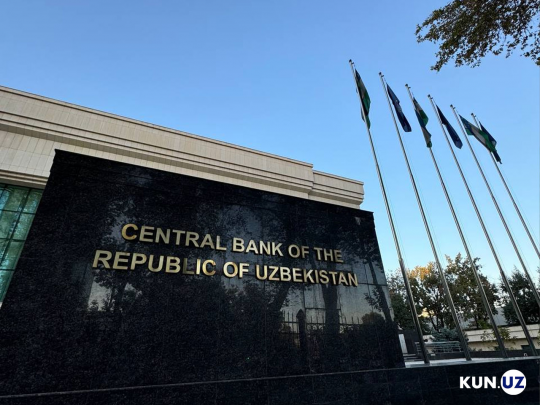
The growth of real wages in Uzbekistan gained significant momentum during 2025, according to the latest Labor Market Review released by the Central Bank. The report stresses a shift toward an upward growth phase in the second half of the year, largely driven by salary indexation in the public sector.

Data from the Central Bank shows that nominal wages in Uzbekistan rose by 18.9% throughout 2025, while real wage growth – adjusted for inflation – stood at 9.3%. By the end of the year, the average monthly salary reached approximately UZS 6.4 million. This performance marks a notable improvement compared to 2024, when nominal and real income growth rates were recorded at 18.5% and 8.1%, respectively.
Sectoral performance and income gaps
The financial and insurance sectors continued to dominate the labor market with the highest average monthly salaries, reaching UZS 17.6 million. This was followed closely by the information and communication services sector at UZS 15.3 million. In contrast, the lowest average wages were recorded in agriculture (UZS 3.4 million) and social services (UZS 4.1 million).
Despite these disparities, the Central Bank noted a positive trend regarding income stratification. While high-paying sectors like trade and information services saw a slowdown in growth rates, lower-paid fields, particularly agriculture and social services, experienced accelerated growth. Specifically, wages for employees in transportation and storage rose by 18.9% in nominal terms (9.3% real growth), while those in social sectors saw a 17.4% nominal increase (7.9% real growth). The construction sector saw the most modest gains, with nominal growth at 9.1% and real growth at just 0.6%.
Regional trends
Geographically, the distribution of wage increases varied significantly across the Republic. The highest rates of real wage growth were documented in the following regions:
- Namangan region – 13.1%
- Sirdaryo region – 11.5%
- Jizzakh region – 11.1%
On the opposite end of the spectrum, the Andijan region recorded the lowest real wage growth at 4.6%, followed by the Republic of Karakalpakstan at 6.2%.
The Central Bank concluded that while significant differences in wage growth across regions and sectors persist, the acceleration of earnings in traditionally lower–paid industries suggests a gradual reduction in labor market polarization. This shift indicates that the benefits of economic growth are beginning to be distributed more broadly across the workforce.

Related News

13:31 / 16.07.2026
Propane records sharpest annual price increase among non-food goods in Uzbekistan

12:21 / 16.07.2026
Central Bank establishes Islamic Finance Council to guide sector development
21:40 / 15.07.2026
Central Bank survey finds 61% of borrowers struggle to repay debts on time
12:34 / 15.07.2026