





Additional features
-
Night mode

Dollar volatility up in Q1 amid stronger FX demand – Central Bank
Demand for foreign currency in Uzbekistan reached $14.62 billion in the first quarter (Q1), according to a Central Bank review of the foreign exchange market. This represents a 24% increase from the same period in 2025.
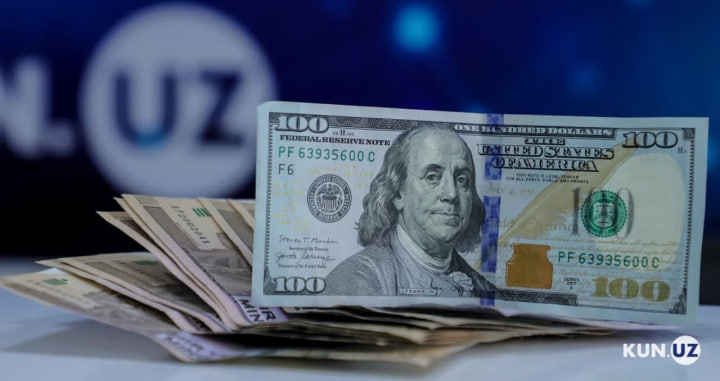
Legal entities remained the primary buyers, purchasing $11.46 billion during the quarter – $2.13 billion (22.8%) more than a year earlier. Meanwhile, individual purchases increased by 30.5% to $3.16 billion. Around 47.5% of the purchased currency was used to finance imports of equipment, raw materials, and production goods. Notably, this share has decreased over time, down from 50% last year and 62% in 2024.
Other significant expenditures included the repayment of foreign currency loans, which accounted for 29% of purchases (up from 25.6% a year ago). Spending on imports of consumer goods and pharmaceuticals remained stable at 19.5%, while 1.3% was directed toward income repatriation by foreign investors.
During the same period, foreign currency inflows into banks grew by 27% year–on–year to $12.16 billion. The volume of currency sold by individuals saw a dramatic rise, increasing nearly 1.5 times to $6 billion. As a result, the positive balance reached $2.85 billion, an increase of 75%. The Central Bank noted that these inflows from individuals provided essential liquidity to the market.
Businesses sold $5.68 billion in foreign currency, up 21.8%. According to the regulator, companies sold $2.2 billion of their export revenues in the domestic market – slightly more than half of the country's total exports. Foreign loans contributed an additional $2.3 billion to the supply, a 65% increase in absolute terms, though the share of borrowed funds in total sales decreased to 22%.
The Central Bank identified rising business demand for imports, fueled by increased investment and consumer activity, as a key factor behind the depreciation of the UZS. However, growth in export revenues and remittances ($3.8 billion, up 13%), combined with external borrowing, helped maintain supply and prevented more extreme fluctuations. In the first three months of the year, the USD–to–UZS exchange rate fluctuated by an average of 0.24% per day, compared to 0.09% during the same period last year.

Related News

13:31 / 16.07.2026
Propane records sharpest annual price increase among non-food goods in Uzbekistan

12:21 / 16.07.2026
Central Bank establishes Islamic Finance Council to guide sector development
21:40 / 15.07.2026
Central Bank survey finds 61% of borrowers struggle to repay debts on time
12:30 / 15.07.2026