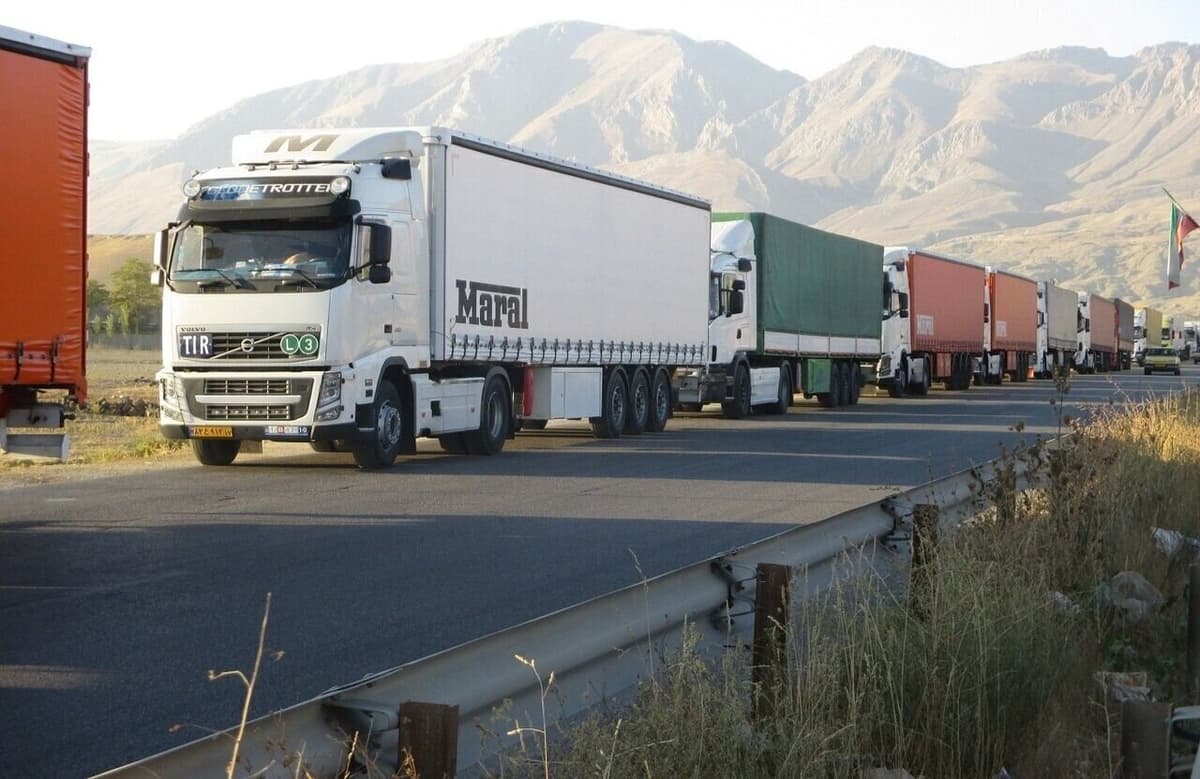
The ministry’s Fiscal Strategy for 2027–2029 highlights Iran’s importance to Uzbekistan’s foreign trade as a transit corridor, despite relatively limited direct trade between the two countries. In 2025, goods worth $3.9 billion imported into Uzbekistan transited Iran, accounting for about 9% of the country’s total imports.
The potential disruption is therefore linked less to Uzbekistan’s direct trade with Iran and other Middle Eastern countries than to Iran’s role as a key transit route and gateway to international markets. Iranian ports serve as important transport hubs for Uzbekistan-bound cargo.
Technology equipment accounts for a quarter of imports transiting Iran
Of the $3.9 billion worth of goods imported into Uzbekistan through Iran in 2025, around $1 billion consisted of technological equipment. This was equivalent to 14.8% of Uzbekistan’s total imports of technological equipment.
Other major categories included food products worth $725 million, chemical products at $339.4 million, metals and metal products at $319.1 million, vehicles and spare parts at $278.7 million, and pharmaceutical products at $259.7 million. Electrical equipment accounted for another $229.7 million.
Other goods made up the remaining $712.5 million.
Uzbekistan also exported $1.4 billion worth of goods through Iran in 2025, equivalent to about 10% of exports excluding gold.
Textiles accounted for the largest share at $546.5 million, followed by metals and metal products at $422.3 million, chemical products at $143.6 million, and fuel and petroleum products at $100.2 million. Tobacco, electrical equipment and other goods accounted for about $181 million.
Regional tensions pose wider economic risks
Direct trade between Uzbekistan and major Middle Eastern countries remains relatively limited. In 2025, Uzbekistan’s combined trade with Iran, Israel, Qatar, the United Arab Emirates, Bahrain, Kuwait and Saudi Arabia totaled $2.1 billion, or 2.6% of the country’s overall foreign trade.