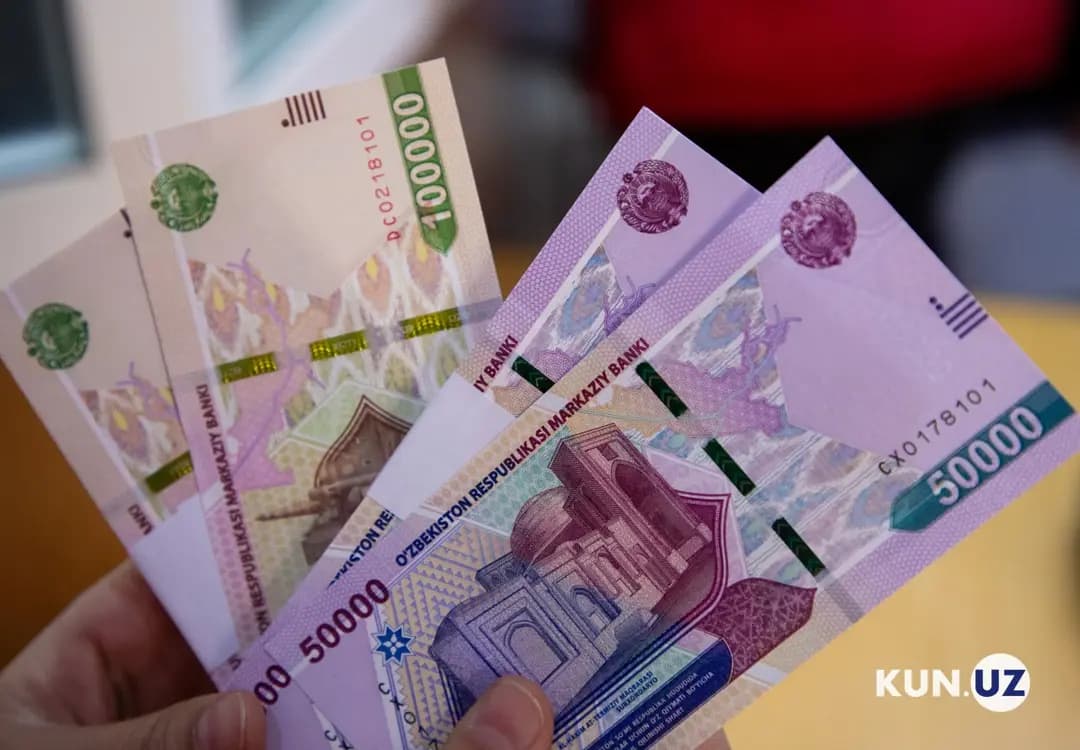

According to a review by the Central Bank, remittances to the country increased by 13%, or $1.1 billion, year-on-year in January–June, up from $8.2 billion in the same period of 2025.
Monthly inflows accelerated toward the end of the first half of the year. Uzbekistan received $1.2 billion in both January and February, $1.3 billion in March, $1.6 billion in April, $1.7 billion in May and $2.2 billion in June.
In the first half of 2025, monthly inflows ranged from $1.1 billion in January and February to $1.8 billion in June.
The Central Bank attributed the growth to continued strong demand for labor and relatively high wage levels in traditional labor migration destinations, as well as the strengthening of those countries’ currencies against the US dollar since the beginning of the year.
In Russia, for example, the average nominal monthly wage reached 106,900 rubles in the first quarter of 2026, rising 15.1% year-on-year in nominal terms and 8.7% in real terms, according to Rosstat.
The Uzbek Central Bank calculated that the Russian ruble strengthened by an average of 13.5% against the dollar in the first half of 2026 compared with the same period a year earlier, based on official exchange rates published by the Bank of Russia.
Remittances from developed countries gain ground
The Central Bank said the geography of labor migration from Uzbekistan is continuing to diversify, with the shift reflected in remittance flows from developed economies.
Between January and June, remittances from the UK increased by 62%, those from EU countries by 27% and those from the US by 19%.
Among individual EU countries, the strongest growth was recorded in transfers from Ireland, which rose by 86%. Remittances from Lithuania increased by 18%, while those from the Netherlands grew by 7%.