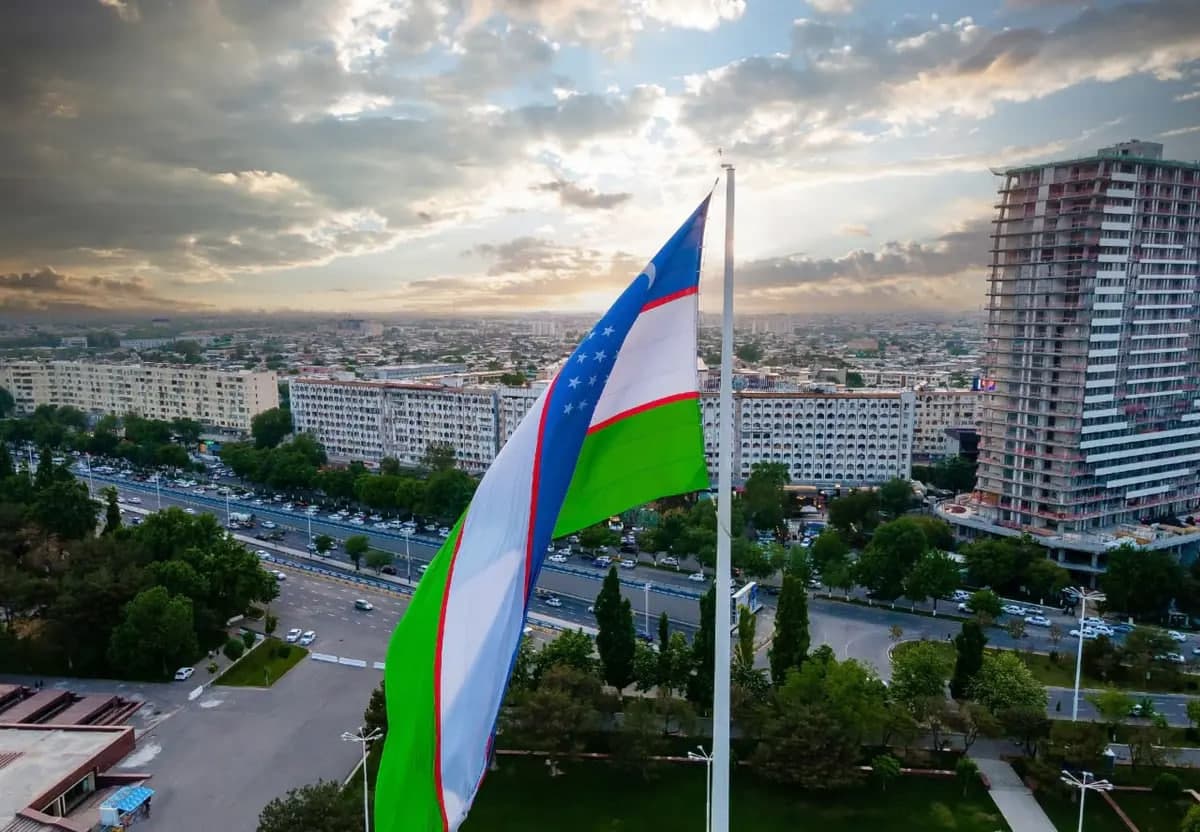

The Uzbek capital was also named among the 28 “Cities to Watch” identified by Oxford Economics as showing strong momentum and potential to climb further in the coming years.
Oxford Economics described Tashkent as one of Central Asia’s emerging urban economic centers. The report noted the city’s economic diversification since Uzbekistan gained independence, alongside rapid construction activity, growing investment across different sectors and sustained population growth.
The report identified Tashkent’s geographic location and skilled workforce as key strengths. At the same time, Oxford Economics said the city’s relatively low GDP per capita could increase the risk of skilled workers leaving for wealthier countries. It also pointed to environmental pressures, including water scarcity, as a major challenge.
The index assesses cities across five categories – economics, human capital, quality of life, environment and governance – with each category scored on a 0–100 scale. The scores are then combined into an overall ranking.
Tashkent scored 54.7 in economics, placing 188th globally, while its human capital score of 61.5 put it in 108th place.
The capital scored 47.5 for quality of life, ranking 644th, and 45.1 for environment, placing 806th. Its lowest score was 40.2 for governance, which put Tashkent in 825th place.
Oxford Economics says the governance category measures the strength of urban institutions, regulatory quality and the stability of conditions for residents and businesses.
The overall index is led by New York, followed by London and Paris. Seattle, San Francisco, Dublin, Boston, San Jose, Tokyo and Zurich complete the top 10.
Among Central Asian cities, Almaty ranked 265th and Astana 281st. Bishkek placed 461st, while Ashgabat and Dushanbe ranked 668th and 672nd, respectively.
Oxford Economics’ 2026 index covers 1,000 cities and is based on both current performance and forward-looking economic forecasts.