The measures were outlined in a presidential decree to support urban greening and expand the role of neighborhoods in the Yashil Makon nationwide program.
Under the decree, the Tashkent city and regional administrations, along with the Council of Ministers of Karakalpakstan, are required to develop “green programs” for cities and districts aimed at expanding areas covered by vegetation. The programs are to be approved by November 1 this year and, starting in 2027, by March 1 each year.
The programs will identify projects for green spaces, alleys, artificial ponds and irrigation systems. They must also specify investment volumes, implementation deadlines, responsible officials and performance indicators.
Each year, 14 cities and districts with the lowest natural levels of greening will receive up to UZS 100 billion from the Nationwide Fund for Addressing Environmental Problems to implement their green programs.
Yashil AI to map planting priorities
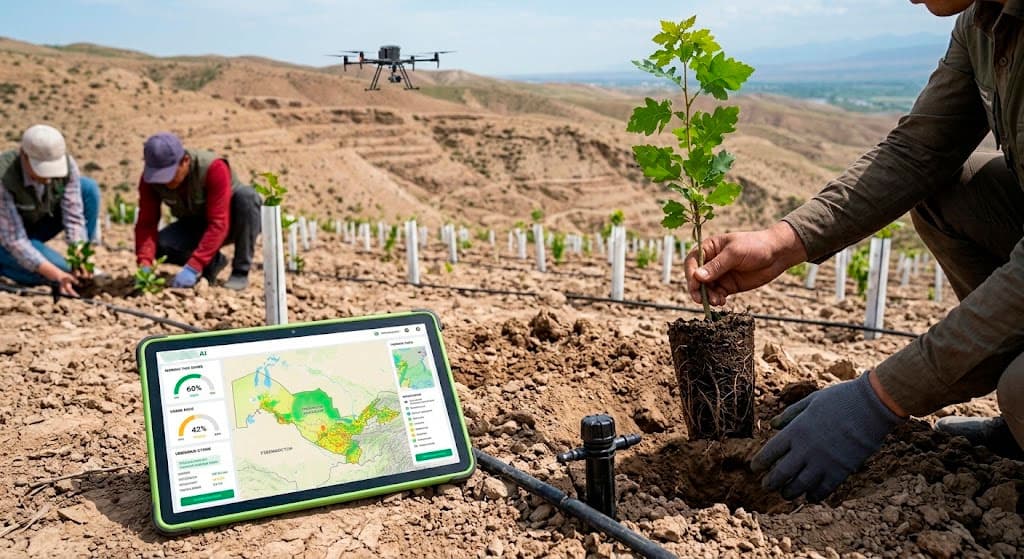
The Yashil AI assistant is scheduled to be launched by the end of March 2027. It will use information on soil types, land quality and water availability to determine suitable locations for greening and forest planting.
The system will combine satellite data with field observations to assess conditions and support planning.
Yashil AI will also recommend tree and shrub species suited to specific regions, calculate the required number of seedlings and determine planting, irrigation and maintenance schedules.
A unified map will allow authorities to monitor projects and forecast their progress, while the system will flag risks linked to water shortages, seedling dieback, diseases and other factors. It will also process public complaints and track the results of measures taken in response.
Green lots to allow sponsored gardens
Starting in 2027, Uzbekistan will introduce a “Green Lot” system under which individuals and organizations will be able to obtain land plots for creating public green spaces. The resulting gardens may later be named after their sponsors.
Such plots may only be used for their designated purpose – creating publicly accessible green areas. They cannot be transferred into private ownership, and construction or other activities unrelated to the designated use will be prohibited.