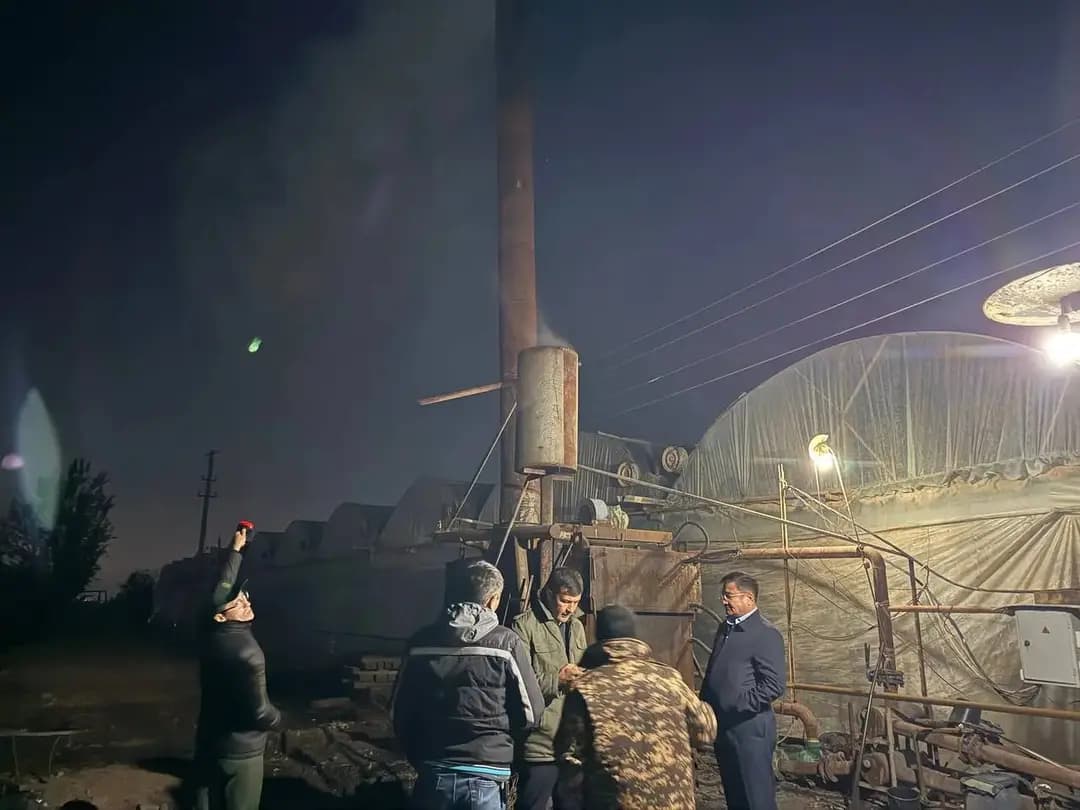
The plan would allow greenhouses to use natural gas, electricity, geothermal and solar energy, as well as waste heat from thermal power plants. Greenhouses currently relying on solid fuels have been asked to switch to these alternatives by December 1, according to a presentation reviewed by President Shavkat Mirziyoyev on October 13.
The measures are intended to curb air pollution during autumn and winter, when weaker winds and temperature inversions can cause emissions from greenhouses to accumulate in Tashkent and nearby areas.
Greenhouses that continue using solid fuel would have to meet strict technical requirements, including enclosed fuel storage, automated boilers, effective dust and gas filtration equipment, safe ash and slag collection facilities, backup generators and chimneys that meet minimum height standards.
Continuous monitoring and financial support
Environmental monitoring is planned from October 15 through March 15, 2027. Inspectors will check filtration systems, emissions levels and compliance with fuel requirements. Data from measuring equipment and surveillance cameras will be transmitted in real time to the Environmental Committee’s information system. Drones and public monitoring representatives will also be involved.
Greenhouses found operating without the required filtration equipment, exceeding emissions limits or burning prohibited fuels could face penalties, including suspension of operations.
To help businesses comply, the government has proposed subsidies of up to UZS 50 million per hectare for environmentally friendly and energy-efficient equipment, as well as concessional loans of up to UZS 3 billion for seven years. Financial assistance would also be available to cover the purchase and installation of monitoring equipment.
Separate support is planned for household greenhouses. Proposals include cutting land and property taxes by 50% through 2030, exempting them from turnover tax and covering half the electricity costs of energy-efficient systems.
Households in Tashkent and surrounding areas could also receive grants of up to UZS 100 million to install cleaner energy sources and efficient equipment. Concessional loans of up to UZS 300 million would be available to build new greenhouses, while loans of up to UZS 150 million would support the modernization of existing ones.