From Khujand to Singapore: how I got into UWC on a full scholarship
|23:37 / 01.10.202622917 min
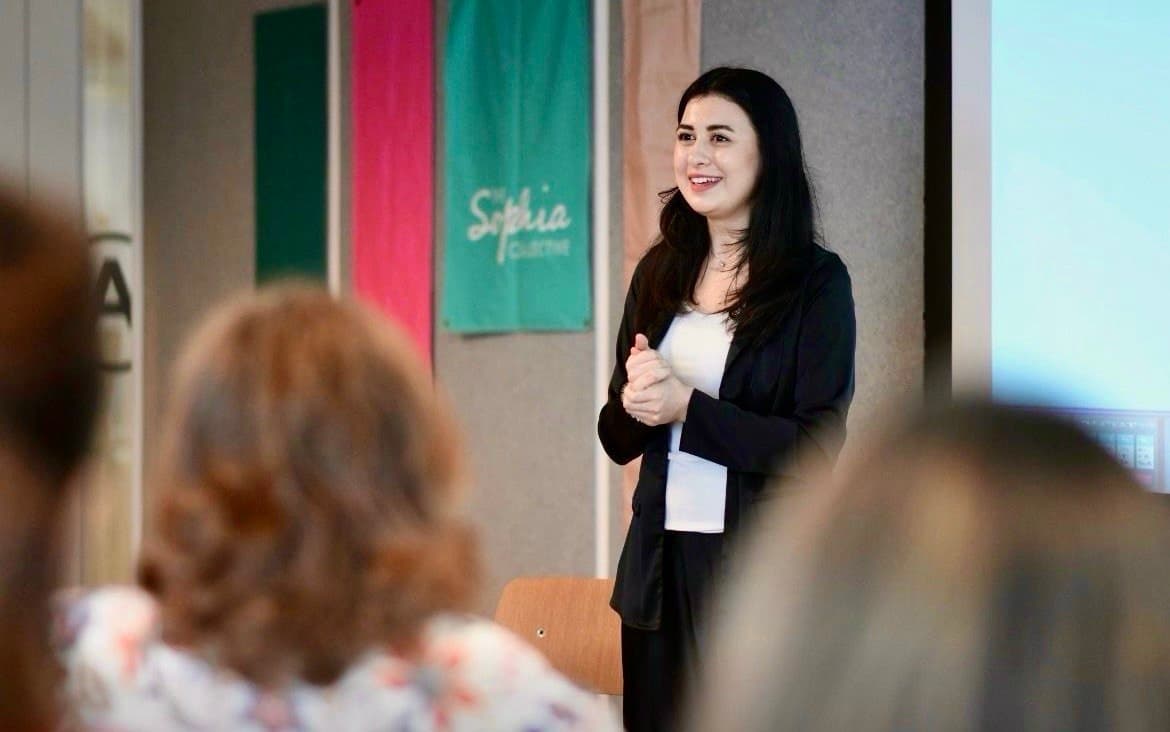
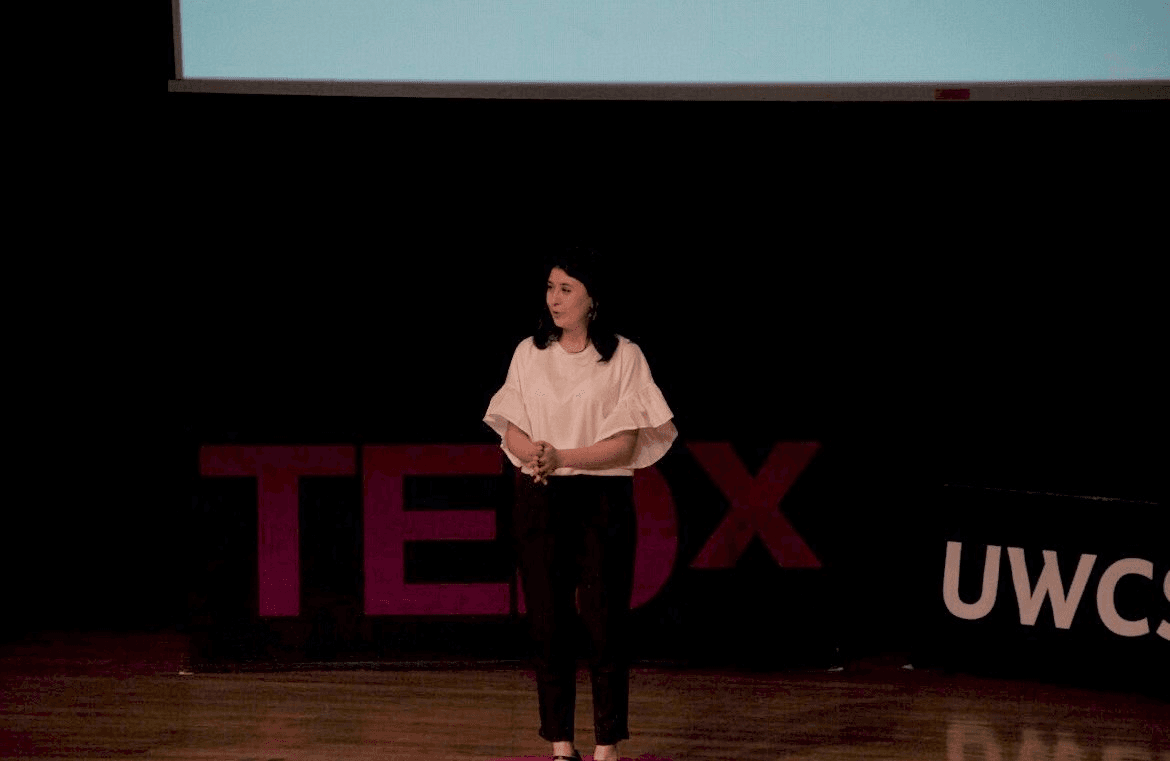
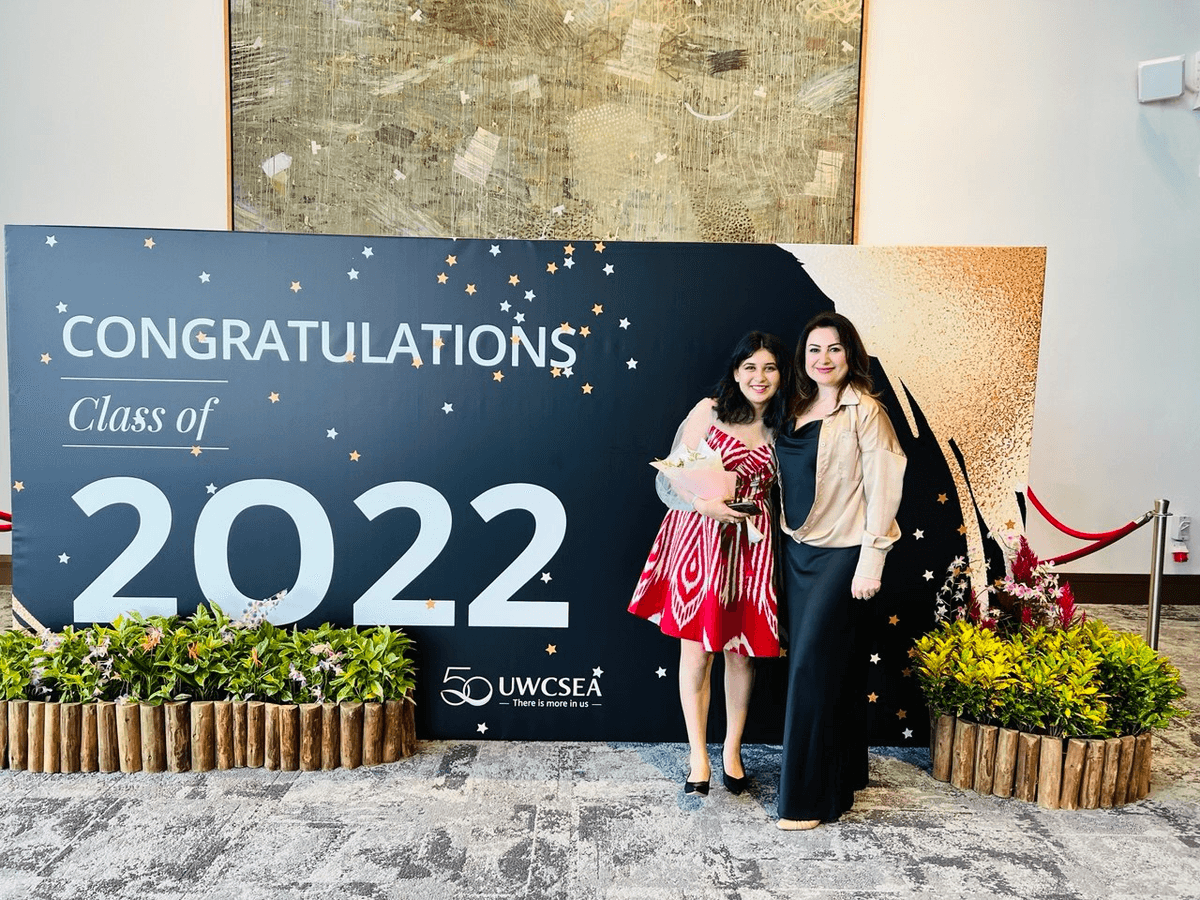
Zebo Furqatzoda told Kun.uz how she went through the UWC selection. My name is Zebo Furqatzoda. I am from Khujand and studied at a physics and mathematics lyceum. At 16 I was admitted to UWC South East Asia in Singapore on a full scholarship worth SGD 168,000.
The selection took nine months. I submitted an application with about 15 essays and two recommendations, passed online tests in logic, mathematics and English, and had a 90-minute interview with a 12-member panel in Dushanbe.
Grades were only the first filter. At every stage the committee asked what I had done on my own initiative: a summer school, Model UN, mentoring and a mobile app I built with my team.
What UWC is
UWC (United World Colleges) is a network of 18 schools and colleges on four continents. Teenagers from dozens of countries live on one campus, study together and take part in community projects.
In the last two years of school, students take the International Baccalaureate (IB). It is built less on memorising textbooks and more on research, critical thinking and project work.
You do not apply to a specific school. You apply through the national committee of your country. You can name the schools you would prefer, but the committee decides where to nominate you.
Scholarships are available. Financial aid is assessed separately from selection, so getting in and getting funded are two different decisions.
What drew me to UWC was one idea: grades were not the only thing that mattered. They also wanted to know who you are, what you are curious about, what you have started without anyone asking you to, and how you treat people around you.
How the selection went
Step 1. Application and essays
Along with my school records, I wrote about 15 essays. I expected the usual questions: why do you want to study here, what are your strengths. Instead, some prompts asked about situations and dilemmas I had never thought about.
I stared at some of them for a long time. Later I understood why they were there. The committee wanted to see what I do when I have no ready answer.
Step 2. Two recommendations
I gave the contacts of two people who knew me well and thought that was it. Later I found out the selection team had called both of them and asked questions about me.
Step 3. Online tests
When I clicked "Start", my camera switched on. Every second was recorded.
First came English: grammar and vocabulary. Then mathematics and logic, where the years at the lyceum helped. I closed the laptop with no idea how it had gone.
Two weeks later I was invited to an interview.
Step 4. Interview in Dushanbe
The interview could only be done in person, in Dushanbe. I went to my school office and explained why I needed to leave the city during school hours. They let me go.
About 15 finalists were invited. Around the table sat twelve people: a psychologist, a business representative, teachers, English and mathematics specialists.
They gave me situations and asked what I would do. They were not waiting for a right answer. They were watching how I looked for one.
They asked how I would cope living alone at 17 in a country I had never been to, "for example, Japan or Singapore". I didn't know then how close that was to my real future.
They asked about leadership, but never in theory. Not "what would you do as a leader", but "when did you actually lead, what did you do, what happened". There was nowhere to hide behind big words.
After an hour and a half they simply thanked me. Then the finalists had two more hours of logic and English tests. I left exhausted and unsure, but for some reason hopeful.
FLEX or UWC
In 11th grade I applied to both FLEX and UWC. I became a FLEX finalist. In Khujand everyone knew FLEX, and it was the safe choice: a year in the United States and a name people recognise.
But somewhere in the middle of the UWC essays, something changed for me. FLEX offered one year abroad. UWC offered two years of living with students from all over the world, studying for the IB and building projects with people who see the world differently.
I chose the programme almost nobody around me had heard of.
What prepared me
People often ask what exactly got me in. They expect one answer: a prize, a certificate, a secret. There isn't one. There were years of doing what I cared about, step by step.
English and mathematics from 14
At 14 I moved to a physics and mathematics lyceum. Around the same time, English stopped being a school subject for me. I wanted to speak, argue and be understood, so after a full school day I studied for another four or five hours.
A summer school in another country
In 8th grade I heard about a summer programme run by the University of Central Asia. They selected about 50 of the strongest students in the region. The programme was for 10th graders.
I applied anyway, passed the tests and the interview, and went abroad alone for the first time. My family hesitated until they saw the schedule and understood it was much more than a summer camp.
For the first time, I was not comparing myself with students from my own city. I was standing next to the strongest teenagers in Central Asia, and my skills were not as strong as I had thought. I came home with a list of everything I still needed to learn.
First place at Model UN
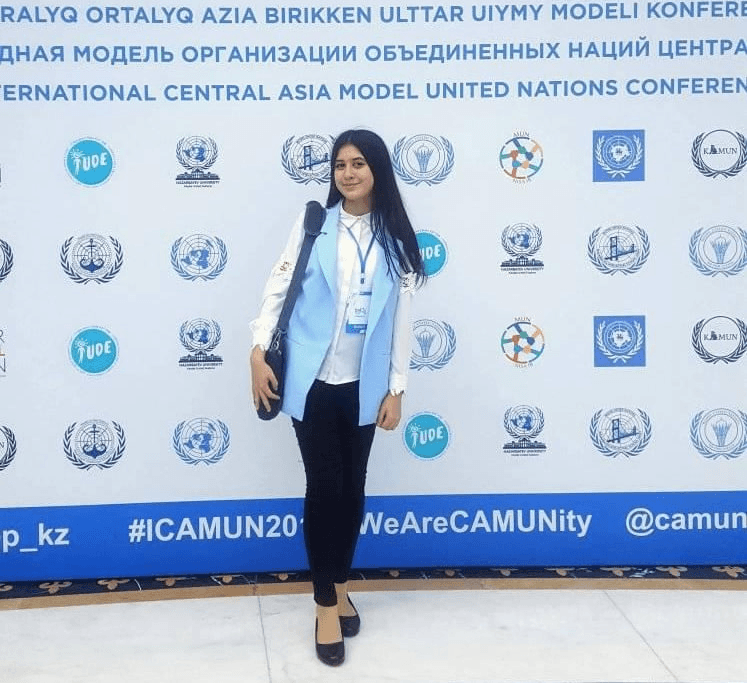
In 9th grade I went to Kazakhstan for a Model United Nations conference. I had done MUN only twice before. The whole conference was in English: each delegate represented a country, researched an issue and defended a position.
My mother came with me and set her own work aside so I wouldn't be alone. I took first place among 420 delegates.
The award was not what stayed with me. "That day I felt a very strong sense of agency: I could shape my reality with my thoughts and the actions that followed them."
Mentoring in remote schools
My mother ran a nonprofit that taught teenagers leadership, entrepreneurship and financial literacy. Sometimes they travelled to villages where the internet barely worked. She often took me along.
At first I was just the teacher's daughter sitting at the back. Then the girls started coming to me with questions, and eventually I was given a module of my own to teach. Those trips taught me to listen and to work alongside people, not above them.
Technovation: an app in nine months
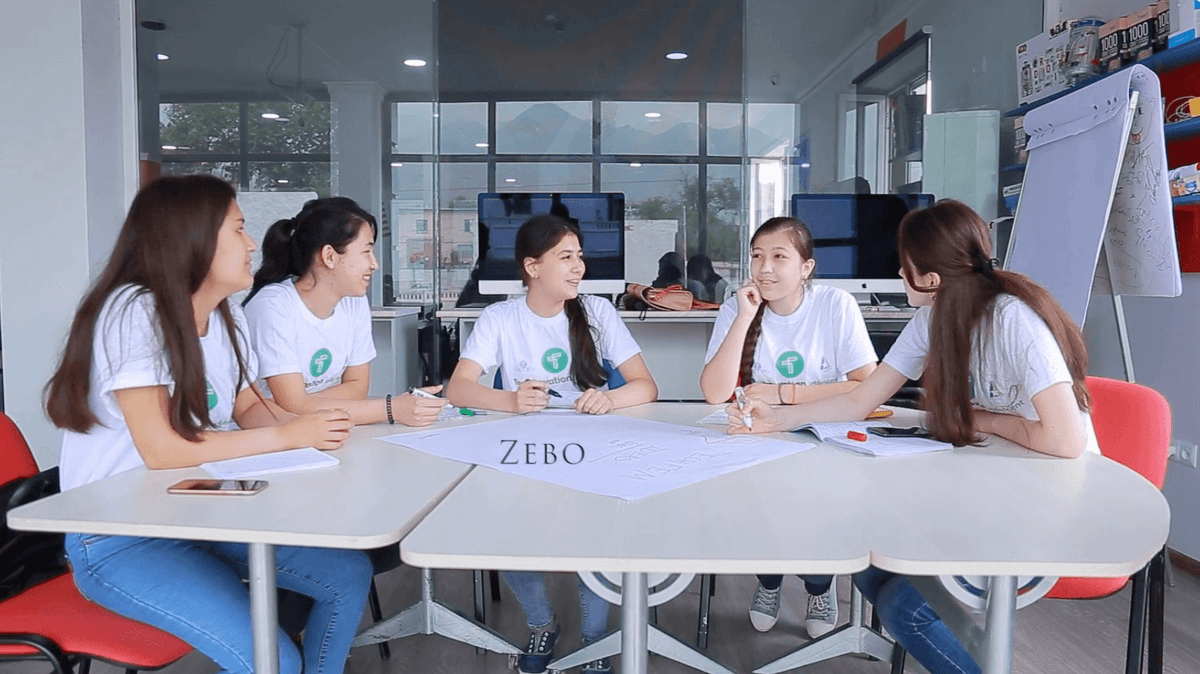
In 2019 I joined Technovation, an international technology competition for girls. That year more than 7,200 girls from 57 countries took part.
Over nine months, a team has to find a real problem, build a mobile app and record a video pitch. I led our team, TechFem. We built MedAlert: one button sends a person's location and details straight to a hospital. In an emergency, nobody should waste seconds explaining where they are.
We became the first team from Tajikistan to reach the semifinals.
My first rejection
One of my biggest dreams was TechGirls, a programme of the U.S. Department of State. The first time I applied, I wasn't even invited to an interview.
I let it hurt for a week. Then I wrote to the mentors and asked why. They answered honestly: strong potential, but not enough experience to show it yet.
I took it as a to-do list. After Technovation I applied again, went through all the interviews and became one of six finalists from my country. Then COVID-19 arrived, and the programme in Virginia was cancelled.
I never went. But I got the most important thing out of it: a "no" is not the end of a story.
Why Singapore
Two months after the interview, the phone rang. The call lasted less than a minute: "You got in. The committee has selected you for UWC in Singapore."
I said "Thank you", hung up and typed into the search bar: where is Singapore. I could not have found it on a map.
Later I asked the committee why they had chosen Singapore for me. They gave two reasons.
The academic level. UWC South East Asia has high academic standards, and they thought it suited someone who loves difficult subjects.
Adaptation. It is a large, established community, and they believed it would help a newcomer from a faraway country settle in.
What the scholarship covers
The full scholarship was worth SGD 168,000. For a family from Khujand, that number changed what was possible. It covers:
tuition;
boarding;
meals;
flights home and back;
living expenses in Singapore.
How I convinced my family
In Khujand everyone knew FLEX, almost nobody knew UWC, and Singapore was just a word. So I did what I knew how to do: I made my family a presentation. What the IB is, where I would live, what I would study, who I wanted to become.
I clicked to the last slide and waited. My mother said two words: "Great. Go."
I was still bracing for an argument and asked: "But how will we explain this to everyone else?"
"Don't worry about that. I'll handle it."
A deal I made with my mother at 14
That "Go" had been promised years earlier. At 14 I told my mother, almost shyly, about all my dreams. She said: "I believe in you."
I asked: "Will you support me?"
She said "Of course", and set one condition. Until I finished school, she would give me every educational opportunity I needed. After school, the choice of where to study would be mine alone, whether Khujand, Dushanbe, India, Korea or the United States.
"Until you graduate in Khujand, I will support you financially. After that, you need to become independent."
At 14 I didn't fully understand what I had been given. It was not just support. It was responsibility for my own future. Since then I have treated every opportunity the same way: dream, go for it, accept the rejection if it comes, understand why and try again.
Three pieces of advice for those who want to apply
Don't rely only on grades. Good grades open the first door. What you do because you care opens the rest. I didn't do any of it to impress a committee.
Use rejection as feedback. When TechGirls said no, I asked why, and the answer became the plan for my next application.
Don't try to look like an ideal candidate. At the interview I didn't play a perfect version of myself. I told the truth with real examples. The panel didn't need someone perfect. They needed someone real.
And one more thing. I know many talented teenagers from Central Asia who sat in the same competition halls with the same dreams but never took the next step. I don't think talent was the difference. I think it was whether someone at home said yes.
"If my mother had told me 'This is too difficult' or 'No one from our city has done this before', I might never have tried."
So to parents: your child may see an opportunity you cannot see yet. At least let them try.
Zebo applied through the national committee of Tajikistan. In Uzbekistan the selection is run by its own UWC national committee, and the steps differ slightly.
Stage
What happens
1. Online application
Form, essays and recommendations at apply.uwc.org
2. Tests
Logical reasoning and English
3. Interviews
Several rounds
4. Nomination
The committee nominates the candidate to one of the UWC schools
5. Financial assessment
Only for those who need financial aid
6. Orientation
For selected candidates
Who can apply: students in 10th or 11th grade.
Deadline: applications for the current cycle closed on September 30, 2026. The next cycle usually opens in the summer. Follow the announcements of the UWC national committee of Uzbekistan.
You cannot choose only Singapore. The committee takes your preferences into account, but the final nomination depends on available places across the UWC system and where each candidate fits best.