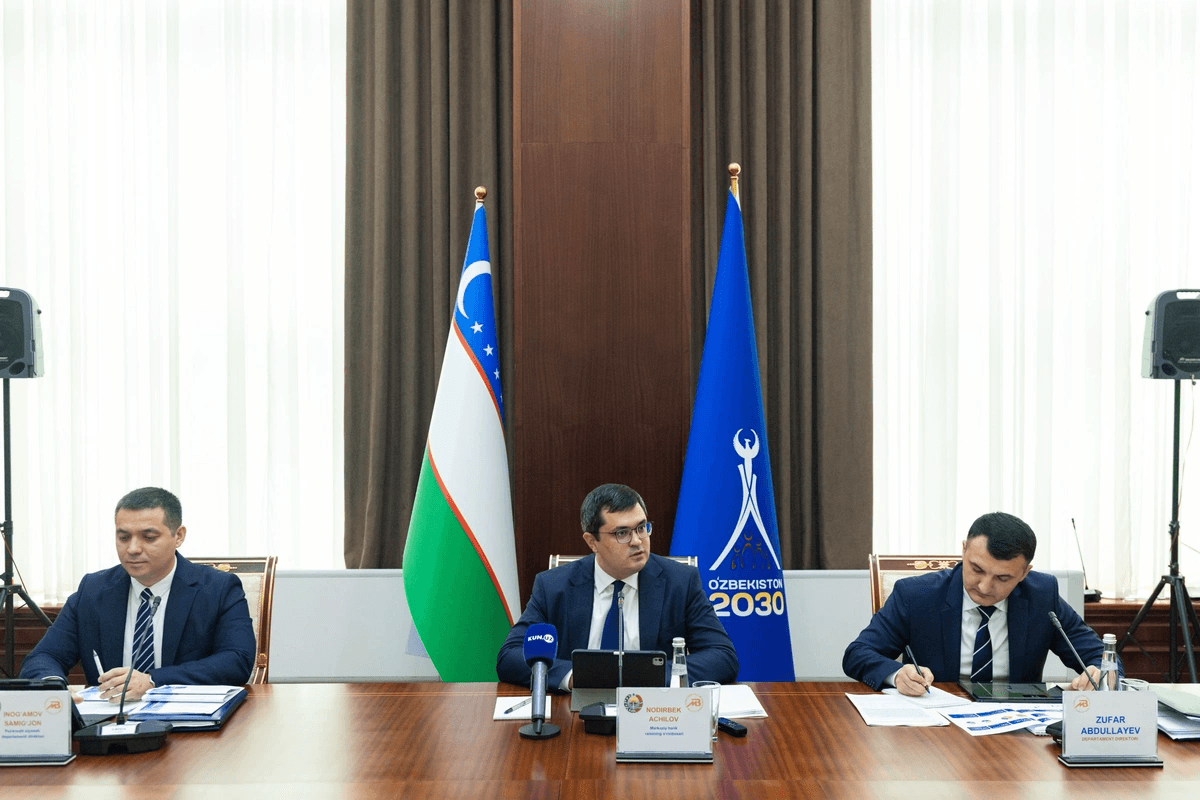
The discrepancy between expected and announced tariff increases was one of the key factors behind the regulator’s decision to maintain tight monetary conditions and keep the key interest rate at 14%, Samigjon Inogamov, head of the Central Bank’s Monetary Policy Department, said at a press conference on November 4.
The Central Bank had already factored increases in heating and hot water tariffs into its initial projections. However, the final adjustments were somewhat higher than expected, prompting the revision, Inogamov explained.
Deputy Central Bank Chairman Nodirbek Ochilov said the revised inflation forecast also accounts for the sharp increase in propane prices, which rose 2.5-fold for household consumers.
Ochilov noted that the utility tariff increases were accompanied by measures designed to ease the burden on households. These include raising the basic electricity consumption allowance from 200 kWh to 350 kWh in areas without gas supply and providing one-off compensation payments to families included in the Unified Social Protection Register.
The Central Bank expects these measures to help cushion the impact of higher utility costs on household incomes, ability to pay and purchasing power.
According to Ochilov, the one-off effects of the heating tariff increases and higher liquefied gas prices have already been incorporated into the current inflation forecast.
“When we talk about a 7% forecast, it is a figure that takes all factors into account,” he said.
The Central Bank also confirmed that its inflation forecast for 2027 remains at 5%, taking into account all changes announced so far.