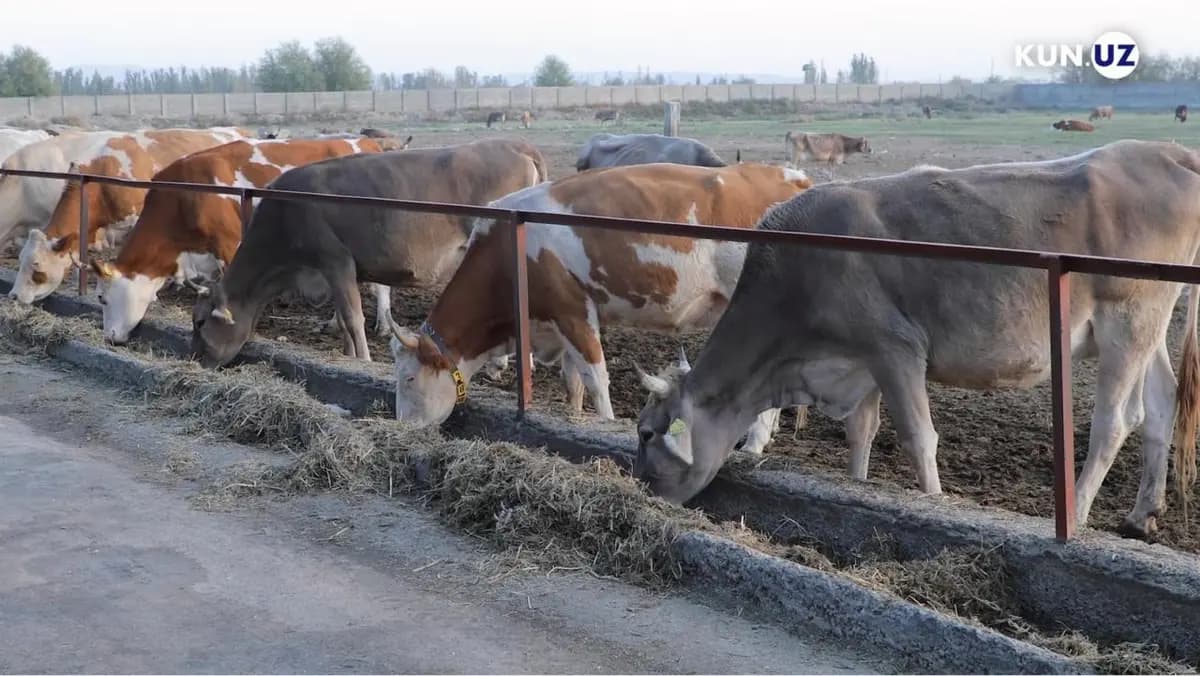
The Resilient Livestock Development Project is expected to benefit around 29,000 small-scale farms in five of the country’s main livestock-producing areas: Bukhara, Kashkadarya, Navoi and Samarkand regions, as well as the Republic of Karakalpakstan.
It will focus on improving farmers’ access to animal feed, strengthening veterinary services and promoting more efficient pasture management.
“Livestock is a vital source of income and food for millions of people in rural Uzbekistan, but the sector is increasingly affected by drought, extreme heat, and water scarcity,” said Kanokpan Lao-Araya, head of the ADB’s Resident Mission in Uzbekistan.
The project will help farmers improve livestock productivity, use land and water resources more efficiently and strengthen their resilience to climate-related challenges, she added.
Planned measures include improving pasture management, expanding the production of drought- and salt-tolerant forage crops, restoring livestock watering points and increasing the availability of animal feed.
The project will also strengthen veterinary and agricultural advisory services through digital technologies. These will include AI-based pasture monitoring, a mobile application providing farmers with recommendations and early warnings, and an upgraded community-level veterinary support system.
Women working in livestock farming will receive specialized training and support in forage production. The project also aims to expand their opportunities to engage in livestock-related businesses and participate in decision-making.
The ADB's $60 million loan will be complemented by a $5 million grant from the Green Climate Fund under its Glaciers to Farms programme and a $3 million grant from the Japan Fund for Prosperous and Resilient Asia and the Pacific, financed by the Japanese government through the ADB.