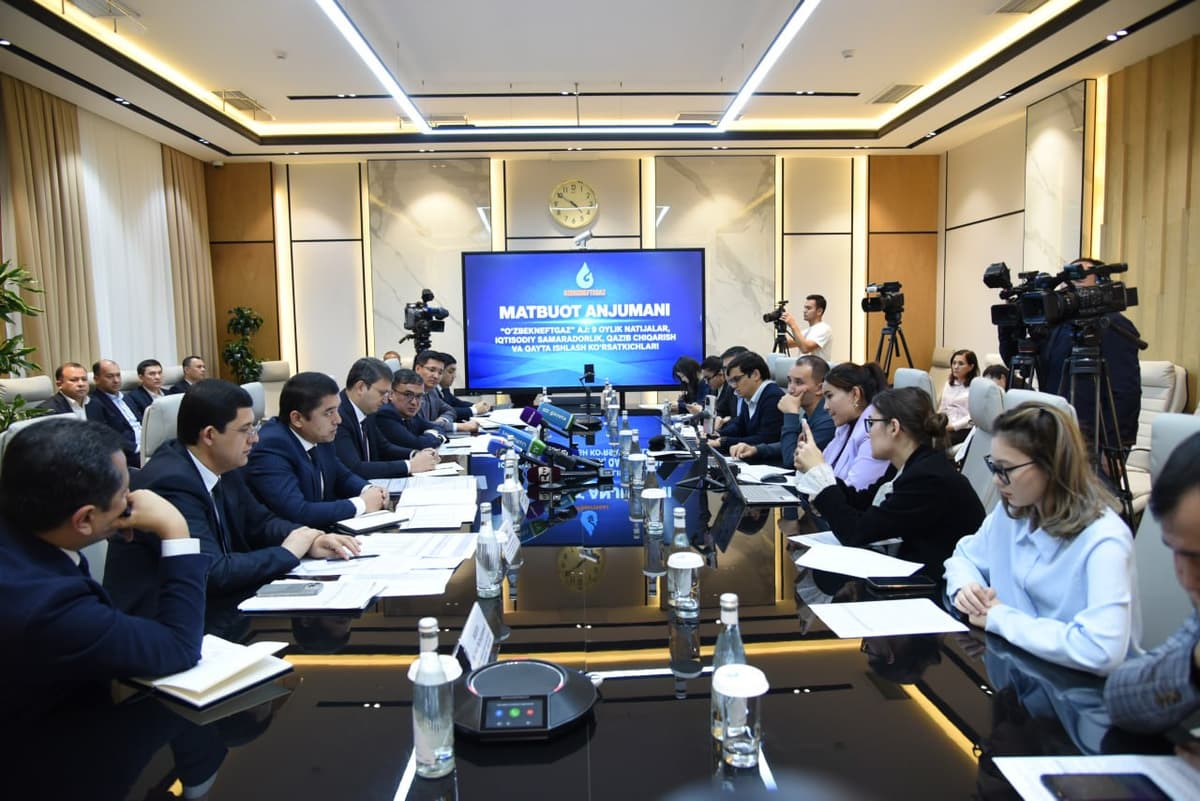
Of the total, $840 million relates to loans taken out by Uzbekistan GTL, while the remaining $260 million was borrowed by Uzbekneftegaz itself.
The company is also renegotiating the terms of existing loans. As of September 30, the group’s outstanding loan debt had fallen by $417 million compared with the beginning of 2026.
Uzbekneftegaz has revised the terms of 41 high-interest loans totaling $384 million from nine banks. The changes have lowered interest rates and saved the company around $18 million in interest payments.
Loans from commercial banks in Uzbekistan previously carried average annual interest rates of 9.5–12%. Following the revisions, rates have fallen to 7.4–7.5%.
The group’s debt burden has also eased. Khamrayev said the debt burden ratio, which stood at 3.1 at the beginning of 2025, is expected to decline to 2.2, based on preliminary calculations.
Production, exports and profits
In the first nine months of 2026, Uzbekneftegaz and its subsidiaries produced goods worth UZS 42 trillion, reaching 105.7% of the target. Industrial output grew by 6% year on year.
Exports totaled $737 million, equivalent to 151% of the target, while investment reached $790 million, or 101% of the planned amount.
Net profit at Uzbekneftegaz itself amounted to UZS 2.9 trillion. The Bukhara Oil Refinery reported UZS 1.9 trillion in net profit, while the Shurtan Gas Chemical Complex posted UZS 1.1 trillion.
Uzbekistan GTL recorded net profit of UZS 3.1 trillion, up 24% from the same period last year.
The group paid UZS 6.9 trillion in taxes and other payments to the state budget during the reporting period, a 25% increase year on year.
Cost-cutting and wage increases
Uzbekneftegaz said it had optimized expenses by UZS 1.9 trillion in the first nine months, against a full-year target of UZS 2.3 trillion. Savings on purchases of materials and other resources exceeded UZS 800 billion.
Despite efforts to streamline its workforce, the company increased its wage bill for existing employees by 21% during the reporting period, following two salary increases since the beginning of the year.