





Additional features
-
Night mode

Leadership, AI, and startups – INMerge 2025 highlights Central Eurasia’s growing role in global innovation
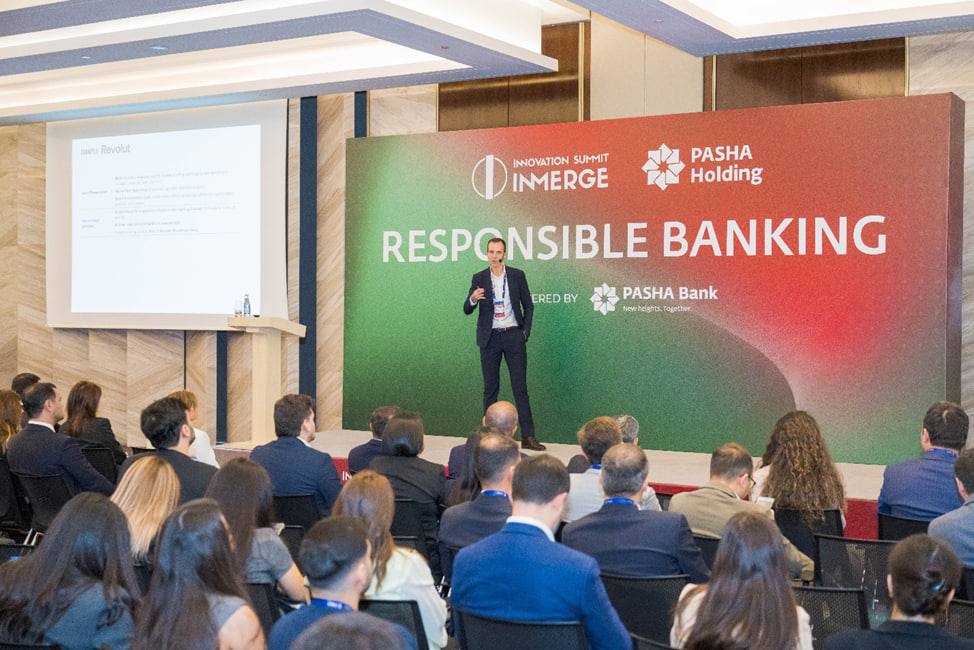
Baku hosted the fifth edition of the INMerge Innovation Summit from September 29 to 30, bringing together leading voices from across the global innovation ecosystem.

Event venue - Baku Convention Center | Bahman Mirzoyev
What is INMerge about?
The two-day summit positions itself as Central Eurasia’s leading platform for innovation and technology, connecting industry leaders, startup founders, investors, and policymakers. It provides a space for dialogue and collaboration while giving startups the chance to pitch their ideas, compete for prizes, and access advanced programs.
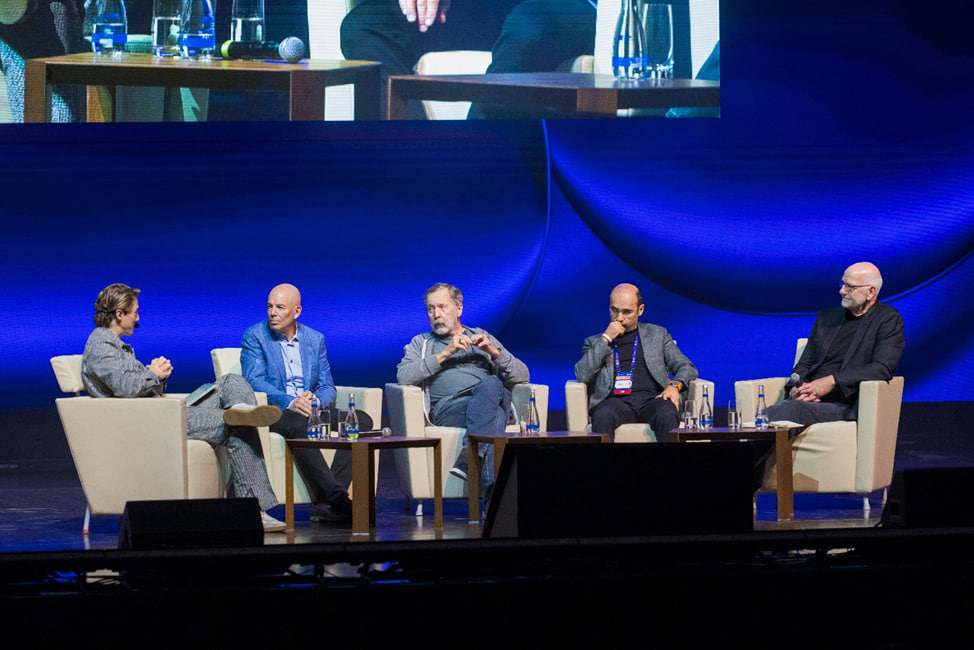
Guest speakers included Mark Randolph, co-founder of Netflix, Hal Gregersen, professor at the Massachusetts Institute of Technology, Ed Catmull, co-founder of Pixar, and others.
An immersive opening
The summit opened with an energetic introduction by the host Matt C. Smith, entrepreneur and athlete, followed by a multimedia techno-show illustrating how technology integrates into every sphere of modern life through an artistic performance symbolizing the fusion of innovation and creativity.

The show was followed by opening remarks from the country’s industry leaders.
Azerbaijan’s Minister of Economy emphasized the focus of the country’s current economy on diversification, an angle dominant among natural resource-rich countries. He stressed the importance of IT and innovation for building a sustainable economy and announced plans for a 1.2 PFLOPS supercomputer to support Azerbaijan’s innovation ecosystem and provide open infrastructure.
Regional collaboration at the forefront
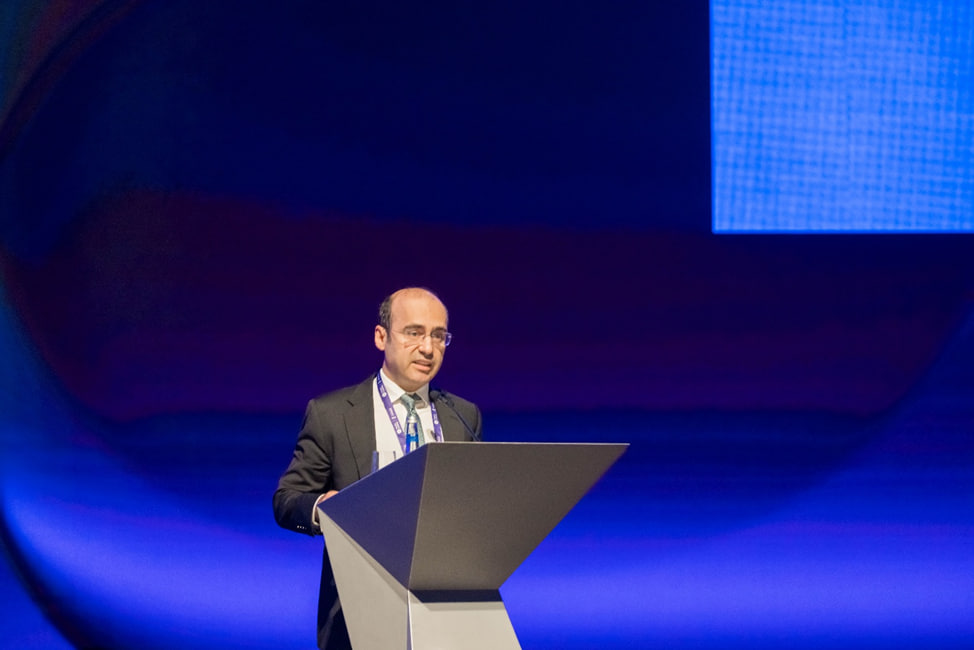
Jalal Gasimov, CEO of PASHA Holding, the organizing company behind the summit, highlighted the importance of unity and cross-border cooperation in Central Eurasia, where countries share historic ties and common values.
He noted that startups born in Baku can scale to Almaty or Tashkent. Ideas tested in Istanbul can reach Tbilisi or Samarkand. “Innovation knows no borders, so why should we?”-he noted at an event that brought together government officials, innovators, investors, corporations, startups, and ecosystem builders from Azerbaijan, Georgia, Türkiye, Kazakhstan, Uzbekistan, and beyond.
Numbers behind the summit
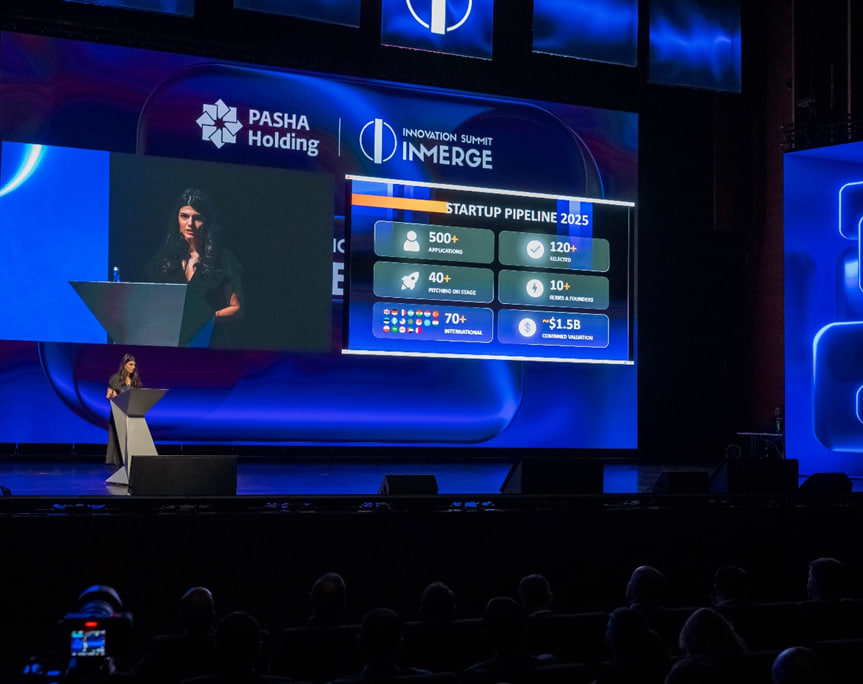
According to organizers, INMerge has attracted over 220 investors, including 51 institutional investors from more than 22 countries. The summit welcomed over 5,000 participants, 150 speakers, 100 startups, and more than 80 venture funds, creating opportunities for collaboration and growth.
Focus on local strengths, lead with purpose: Insights from industry voices
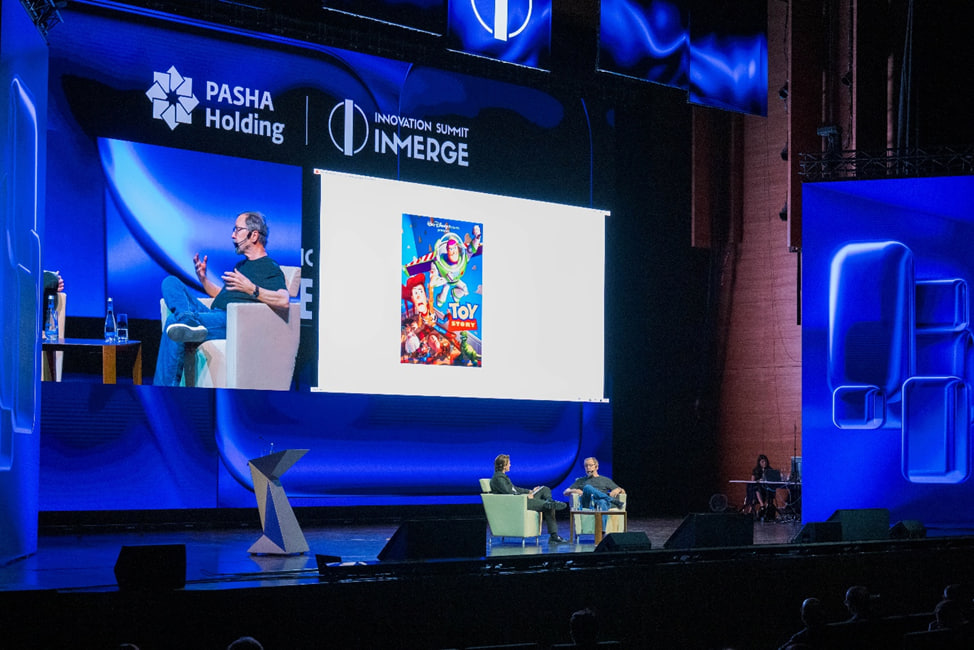
Among the foreign guest speakers was Ed Catmull, the co-founder of Pixar Animation company, who during the main stage panel talked about his experience of company formation and the relationship with leaders and innovators. He, particularly, stressed the importance of being open to people who disagree-the habit of Steve Jobs with whom he worked with. Reflecting on his time at Pixar, he described how Steve Jobs served as a voice for the team, listening carefully, amplifying their ideas, and ensuring they were recognized, showing how creativity and collaboration could thrive even in an environment with limited opportunities.
Among the main topics, artificial intelligence dominated the discussion, emerging as a central theme shaping both opportunities and challenges in today’s innovation landscape.
During the press conference, Kun.uz English, the media partner of the event, asked Zack Kass, former Head of GTM at OpenAI, to share his perspective on the ethical dimension of AI. In response, he stressed that the real debate should focus not on abstract fears or bias alone, but on alignment, transparency, and the dangers of misuse by bad actors.

“When we talk about AI ethics, the real issue is alignment — making sure systems understand human values and the consequences of their actions. Bias exists in every human and machine, but what matters is whether AI can explain its reasoning. If a system can show why it made a decision, even an imperfect one, society can build trust. The real danger is not AI itself, but bad actors misusing it. Because AI gives enormous power to individuals, governments must act strongly to prevent those who try to tear the fabric of society.”
Other media questions touched on the economic and practical aspects of AI, with Kass highlighting opportunities for emerging markets through cheaper model operation, regional language support, and application-focused development tailored to local needs.
Key themes and areas of INMerge 2025
The two-day summit focused on eight major areas: Fintech, Responsible Banking, Data & AI, Industry 4.0, Telecom, Marketing, E-Commerce, and Investment across following themes:
- Fintech: AI-powered banking and collaboration between banks and startups.
- Responsible Banking: Customer-focused services, sustainable growth, and rebuilding trust beyond ESG.
- Telecom: The role of AI, 5G, and cross-industry partnerships.
- Industry 4.0: Data-driven decisions, smart processes, and stronger ties between academia and business.
- E-Commerce: AI-enhanced shopping experiences, cross-border expansion, and new logistics models.
- Investment & Venture Capital: Emerging trends shaping startups and regional growth.
- Marketing: Creativity, trust-building, and employee-driven brand advocacy.
- Data & AI: Scaling enterprise intelligence, ethical use of AI, and building systems for the future.
Dreams, people, and uncomfortable questions: Rethinking leadership, insights from INMerge 2025
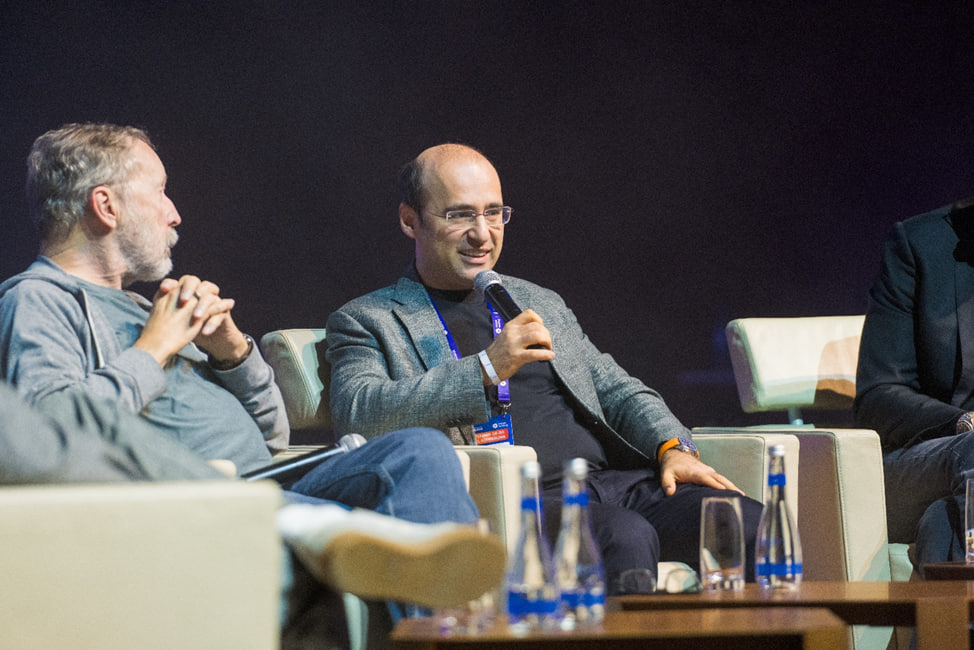
The final day of the summit turned into a deep exploration of leadership and its role in driving innovation and institutional growth. The debate, guided by host Matt C. Smith, revolved around the questions about the leadership and its role in shaping innovation and sustainability.
Ricardo Sunderland of Egon Zehnder suggested that true leaders are those who “have the desire and dreams.” For him, leadership means to cultivate adaptability, learning from hardships, and building the ability to navigate uncertainty. He reflected that one must first understand their own goals, then assess what exactly prevents to achieve the goals, that could even the fear of success as it was in his case and responsibilities that rise with the achievement.
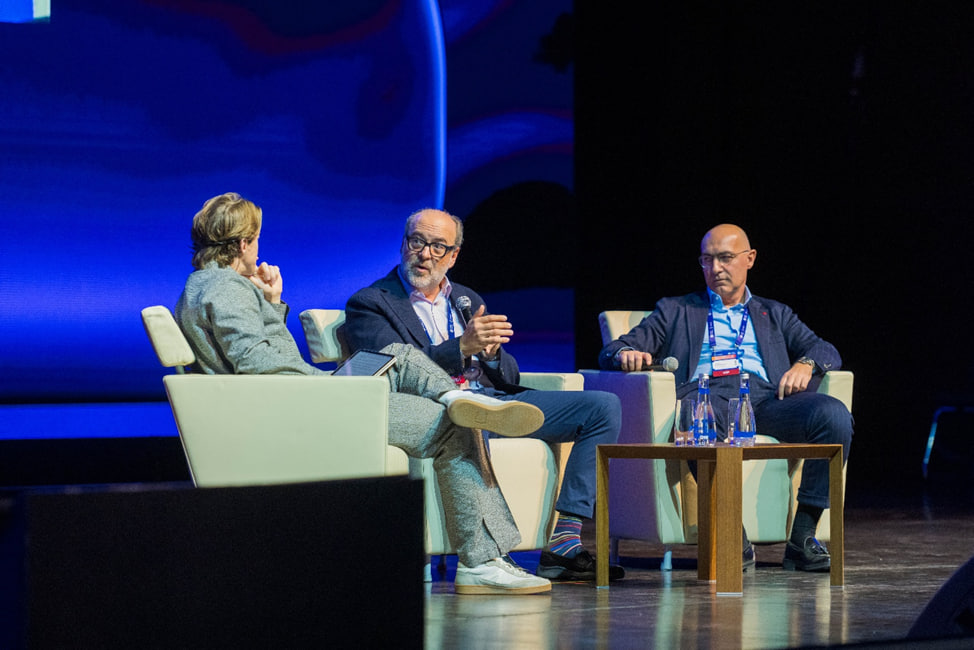
The discussion then shifted to organizations themselves. Farid Mammadov, Deputy CEO of PASHA Holding, argued that leadership only flourishes when companies create diverse experiences, encourage risk-taking, and prioritize people over rigid metrics.
“The organization should work on building leaders based on leadership principles,” he noted, pointing out that KPIs do not define success. Even the most ambitious projects, he reminded the audience, cannot succeed without strong teams and “people-first” approach.
Hal Gregersen’s immersive workshop added another layer, urging participants to step deliberately into uncomfortable situations. By asking difficult questions and accepting moments of ignorance, embarrassment, or error, he argued, individuals cultivate the resilience and problem-solving abilities essential for leadership.
These reflections lent a philosophical depth to the summit. Beyond the technicalities of startups and innovation, speakers emphasized values, personal and organizational, as the foundation for lasting progress. For many young participants, this was a reminder that innovation is not only about ideas and funding, but also about the character and principles of those who drive it forward.
Startups and future collaboration
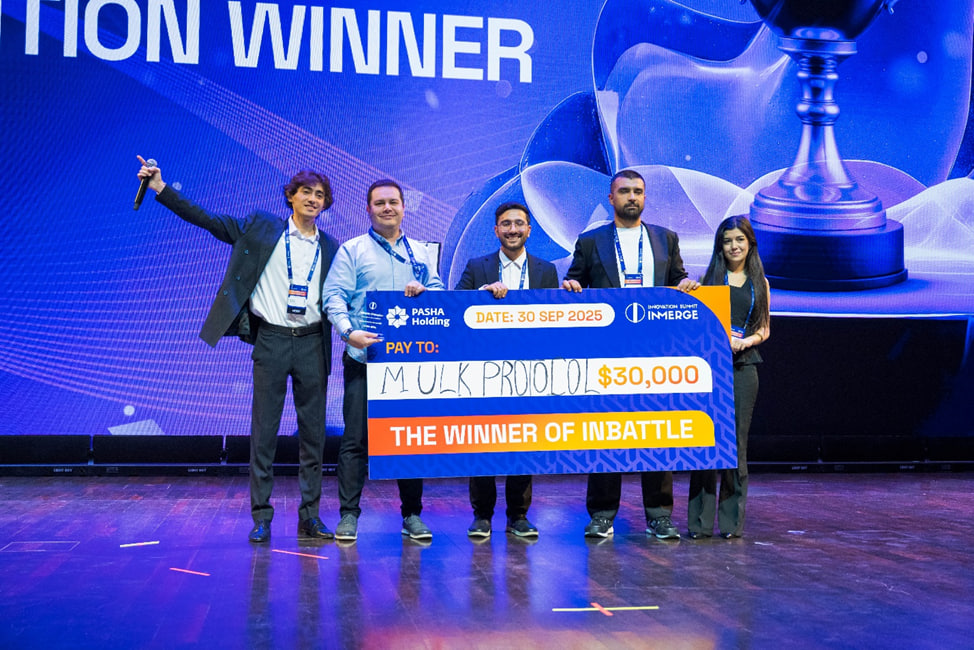
The summit’s highlight was the InBattle Startup Awards 2025, where 40 startups from different countries competed. The top prize of $30,000 went to Uzbekistan’s MULK PROTOCOL, a financial platform that enables property and business owners to tokenize their assets to improve liquidity. The win showed both the region’s growing collaboration and its potential.
Notably, this year’s Baku summit followed an earlier stop in Tashkent, organized with IT Park Uzbekistan. That gathering brought together fintech leaders, startups, and investors from across Central Asia, and ended with a strategic MoU between PashaPay and the Fintech Association of Uzbekistan.
“The future holds strong potential for cooperation between Azerbaijan and Uzbekistan, both politically and economically,” said Jalal Gasimov, reflecting on upcoming joint projects. He pointed to the example of collaboration with the Uzbek company Uzum, where both sides “learn from each other’s successes and mistakes,” despite the absence of a formal legal framework. On a national level, Gasimov highlighted several initiatives: an investment fund with Uzbek origins, a memorandum on data and digital governance, SOCAR’s negotiations on a production-sharing agreement, and a joint venture to transmit renewable energy from Uzbekistan to European markets. “These initiatives, backed by both governments, will bring clear benefits to businesses in both countries,” he concluded.

Central Eurasia in focus: The need for technological advancement
One thing might be clear: to achieve broader goals related to tech advancement and competitiveness, the region must also address the highlighted challenges.
Central Eurasia, with over 100 million people, has strong demographic potential, yet competing with global tech powerhouses requires more than natural resources and numbers. That can be seen as well in the number of unicorns the region has compared to global powerhouses such as the U.S., Europe, or China, around 10, compared to over 1,000 in highly competitive markets across the world.
There are numerous factors, including institutional, regulatory, and infrastructural areas, as well as talent migration, that continue to challenge the region’s progress. Most of these areas extend beyond the tech sector yet have a strong indirect influence on it.
Addressing these and other intertwined obstacles will be essential for transforming Central Eurasia into a competitive technology hub.
Overall, the summit in Baku positioned Central Eurasia as an aspiring hub for innovation, highlighting the region’s ambition to expand its IT and business technology sectors, with the central challenge and opportunity being to translate these goals into sustainable regional impact.
Aziza Normuradova

Related News

11:07 / 30.03.2026
Digital literacy and rehabilitation: Uzbekistan to train 18-30 year old prisoners in tech

21:21 / 27.03.2026
Competition Committee takes action over UZS 25 billion in public procurement violations

16:45 / 26.03.2026
Gov’t targets $5 billion in tech exports through new Enterprise Uzbekistan brand
13:52 / 25.03.2026