




Additional features
-
Night mode

Deputies approve bill on Islamic banking in first reading
Uzbekistan will introduce a license granting the right to conduct Islamic banking activities. With such a license, banks will be able to operate as full-fledged Islamic banks or open Islamic “windows” within existing traditional banks. It is also proposed to allow banks operating under Islamic principles to directly engage in trading activities.
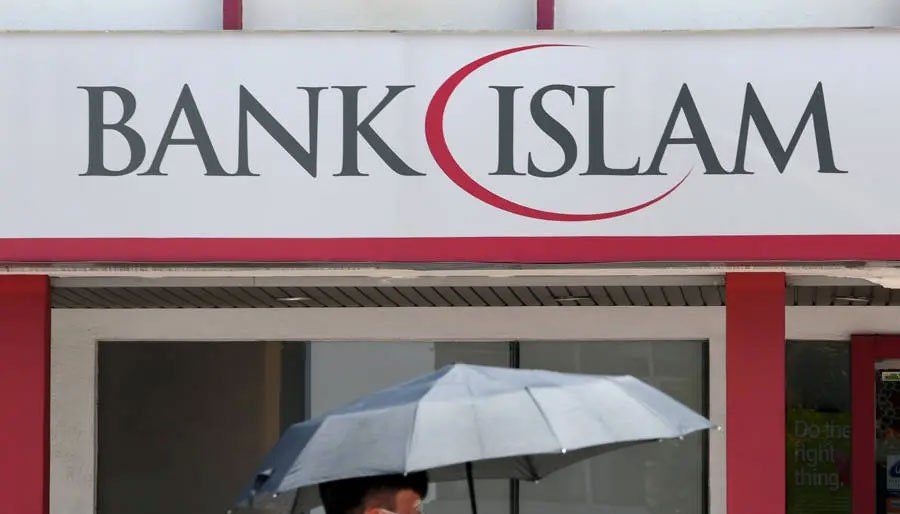
Photo: Getty images
On 16 September, the Legislative Chamber of the Oliy Majlis reviewed a draft law on the introduction of Islamic banking in Uzbekistan.
According to Abrorkhoja Turdaliev, Deputy Chairman of the Central Bank, trade and partnership financing are the main methods in Islamic finance. However, Article 7 of the Law “On Banks and Banking Activities” prohibits banks from directly engaging in trade, establishing legal entities, or participating in their authorized capital, which creates restrictions. In addition, under the Tax Code, the sale of goods is subject to value-added tax (VAT). This makes Islamic financial services carried out through trade more expensive compared to traditional financial services.
Turdaliev noted that the full introduction of Islamic banking requires not only the removal of legislative restrictions but also the creation of institutional foundations through a comprehensive approach. For this reason, amendments based on international practice are needed to the Tax Code, the Civil Code, and eight other laws.
Under the draft, a license granting the right to conduct Islamic banking activities will be introduced in Uzbekistan. With such a license, banks will be able to operate as full-fledged Islamic banks or open Islamic “windows” within existing banks.
The draft also identifies the main Islamic financial operations, including murabaha, mudaraba, musharaka, wakala, and salam. It is proposed to allow banks operating under Islamic principles to directly engage in trade, establish legal entities, and freely acquire shares in companies’ authorized capital.
An Islamic Finance Council will be established at the Central Bank and in commercial banks, with defined tasks and functions. The draft law also provides for the introduction of a special tax regime for Islamic financial operations in Uzbekistan.
According to Turdaliev, the adoption of this document will create the necessary legal basis for the operation of Islamic banking in Uzbekistan in line with international standards.
“This will enable the establishment of Islamic banks, Islamic ‘windows,’ and Islamic microfinance institutions to provide services to the population and businesses. As a result, access to alternative financial services will expand, and new mechanisms for supporting business financing will be introduced,” he said.
Deputies approved the draft law in the first reading.
According to a UNDP survey, 68 percent of Uzbekistan’s population and 60 percent of business representatives do not want to use traditional banking services due to religious beliefs.
It should be recalled that three years ago, work began to introduce Islamic windows in more than ten banks. Surveys among entrepreneurs also showed that 38 percent expressed a desire to obtain resources based on Islamic finance.
The President has also stated that the widespread introduction of Islamic finance in Uzbekistan could generate an additional $5 billion in resources and have a significantly positive impact on the competitive environment in the country.
In May 2024, Behzod Khamroev, Deputy Chairman of the Central Bank, announced that a draft law on Islamic finance had been developed and would be submitted to parliament by the end of the year.

Related News

09:47
Central Bank to tighten oversight on payments exceeding UZS 10.3 million
17:37 / 26.03.2026
Central Bank imposes fines on 11 commercial banks

17:30 / 26.03.2026
Central Bank backtracks on mandatory P2P transfer descriptions following public pressure
16:45 / 26.03.2026