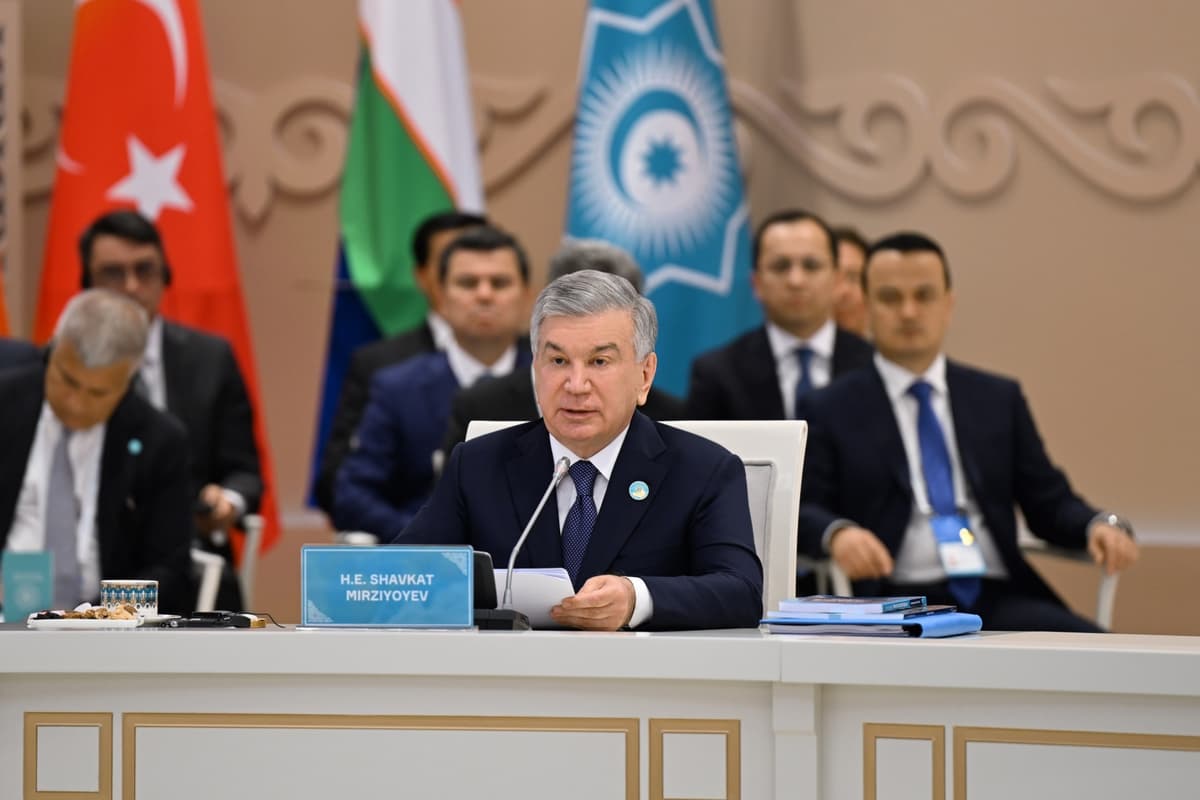
Charlotte Kan: Hello, welcome to the II Uzbekistan Economic Forum in Samarkand. I am glad that the Vice President of the Asian Development Bank Shixin Chen is also participating here. Thank you for joining us.
Shixin Chen: Thank you.
Charlotte Kahn: So what are the current priorities for ADB in the region?
Shixin Chen: The region is going through a very difficult period due to the COVID-19 pandemic and subsequent external shocks. This makes the situation more difficult than ever in terms of trade, tourism, remittances and supply chain disruptions. All this adds up and makes the situation confusing.
Overall, the region faces growing budget deficits, currency volatility, and supply chain challenges. This leads to a very difficult situation in terms of security and energy supply. Also in terms of how governments support the structural reform agenda. These are very difficult times, but when we look at the crisis and challenges in the ADB, we are also talking about opportunities.
In this regard, we should pay more attention to what can become a window of opportunity in this very difficult time. At the same time, I think there are several areas where we can explore ways to focus on developing the economy and other sectors in the region. The most important thing is to try to change the development model from the traditional way. This is a good opportunity to understand that we should be green, and there are some opportunities here.
For example, in the Caucasus and Central Asia region, there is a perspective in the network of renewable energy sources, which can attract a large amount of investment. In fact, the private sector is very interested in this. There are conditions for investment and, at the same time, to improve energy efficiency. We can see hydropower as an example. The system is outdated and requires some upgrading, increased production, and an alternative source of water supply.
In terms of demand, we have the idea of e-mobility, that is, e-business, e-motorcycles and e-shopping. These are from the demand side. You see, this is a huge opportunity. But the question is, we need to reform our work and how it will help to implement the investment programs. Then we get green growth. This is a very important thing.
The second aspect we are thinking about is human capital development. We are facing a deficit due to chronic underinvestment in human capital. If you invest in education, the growth curve deepens. This is how we grow faster. We can fix this somehow. We are focusing on the high quality of education in the region to develop human capital, especially education. This allows to supply the market with young qualified personnel and meet the demand.