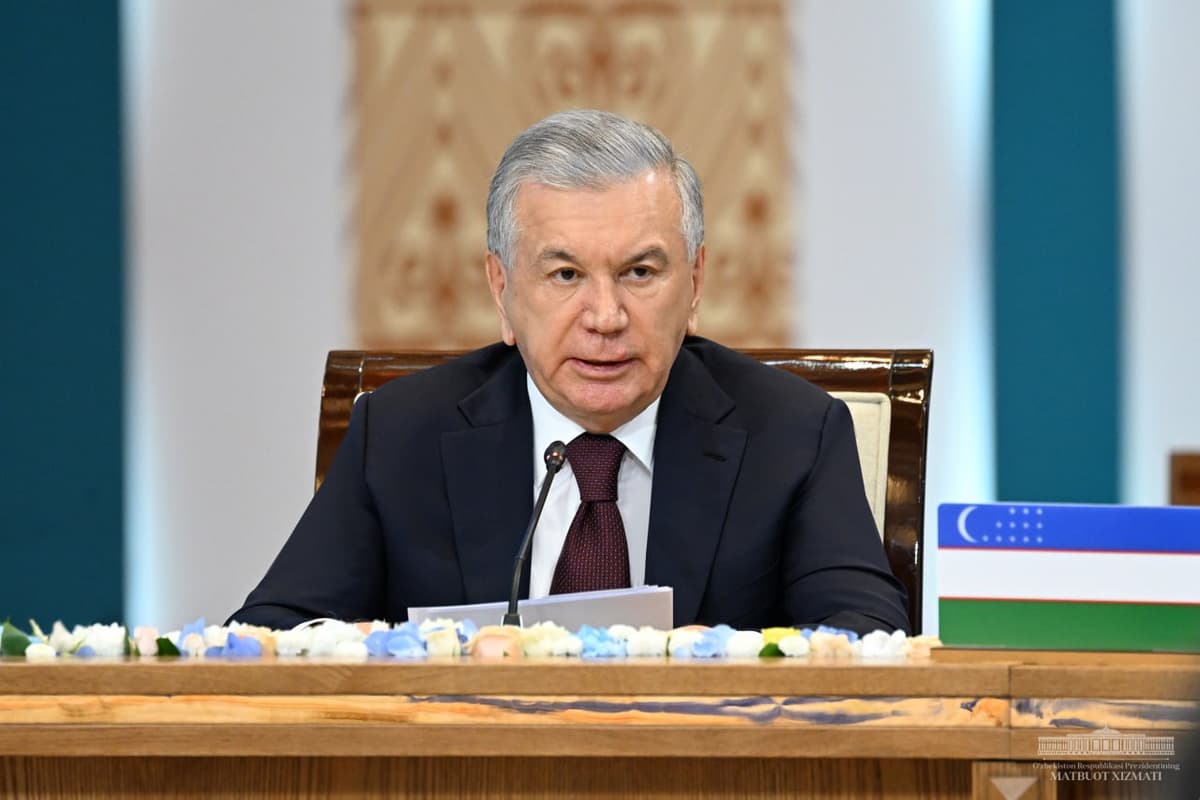
In his address, Mirziyoyev emphasized the historical links between the two regions, noting that intellectual exchanges between Central Asia and Germany date back to the 18th century. He recalled cultural connections such as Handel’s opera dedicated to Amir Temur and Goethe’s writings on the region’s ancient cities. These deep-rooted ties, he said, provide a solid foundation for the multifaceted cooperation that is now being forged between Central Asia and Germany.
Focusing on six priority areas, Mirziyoyev first stressed the importance of long-term strategic cooperation for ensuring stability and sustainable development in Central Asia. He proposed adopting a comprehensive Concept for Developing Cooperation, supported by a "Central Asia-Germany Forum of Analytical Centers," and suggested holding its inaugural meeting in Khiva, Uzbekistan. This forum, according to Mirziyoyev, would play a crucial role in deepening regional cooperation and promoting dialogue on shared challenges and opportunities.
Investment and technological partnerships between Central Asia and Germany formed the second key area of Mirziyoyev’s vision. He highlighted the significant presence of German companies in Uzbekistan, with over €20 billion in ongoing projects across various sectors, including energy, chemicals, and agriculture. To further boost economic cooperation, Mirziyoyev proposed creating a roadmap for expanding investment ties and launching a "Central Asia-Germany" business dialogue platform. He also suggested adopting an intergovernmental agreement to protect investments across the region.
The third priority identified by the Uzbek President was the development of the region’s mineral resources with the help of German expertise. Central Asia’s rich reserves of raw materials, including rare earth metals, offer significant opportunities for collaboration. Mirziyoyev called for joint projects in geological exploration, mineral processing, and the creation of a digital map of the region’s key raw materials. He expressed Uzbekistan’s readiness to support Germany in securing these resources for the EU market.
Mirziyoyev also focused on the potential of "green" energy partnerships, the fourth strategic area of cooperation. He proposed the establishment of an Energy Dialogue between Central Asia and Germany to enhance collaboration on renewable energy development, including solar, wind, and hydrogen projects. The Uzbek leader expressed interest in German technical assistance to help Central Asian countries transition to a low-carbon economy and modernize their energy infrastructure.
Addressing climate change, the fifth priority area, Mirziyoyev underscored the pressing need for joint efforts to mitigate the impacts of global warming on Central Asia. He welcomed Germany’s support through the “Green Central Asia” initiative and called for greater cooperation in environmental education, water resource management, and biodiversity preservation. He also voiced support for the creation of the Central Asian Nature Partnership, a project initiated by Chancellor Scholz to strengthen environmental cooperation in the region.