





Additional features
-
Night mode

2025 in review: Structural change at home and across the world
What happened during a year full of events, ups and downs, victories, and losses? We tried to compile some of the key global and local developments.
The political landscape changed early and decisively. In January, Donald Trump returned to the White House, launching a sweeping overhaul of the U.S. federal system. Elsewhere, power realignments followed suit: Germany voted for a new chancellor, while the Vatican broke with centuries of precedent by electing its first American pope, stressing a broader redistribution of political influence in the West.
Meanwhile, one of the world’s most devastating conflicts reached a critical juncture. After two years of war, a U.S.-brokered ceasefire in Gaza came into force on October 10. Although the truce remains fragile and violations are reported regularly, the focus has shifted from sustained bombardment to the long, complex task of reconstruction.
Political pressure also rose from below. A wave of youth-led, Gen Z–driven protests swept parts of Asia, culminating in the collapse of Nepal’s government following a controversial social media ban and triggering a month-long pro-democracy uprising across Indonesia. These movements signaled a generational challenge to entrenched political systems and digital governance models.
Technology, too, crossed a threshold. In 2025, artificial intelligence moved beyond experimental chatbots into the era of autonomous AI agents. New systems such as Google’s Gemini 3 and China’s DeepSeek demonstrated the ability to perform complex, multi-step tasks independently – from booking travel and managing supply chains to writing full software architectures. This shift reshaped markets as well as mindsets. Nearly $600 billion was wiped off Nvidia’s market value in a single week as competitors showed that advanced AI no longer depends on the most expensive hardware, turning the race for intelligence into a race for efficiency.
For Uzbekistan, the year carried particular weight. Tashkent strengthened direct strategic ties with the United States, the United Arab Emirates, and Japan, reinforcing its increasingly diversified foreign policy. Samarkand hosted the UNESCO General Conference, the first time the event had been held outside Paris in four decades, cementing the city’s growing role as a global diplomatic and cultural venue.
Sport offered some of the country’s most visible successes. In June, Uzbekistan’s national football team, known as the White Wolves, qualified for the FIFA World Cup for the first time, ending a 30-year wait. In chess, 19-year-old Javokhir Sindarov stunned the global community by winning the FIDE World Cup in India, becoming its youngest champion. Karate athlete Gulshan Alimardonova also made history as the first Uzbek woman to claim gold at a World Karate Championship. Combined with a strong second-place finish at the Asian Youth Games, these results signaled Uzbekistan’s growing presence in international sport.
Yet the year also exposed unresolved challenges. Air quality in Tashkent deteriorated sharply, turning environmental concerns into a public and political issue. Citizen appeals and growing activism pushed ecological problems into the national conversation, highlighting the costs of rapid urbanization and weak environmental governance.
The year 2025 showed us that the old rules are being rewritten. From the ceasefire in Gaza to the rise of new economic players, it was a year of structural change. These events have set the baseline for the global economy and geopolitics heading into 2026, which is just around the corner, and it’s going to be even faster.

Related News
15:42 / 06.07.2026
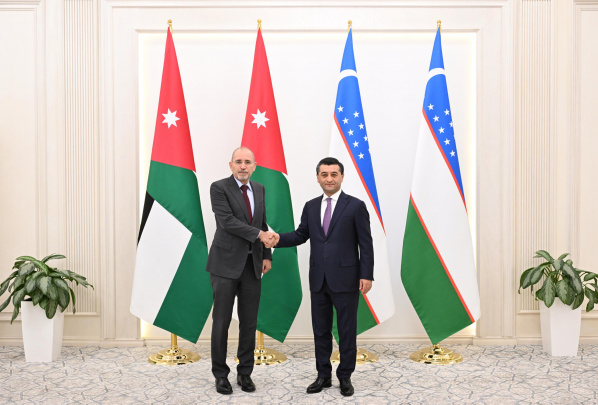
Uzbekistan and Jordan seek closer ties in trade, transport and regional diplomacy
18:46 / 03.07.2026
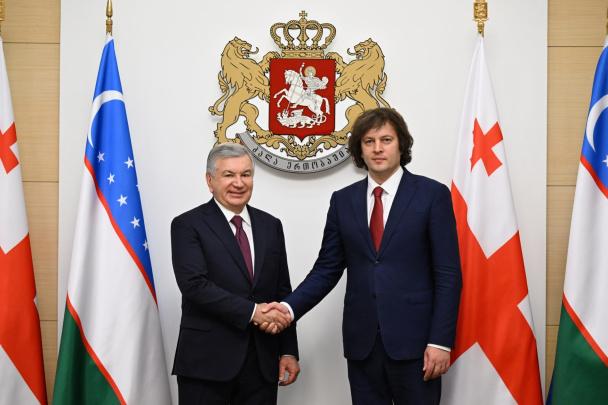
Uzbekistan and Georgia sign strategic partnership declaration

11:24 / 02.07.2026
Businesses in Uzbekistan accelerate AI and cybersecurity investment to gain competitive edge
16:27 / 01.07.2026