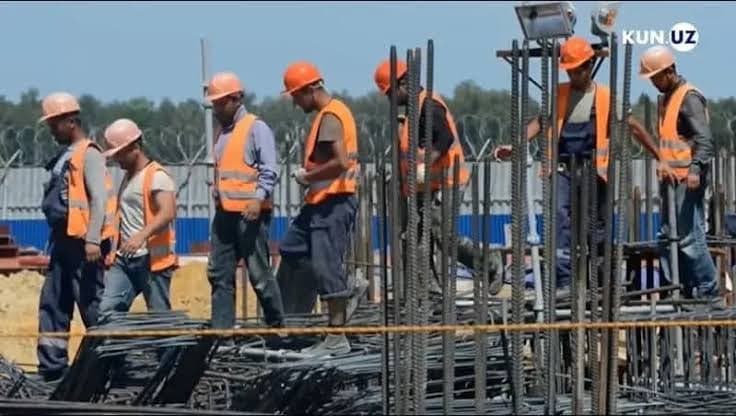
On January 28, Russian law enforcement officers conducted a raid at the Central Market in Kazan, Tatarstan, during which force was used against Uzbek citizens. An Uzbek migrant who spoke to Kun.uz explained that such raids often leave migrants under intense psychological pressure, with the only options being to pay a bribe to avoid further complications or face deportation. "Raise awareness of this issue — hopefully, it will attract someone’s attention," said the source.
On that day, Russian Federal Migration Service officers, in cooperation with law enforcement, carried out raids at the Central Market, known as "Kolhozny Rynok," in Kazan. According to the Uzbek citizen, during the raid, Russian officers treated Uzbek citizens roughly, using force to detain them.
"One may be moved to tears witnessing the situation here. Can Uzbek labor migrants really be treated with such disrespect? Raise awareness of this issue — hopefully, it will attract someone’s attention," said the complainant. He also mentioned that similar raids took place on February 6.
"During such raids, most migrants are under psychological pressure. No matter how much [money] they pay, they just want to avoid deportation. The officers know that many migrants do not live at their registered addresses. While this violation can be fined 2,500 RUB, officers often take 5,000 RUB. If a migrant lacks proper documentation, the fine is even higher. In addition, some migrants are taken to temporary detention centers for documentation processing, and later deported. Some are given a deadline to leave," the complainant explained.
He further revealed that such raids tend to target areas where Uzbek and Tajik migrants are gathered. Even if migrants have complete documents, including a residence certificate, they are still detained. Once their documents are checked, they may be released. However, he emphasized that many believe there is little point in seeking help from Russian consulates.
"Very few issues are resolved when contacting the consulate. The lines are long, and nothing gets solved, but they take their breaks on time. The last time we visited, in 2021, if I remember correctly, my companion left after having an argument over an issue. The consular staff seemed more interested in getting through their workday," he said.
He also pointed out that the treatment of migrants varies across Russian regions.
"Since most of the people in Kazan are Tatars and Muslims, the treatment is much better. The law enforcement officers speak calmly even on the streets. However, in Moscow and St. Petersburg, migrants are treated like prey. They are surrounded and caught from all directions. It's like hunting a herd of animals that have been released into the open.