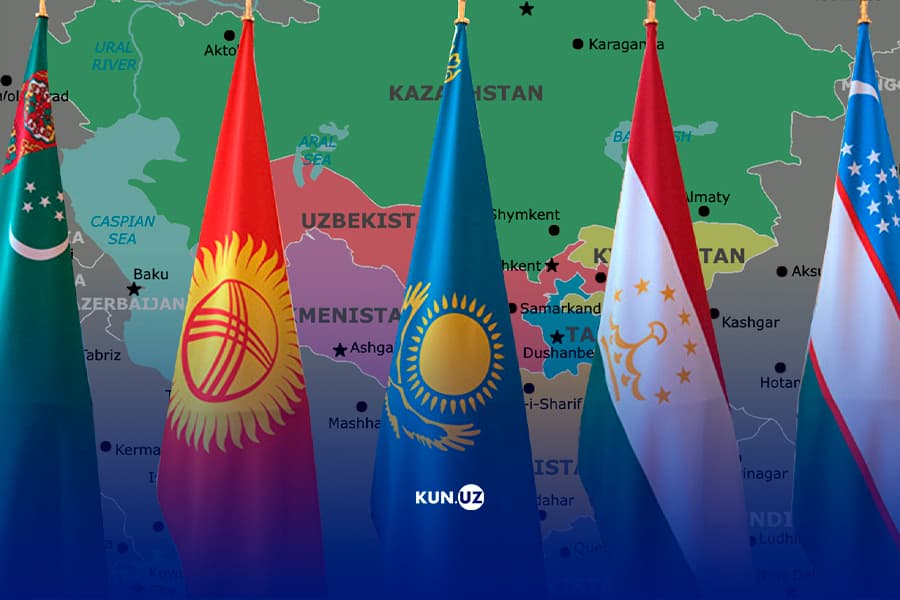
34 years of independence: The economic transformation of Central Asia
|00:32 / 13.03.20259,95110 min
At the time of independence, the total GDP of Central Asian countries was around $47 billion. After 34 years, this figure has increased more than tenfold, approaching $500 billion. Although national economies are growing at a high rate, the region remains dependent on raw material exports and remittances.
Photo: KUN.UZPhoto: KUN.UZ
In 1991, Central Asian countries gained independence one after another following the dissolution of the USSR. While all nations in the region faced severe economic challenges in the early years of independence, national economies began to recover in the second half of the 1990s. Over time, people's incomes and living standards have also significantly improved.
How have Central Asian states developed since 1991 in terms of GDP per capita?
- Kazakhstan: From $1,442 in 1991 to $12,919 in 2023 (8.9 times growth).
- Turkmenistan: From $832 in 1991 to $8,232 in 2023 (9.9 times growth).
- Uzbekistan: From $658 in 1991 to $2,849 in 2023 (4.3 times growth).
- Kyrgyzstan: From $569 in 1991 to $1,970 in 2023 (3.4 times growth).
- Tajikistan: From $458 in 1991 to $1,160 in 2023 (2.5 times growth).
Between 1991 and 2023, Uzbekistan's GDP increased from $13.8 billion to $101.6 billion, growing 7.3 times. The GDP growth in neighboring countries during the same period was as follows:
- Kazakhstan: From $24.9 billion to $262.6 billion (10.5 times growth).
- Turkmenistan: From $3.2 billion to $60.6 billion (18.9 times growth).
- Kyrgyzstan: From $2.54 billion to $14 billion (5.5 times growth).
- Tajikistan: From $2.54 billion to $12 billion (4.7 times growth).
It is important to note that international organizations and reputable rating agencies have raised concerns about the reliability of Turkmenistan’s GDP figures and growth data.
Population growth
Uzbekistan is the most populous country in the region. In 1991, its population was 20.4 million, and by January 1, 2025, it had reached 37.5 million.
Kazakhstan's population was 16.8 million in 1991. In the early years of independence, this figure remained largely unchanged. Between 1994 and 2002, the population declined significantly, dropping to 14.8 million by the end of 2001. This decline was primarily due to the emigration of large numbers of Russians, Germans, Chechens, and other ethnic groups. However, the population gradually started to grow again, reaching approximately 20.3 million by January 1, 2025.
Related topics
Tajikistan ranks first among post-Soviet republics in terms of population growth. In 1991, the country had 5.3 million people, and by January 1, 2025, this figure had nearly doubled to 10.5 million.
On the eve of the Soviet Union's collapse in 1991, Kyrgyzstan had a population of 4.4 million, while Turkmenistan had 3.7 million people. Like other Central Asian republics, both Kyrgyzstan and Turkmenistan experienced population growth, reaching 7.2 million and over 6.3 million, respectively.
At the time of independence, the five Central Asian countries had a combined population of over 50 million. By the end of 2024, this figure had surpassed 80 million. The highest growth rates were observed in Tajikistan (98%) and Uzbekistan (84%), while Kazakhstan, Kyrgyzstan, and Turkmenistan also experienced significant population increases.
Public debt
Sustainable economic growth is impossible without developing infrastructure projects. As a result, in recent years, the external debt of Central Asian countries has increased at a significant rate.
As of January 1, 2025, Uzbekistan's public debt reached $40.2 billion, an increase of $5.3 billion compared to the previous year. Kazakhstan's public debt stood at $60.8 billion.
As of January 1, 2024, the public debt levels of Central Asian countries and their share of GDP were as follows:
- Kazakhstan – $59.8 billion (23% of GDP, $259.3 billion).
- Uzbekistan – $34.9 billion (34.4% of GDP, $101.6 billion).
- Kyrgyzstan – $6.2 billion (45.2% of GDP, $13.7 billion).
- Tajikistan – $3.6 billion (30.2% of GDP, $12.1 billion).
- Turkmenistan – approximately $3.8 billion (5% of GDP, $75.4 billion).
When including corporate external debt, the total debt amounts to $165.6 billion in Kazakhstan and $60.2 billion in Uzbekistan.
Dependence on cross-border remittances
According to the World Bank, labor migration remains a primary source of income for millions of citizens in Central Asian countries. As of 2024, remittances from migrant workers accounted for 45% of Tajikistan’s GDP, the highest proportion in the world, 24% of Kyrgyzstan’s GDP, and 14% of Uzbekistan’s GDP.
"The earnings of migrants from these countries can increase two to three times when working abroad, significantly improving the living standards of their families. For instance, in Kyrgyzstan, the poverty rate among households receiving remittances is below 10%, whereas without remittances, it would exceed 50%. Estimates suggest that without remittances, Uzbekistan's poverty rate could rise from 9.6% to 16.8%," the World Bank report states.
Economic complexity levels
During the Soviet era, Central Asian republics primarily served as raw material suppliers for the central government, with little industrial development. As a result, the economic complexity of Central Asian countries remains low, as their economies are still heavily dependent on the export of raw materials such as oil, gas, minerals, and agricultural products.
In 2024, 53% of Kazakhstan’s total exports consisted of oil and petroleum products, while gold accounted for nearly 28% of Uzbekistan’s exports. Turkmenistan’s economy remains almost entirely dependent on natural gas exports. While resource wealth can provide an advantage at the start of economic reforms, long-term development requires the strengthening of state institutions, which should also be reflected in the economy. For example, the decline in oil prices in 2014 led to an economic slowdown in Kazakhstan.
The Economic Complexity Index (ECI) measures a country’s economic knowledge and capabilities. Countries with a high ECI, such as Japan and Germany, typically export complex and specialized products, while those with a low ECI, such as resource-dependent economies, export a narrower range of goods. The ECI is based on two key metrics:
- Diversification – The number of different products a country exports, indicating the variety in its export basket.
- Ubiquity – The number of other countries that can export these products, reflecting how “rare” or “specialized” the goods are.
In the 2023 Economic Complexity Index ranking of 132 countries, Uzbekistan ranked 66th, Kyrgyzstan 72nd, Kazakhstan 86th, Turkmenistan 107th, and Tajikistan 110th. None of the Central Asian countries received a positive score in the index.
An economy reliant on raw material exports struggles to provide adequate income for the majority of its population. Without increasing economic complexity, reducing income inequality remains a significant challenge.
Unrealized integration
Central Asian states have been working on regional integration since the 1990s. However, several internal and external factors have hindered the full realization of this process.
In 1994, Uzbekistan, Kyrgyzstan, and Kazakhstan established the Central Asian Economic Community, which Tajikistan joined in 1998. In 2002, the organization was renamed the Central Asian Cooperation Organization (CACO). However, in 2004, Russia joined the bloc, shifting the balance of power within the structure.
At the same time, the CACO member states were also part of the Eurasian Economic Community, led by Moscow. A year later, in 2005, citing overlapping objectives between the two organizations, independent regional integration efforts in Central Asia were effectively halted. Since then, no independent regional integration body has been established.
Political disputes between state leaders have also led to a sharp decline in trade relations. For instance, trade volume between Uzbekistan and Tajikistan plummeted from $300 million in 2007 to just $2.1 million in 2014.
Additionally, political instability in Afghanistan, civil war in Tajikistan, and revolutions in Kyrgyzstan have severely damaged the investment appeal of Central Asian nations for many years. The volatile situation forced newly independent states to allocate significant resources to their military sectors, impacting economic development across the region.
In conclusion, the economies of Commonwealth of Independent States countries remain highly dependent on Russia. If Russia experiences a crisis, it inevitably affects the entire region. As a result, Central Asian nations face a significant challenge in balancing their relations with both Moscow and the rest of the world.
Moreover, state dominance in the economy remains strong across Central Asia, and the transition to a market economy is still incomplete. Economic dependence on raw material exports continues as well.