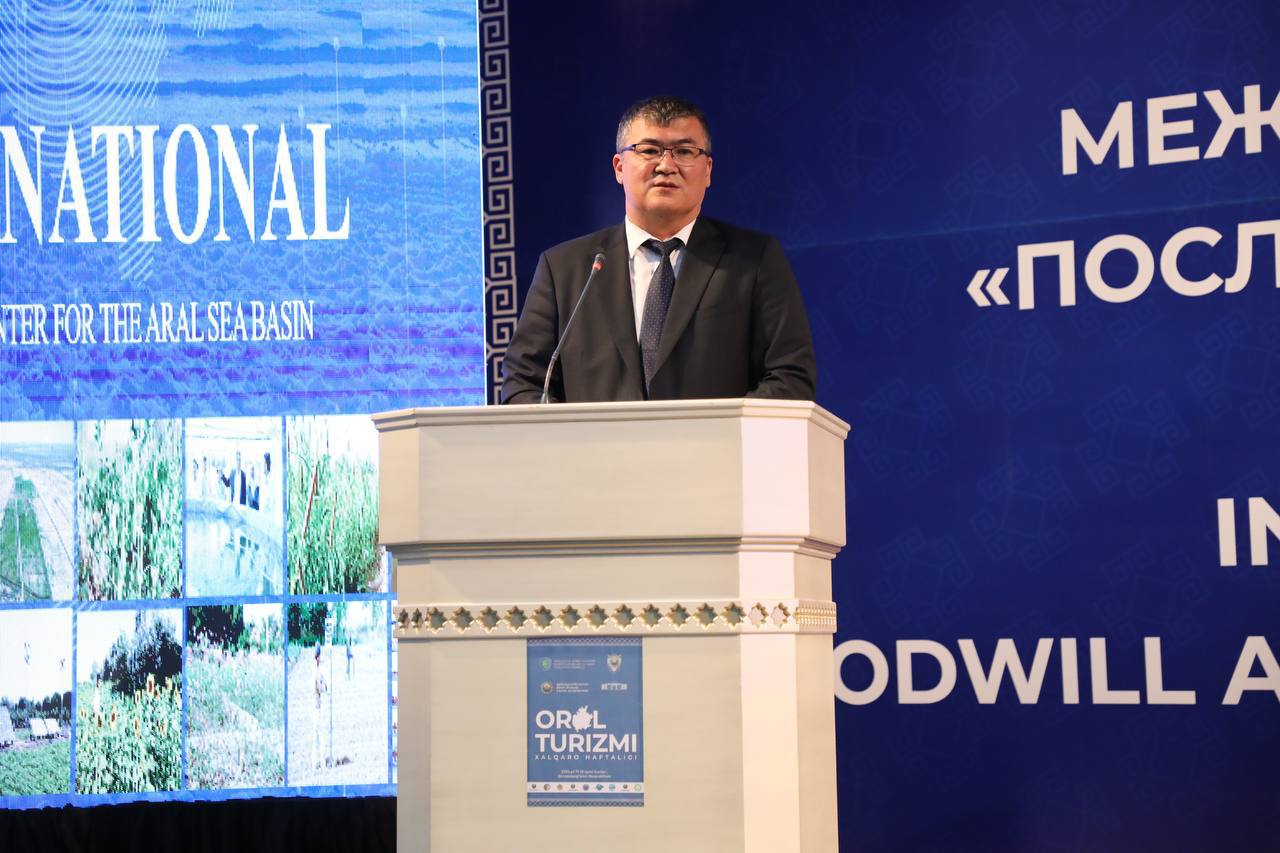
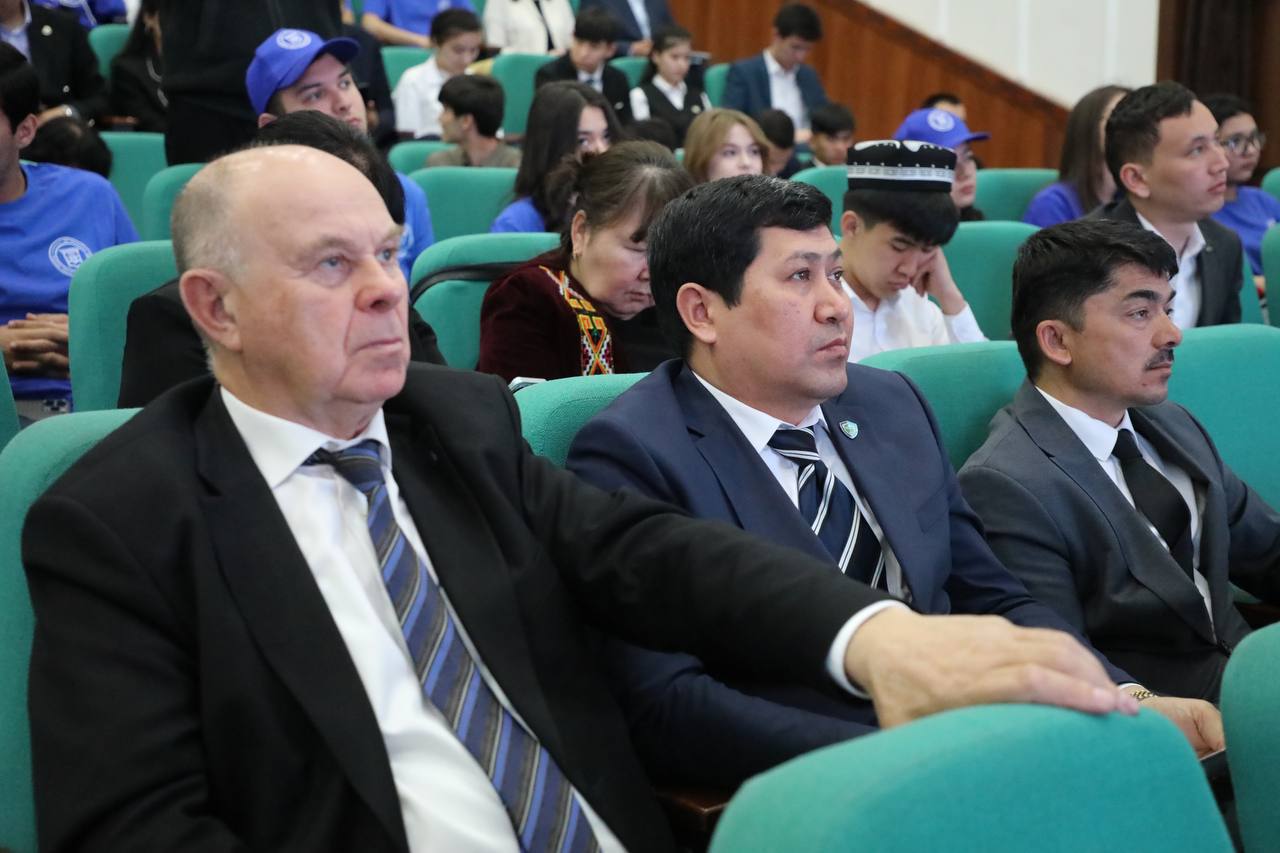
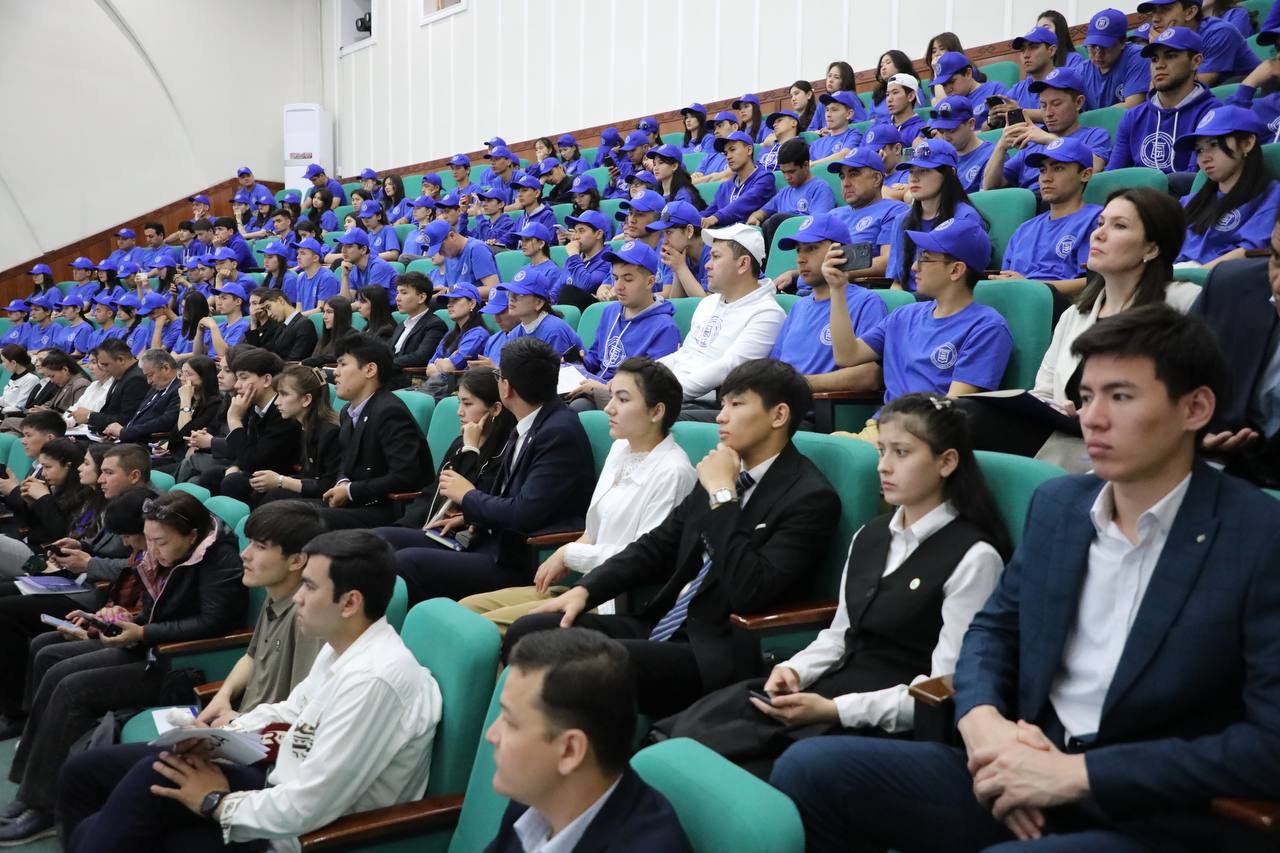
The international conference "Goodwill Ambassadors of the Aral Sea Region," organized as part of the International Aral Sea Tourism Week in the Republic of Karakalpakstan, brought together experts from various countries and regions working on sustainable development and environmental restoration of the Aral Sea region.
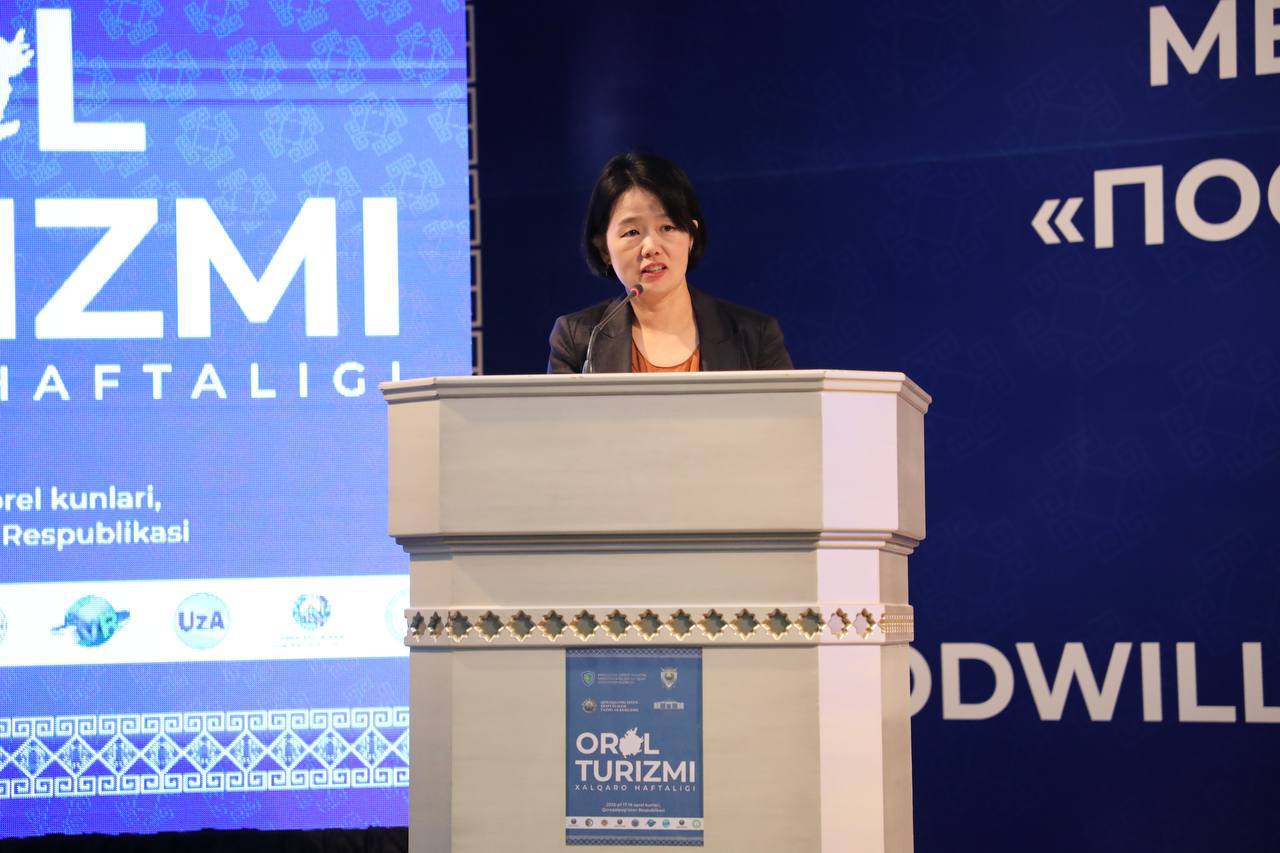
Among the first speakers at the event were Jasur Salikhov, Rector of the Central Asian University of Environmental and Climate Change Studies (Green University), Bakhytzhan Khabibullaev, Director of the International Innovation Center for Aral Sea under the Ministry of Ecology, and Stella Seung Yeon Lee, head of the Global Green Growth Institute's (GGGI) regional office in Uzbekistan.
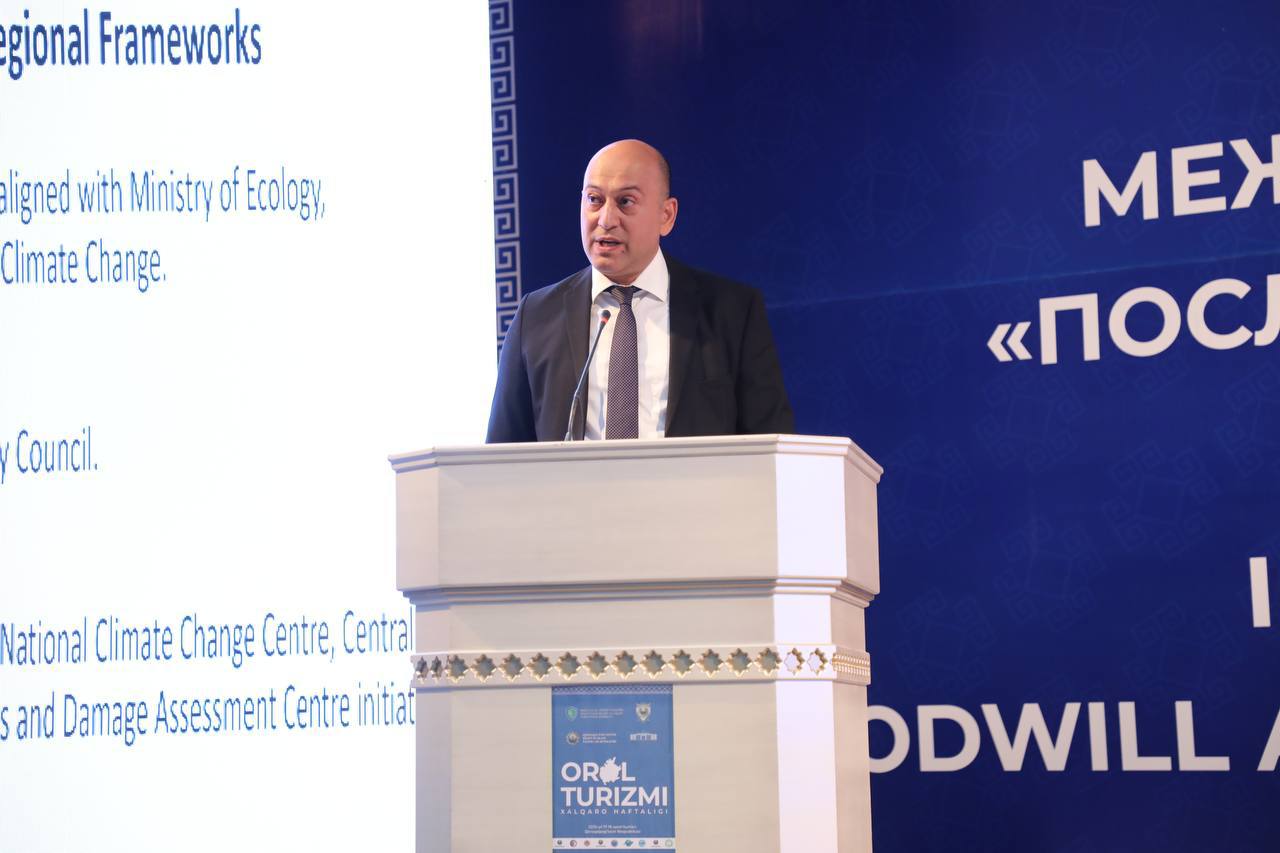
In his presentation, Jasur Salikhov introduced the concept of a new Climate Science Residency program being implemented by Green University under the aegis of the Ministry of Ecology, Environmental Protection, and Climate Change. The program is set to become a platform for training a new generation of climate leaders, conducting interdisciplinary research, and fostering innovations in artificial intelligence, renewable energy, circular economy, climate policy, and sustainable agriculture. Special attention is given to integrating scientific developments into national and regional strategies, as well as creating conditions for international scientific cooperation. The program envisions participation from both domestic and foreign researchers, and includes collaboration with government bodies, academic institutions, and civil society. Expected outcomes include scientific publications, digital tools, sustainable technology developments, and patents aimed at the long-term environmental rehabilitation of the Aral Sea region.
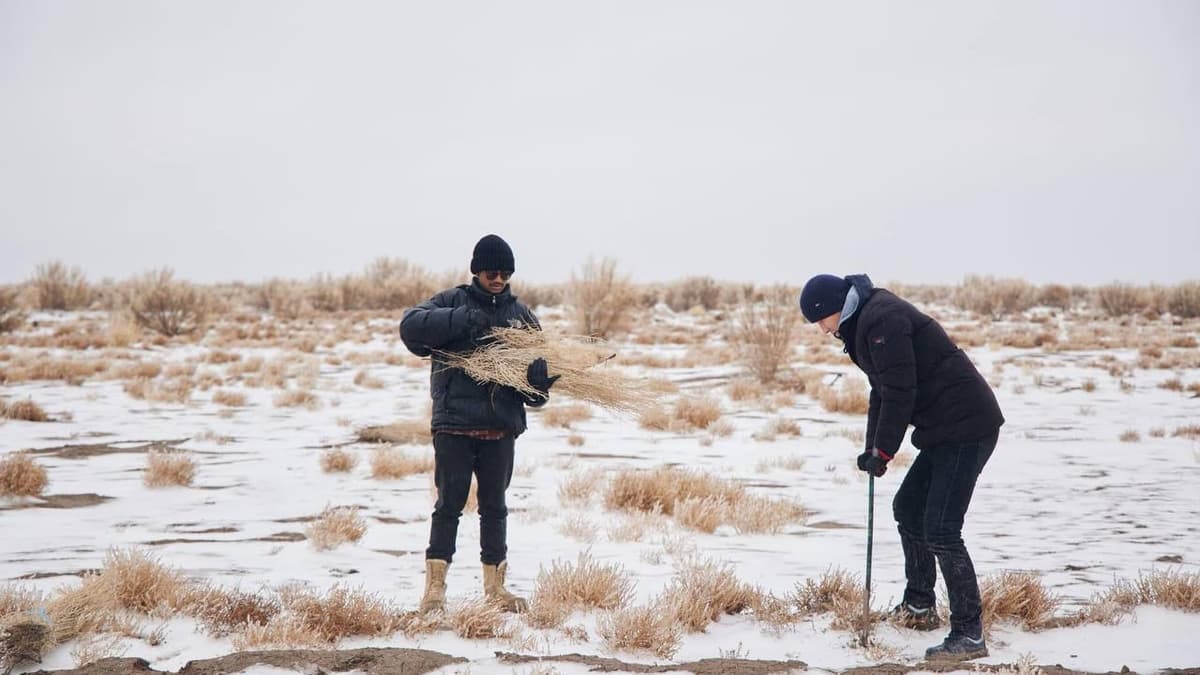
In turn, Bakhytzhan Khabibullaev spoke about the activities of the International Innovation Center for Aral Sea, which has become an important part of an innovative approach to ecosystem restoration in the area. The Center is implementing a wide range of projects—from the introduction of solar and water-saving technologies to the establishment of plant breeding laboratories, a gene bank, and biotechnological clusters. Scientific research covers agroforestry, microgreens, hydroponic and aquaponic systems, as well as the use of alternative energy sources in agriculture. The Center works closely with international organizations including GIZ, UNICEF, the UN, and research institutions in China and Europe. Projects have been carried out on artificial artemia cultivation, the growth of salt-tolerant plants, licorice, and sesame, as well as the use of drainage water in agriculture. Through educational programs and business accelerators, more than 1,200 specialists—including students and farmers—have been trained, and over 50 startups have received support in the fields of ecology and sustainable technologies. The introduction of innovations is accompanied by the creation of experimental sites, technology parks, and demonstration plots, forming the foundation for long-term development and investment in the region.