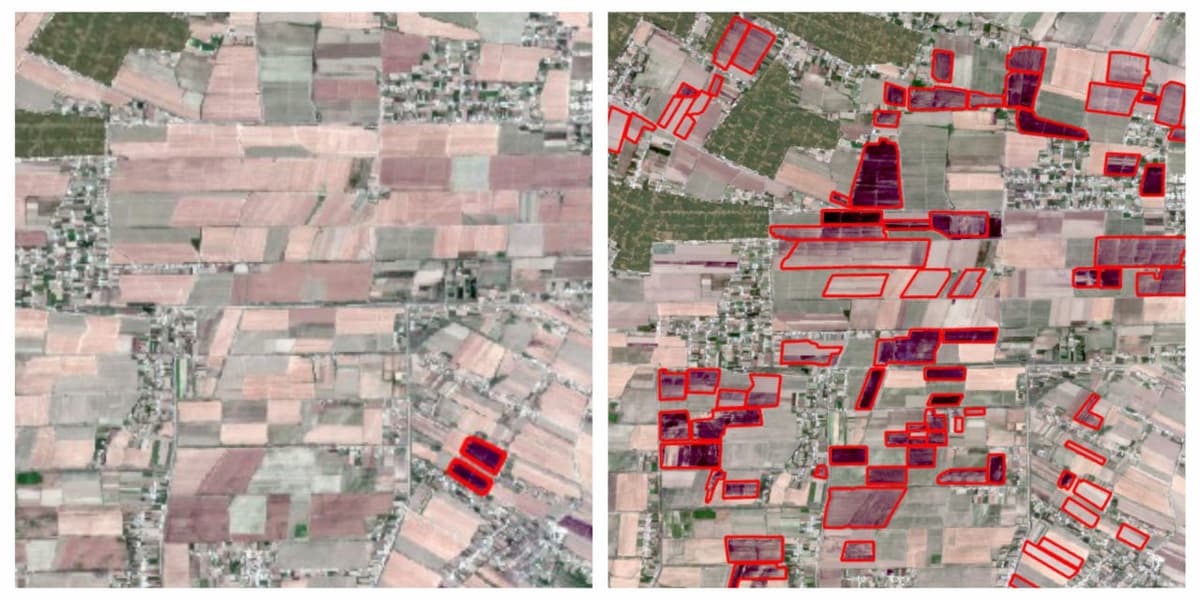
According to the agency’s press service, Uzbekcosmos has identified 213 field fire incidents this year using satellite imagery. The total area affected by fire amounts to 1,605.4 hectares.
The agency noted that illegal burning of straw, stalks, and other organic crop residues is a recurring issue each spring and summer, particularly after the grain harvest season.
So far in 2025, Surkhandarya has seen the highest number of cases – 180 fires burning across 1,324.8 hectares.
Other regional statistics include:
- Syrdarya region – 17 cases (135.2 ha)
- Tashkent region – 3 cases (58.2 ha)
- Bukhara region – 4 cases (21.4 ha)
- Andijan region – 3 cases (18.5 ha)
- Fergana region – 4 cases (20.4 ha)
- Jizzakh region – 2 cases (21.3 ha)
Uzbekcosmos has reiterated that every detected case is reported to the Prosecutor General’s Office, the Ministry of Ecology, Environmental Protection and Climate Change, and other relevant institutions.
The agency also reminded the public that stubble burning on agricultural fields is subject to administrative liability, and if significant damage is caused, criminal prosecution may follow.
Burning cereal stalks on just one hectare of land releases approximately 500 grams of nitrogen oxide, 379 grams of hydrocarbons, 3 kilograms of ash, and 20 kilograms of carbon monoxide and other carbon oxides into the atmosphere. According to the agency, this poses a serious public health threat due to air pollution, increasing the risk of tuberculosis and cancer.
The Ministry of Emergency Situations (MoES) previously reported that on June 17, a wildfire broke out in Surkhandarya, burning dry grass near a juniper forest. It took more than 13 hours to extinguish the blaze, with the involvement of hundreds of emergency personnel, forestry workers, military units, and volunteers. Border Guard drones and a military helicopter were also deployed.