POLITICS | 12:46 / 07.07.2025
1782
9 min read

New penalties and obligations await farmers: Draft law sparks controversy among deputies

Farmers face fines for not planting crops on field margins and a proposed threefold increase in land tax for their entire land area. The draft law, supported by the UzLiDeP and National Revival parties, met fierce opposition from deputies of the People’s Democratic Party (PDP) and the Adolat party. A public activist remarked that lawmakers drafting legislation from air-conditioned offices fail to listen to farmers toiling in the summer heat.

On July 1, the Legislative Chamber of the Oliy Majlis debated a draft law aimed at increasing accountability for farmers leaving land unused. Some deputies supported the initiative, while others warned that the proposed changes could push farmers into financial hardship.

What does the draft law entail?

According to Deputy Minister of Agriculture Qahramon Yuldoshev, the draft law was developed based on the President’s December 30, 2024, decree on “Measures to Increase Agricultural Production by Utilizing Additional Opportunities in Agricultural Lands.”

Yuldoshev noted that over 30,000 hectares of land remain unplanted annually, particularly along field margins, negatively impacting food supply and market prices. To address this, amendments to the Tax Code and the Code of Administrative Responsibility are proposed. Specifically, the Plant Quarantine and Protection Agency would be designated as the authority responsible for monitoring and ensuring that crops are planted or products are cultivated on field margins, canals, irrigation systems, and collector-drainage networks.
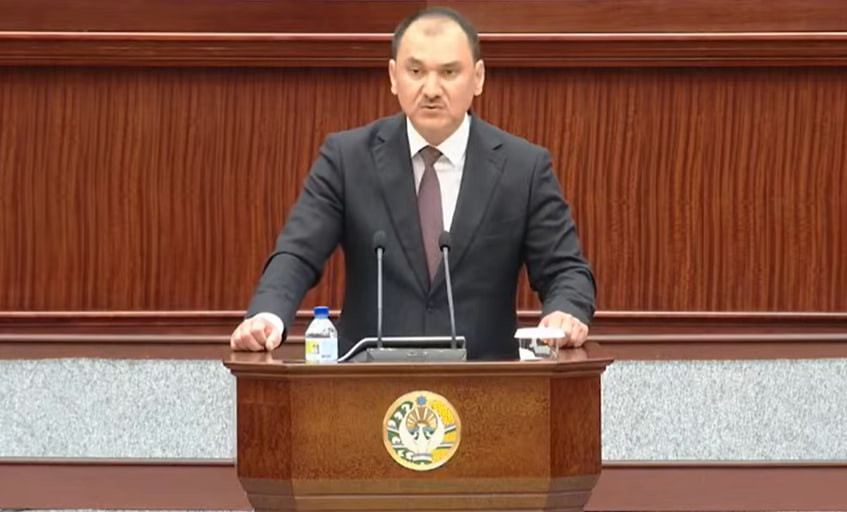
Under the draft law, if such areas are not used for planting or cultivation by April 1 each year, farmers would face a land tax tripled for their entire agricultural land. Additionally, those using or leasing agricultural land who fail to plant crops or cultivate products on field margins, canals, irrigation, or drainage networks could face fines ranging from 5 to 7 times the base calculation amount, with officials facing penalties of 7 to 10 times that amount.

Yuldoshev justified these strict measures as necessary to “enrich people’s tables” and “maximize the efficient use of every inch of land.”

This law will drive farmers to bankruptcy”

PDP leader Ulugbek Inoyatov criticized the draft law, arguing it takes a one-sided approach. He emphasized that the legislation focuses solely on demands and penalties without clear mechanisms to consider the interests of primary and secondary land users.

“If a farmer has 100 hectares of land, of which 2 hectares are field margins, and for some reason, 1 hectare remains unused, the farmer would face fines and tripled land tax for the entire 100 hectares,” Inoyatov explained.
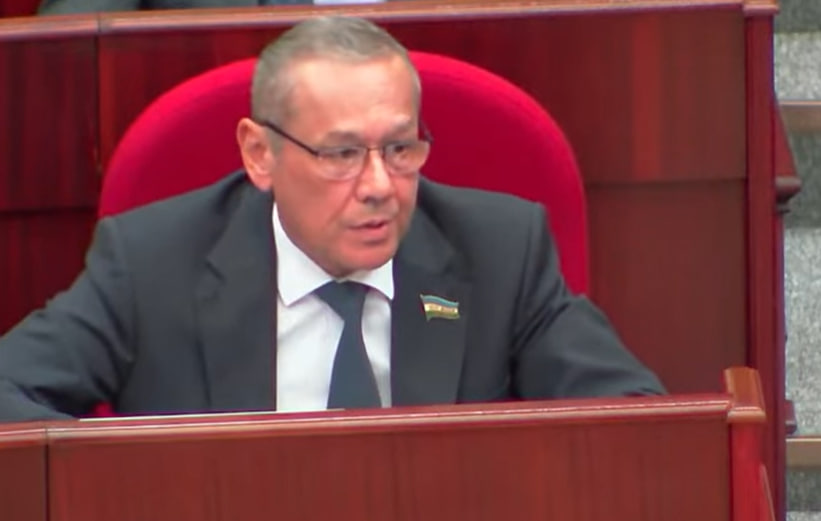

He stressed the need to clearly define the extent of field margins and introduce norms that support farmers and encourage efficient land use before adopting such an approach.

Adolat party deputy Manzura Salimova highlighted that the draft law imposes three simultaneous measures on agricultural producers, which she argued violates international legal norms. “The first measure is tripling the land tax, the second is fines up to 10 times the base calculation amount, and the third is halting financing from agricultural credit resources,” she said.

Salimova warned that adopting this law could place farmers in severe financial distress, potentially leading to bankruptcy.

Another Adolat deputy, Zuhriddin Mavlonov, noted that the law could impose liability for obligations not currently mandated. He pointed out that Article 40 of the Land Code only requires planting around canals and drainage networks, with no specific obligations for field margins or product cultivation.

“Introducing multiple forms of liability for non-existent obligations could lead to increased legal disputes and unjust accountability,” Mavlonov cautioned.

Adolat deputy Gulnora Abduvohidova addressed the legal implications, recalling that a presidential decree introduced a moratorium on new forms of liability and obligations for entrepreneurs. Effective from July 1, 2023, this moratorium bans new penalties for three years. Additionally, another decree imposes a moratorium from July 1, 2025, to January 1, 2028, on regulatory acts imposing new obligations on small and medium-sized businesses.

This law will create opportunities for farmers”

Some deputies supported the draft law. National Revival party leader Alisher Qodirov argued that the new regulations are necessary to “maximize the efficient use of every inch of land.” He noted that the law’s proponents assured deputies that excessive demands would not be placed on farmers lacking necessary infrastructure.

“If a special commission ensures all conditions are met for farmers and measures are taken to prevent any land from remaining unproductive, we must support this initiative. Food security is synonymous with our nation’s security,” Qodirov stated.

UzLiDeP leader Aktam Haitov also endorsed the draft, emphasizing that the law would “create opportunities” for farmers and motivate them to act. “Local working groups have been established. Each case will be thoroughly examined and evaluated, not done blindly. These groups, led by district governors and including deputy governors, prosecutors, tax officials, agricultural and water management representatives, farmers’ councils, quarantine inspectors, and community representatives, will assist with planting issues,” Haitov explained.

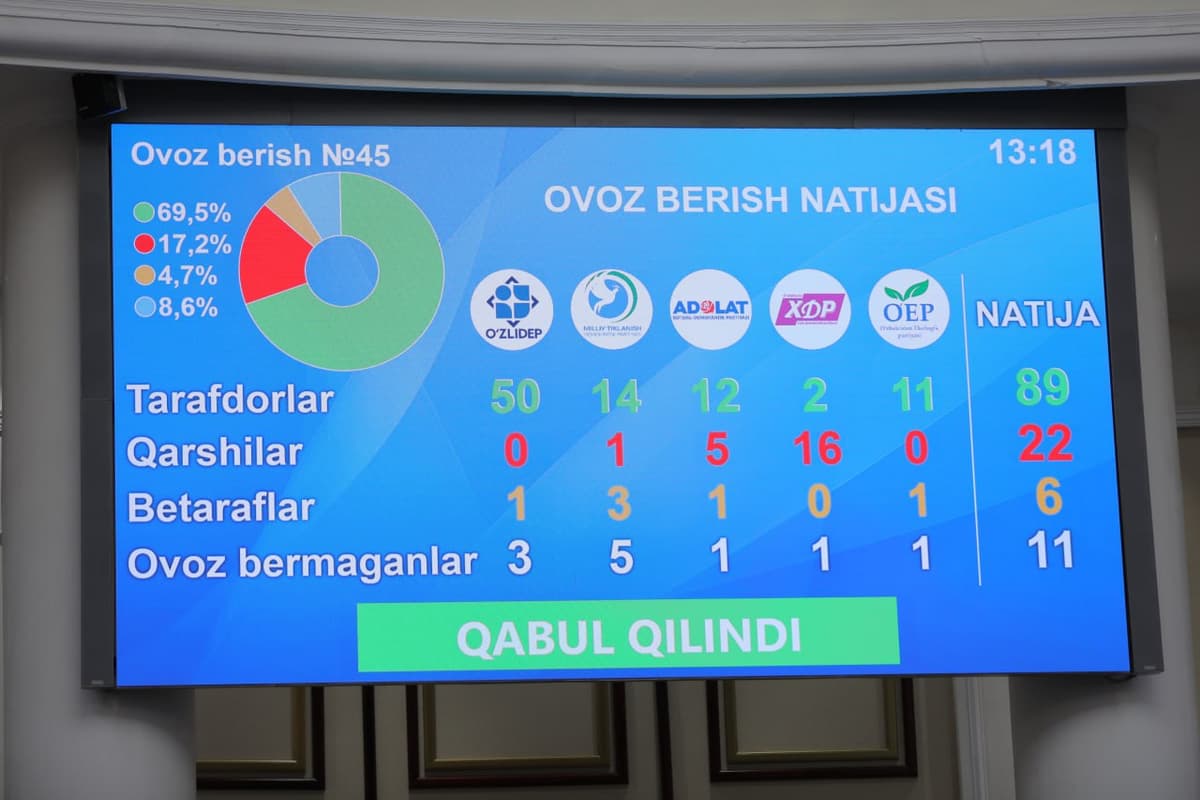
In the first reading, 89 deputies voted in favor of the controversial law, 22 opposed, 6 abstained, and 11 did not vote.

New obligations and burdens amid worsening conditions for farmers”

Journalist Qobil Khidirov, author of the Davletovuz channel, compiled farmers’ and agricultural representatives’ objections to the draft law, outlining why the initiative is flawed.

“First, while farmers toil in the scorching summer heat, lawmakers in air-conditioned offices make decisions without involving farmers or considering their perspectives. Farmers and peasants are no longer participants in decision-making processes, and their professional organizations have become toothless entities aligned with government agendas. Ironically, such initiatives are often pushed through these very organizations.

Second, these new obligations and burdens come against the backdrop of worsening conditions for farmers. Over the past two years, government manipulation of cotton and grain prices has reduced farmers’ incentives, income, and trust, while limiting their ability to hire workers. Many report growing debts.

Third, one in every four comments highlights water shortages or scarcity. While environmental issues are deepening, water distribution remains unfair. Farmers note that water shortages affect not only field margins but also main fields.

Another issue is whether there is a scientific basis for planting on field margins or if it’s merely a costly, superficial measure. Some comments suggest that designating field margins takes land away from primary fields, complicating crop processing and agrotechnical measures, ultimately causing more harm.

Regarding consequences, punitive measures introduce human factors, such as fines issued by officials, which historically fuel corruption. Perhaps this is unnecessary.

Instead of claiming ‘we know better than farmers,’ it would be better to engage with farmers, listen to them, and proceed accordingly. This would, at the very least, prevent further erosion of trust in state institutions,” Khidirov emphasized.

As a reminder, a law signed in April mandates that draft laws submitted to parliament must include legal expertise, anti-corruption analysis, and results of public discussions.

Дониёр Тухсинов
Prepared by Дониёр Тухсинов
Follow Kun.uz news on Google News
+ Subscribe

Related News