



Additional features
-
Night mode

Uzbekistan holds over 400 officials accountable for conflicts of interest in nine months
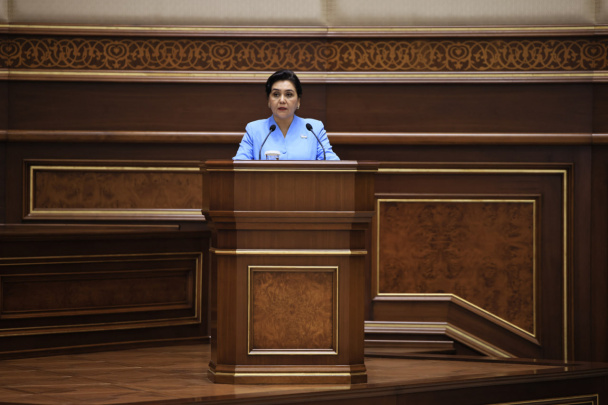
Since the entry into force of law on conflicts of interest in December 2024, 407 individuals have been held administratively liable for violations, the director of the Anti-Corruption Agency, Akmal Burkhanov, told a session of the Oliy Majlis on September 16.
The law, adopted on July 5, 2024, and effective from December 5 of the same year, seeks to strengthen accountability and transparency across the civil service. Burkhanov said more than 95,600 public servants have undergone testing to assess their knowledge of conflict-of-interest rules, while 85,581 officials have received training. Over 100 awareness-raising events have also been held.
Before the legislation came into force, authorities uncovered 213 cases where close relatives worked in direct subordination within government agencies and 1,513 cases of public servants simultaneously engaging in entrepreneurial activities. Measures were taken to eliminate these conflicts.
In addition, 2,677 draft regulatory documents underwent anti-corruption review, with 455 of them found to contain 1,013 risk factors, which were subsequently addressed. Another 692 existing laws and regulations in areas such as civil affairs, family law, information, education, science, and culture were also reviewed in 2024. Of these, 68 documents were found to include 91 corruption-related risks.
Burkhanov noted that in the past six years, 791 individuals have faced criminal charges for irregularities in public procurement. Most offenders were employees of preschool and school education institutions (149 cases), the healthcare system (116 cases), and local government bodies (73 cases). He added that administrative violations in the procurement sector are also on the rise: 662 cases were recorded in 2022, 1,376 in 2023, 1,334 in 2024, and 658 in the first half of 2025.
According to him, the most frequent violations involve signing direct contracts outside the legal framework (UZS 298 billion), accepting overpriced goods and services (UZS 152 billion), breaching tender and bidding requirements (145 cases), failing to publish procurement data on the state portal (UZS 18.8 billion), misclassifying types of procurement (UZS 9.1 billion), bypassing expert review of contracts and technical assignments (UZS 1.4 billion), and allowing conflicts of interest (UZS 1.3 billion).
Burkhanov also highlighted the effectiveness of the automated “Remote Audit” information system, which helped prevent or correct 112,000 financial errors worth UZS 2.3 trillion. Of this, UZS 1.6 trillion in potential irregularities were averted, while 87 cases revealed the misuse of UZS 247 billion in subsidies.
On efforts to curb the shadow economy, Burkhanov said 673,000 business entities have been surveyed, leading to the formal registration of undeclared operations. This has secured an additional UZS 16 trillion in revenue for the state budget.

Related News

18:04 / 09.07.2026
Central Bank says Tax Committee’s proposal to monitor large P2P transfers violates Constitution
13:38 / 09.07.2026
Senate backs stronger child protection measures and penalties for abuse

12:10 / 09.07.2026
Government drops controversial eco-fee on 30-year-old cars after backlash
19:53 / 07.07.2026