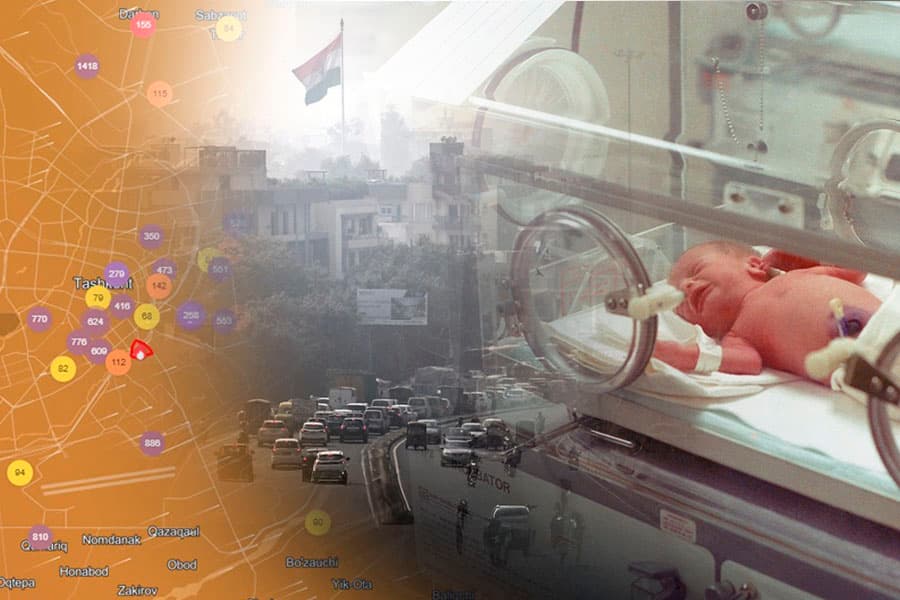
As of September 23, Tashkent ranked sixth globally among cities with the dirtiest air. The concentration of PM2.5 fine particles reached 146 µg/m³ – a level considered “unhealthy.” While the harmful impact of such pollution on human health is well known, one critical danger remains overlooked and unspoken: PM2.5 exposure is especially hazardous for pregnant women.
Pollutants in polluted air – such as PM2.5, ozone, and carbon oxides – can affect the placenta, disrupt normal fetal development, increase the risk of premature birth, and result in babies being born underweight.
What the research shows
Studies by the World Health Organization and Harvard Health indicate that:
- Harmful particles and gases such as PM2.5 and NO₂ can damage the placental barrier;
- They reduce blood circulation in the mother’s body, leading to oxygen deficiency;
- This disrupts fetal development and raises the risk of premature birth by 30–60 percent.
Several international studies confirm this link. In Taiwan, researchers found that each 10 µg/m³ increase in PM2.5 levels during the second half of pregnancy significantly raised the likelihood of premature birth.
Another study conducted between 2014 and 2019 covering 633,516 pregnant women reached the same conclusion: a rise in PM2.5 concentrations by 10 µg/m³ was strongly associated with an increased risk of premature delivery.
In Iran, where premature births surged, researchers investigated air quality and found a clear correlation. An analysis of more than 3.8 million birth records showed that PM2.5 exposure significantly increased the risk of preterm birth, particularly during the second half of pregnancy.
Uzbekistan is not treating this as a health concern
Premature birth is a major global public health problem and a leading cause of child mortality. The growing number of cases linked to air pollution is being studied worldwide. Preterm babies are at higher risk of lifelong complications, including intellectual and psychiatric disorders in childhood and early onset of chronic illnesses in adulthood.
According to WHO, 13.4 million babies were born prematurely in 2020 – one in every ten live births. Notably, over 90 percent of premature births occurred in low- and middle-income countries, where large populations are exposed to poor air quality.
In Uzbekistan, official guidance recognizes air pollution as a risk factor for allergies, stomach and lung diseases, bronchial asthma, shortness of breath, and headaches. However, no health warnings mention the danger of premature birth.
Hospitals in Tashkent are recording rising cases of women giving birth before full term, yet no official data is available. When Kun.uz requested clarification, the Ministry of Health referred the matter to the Statistics Agency. According to its figures, preterm births have risen in recent years: from 6,359 cases in 2017 to 11,156 in 2024.
The numbers are increasing, the air remains polluted, but no action is being taken. Clearly, Uzbekistan has yet to recognize this as a national health problem. In reality, polluted air is a silent but grave threat to maternal and child health – one that cannot be ignored.
How can pregnant women protect themselves?
Doctors recommend that expectant mothers take extra measures to reduce exposure:
- Keep indoor air clean through regular ventilation while preventing dust and drafts.
- Use natural humidifiers such as plants, damp cloths, or aquariums.
- Consider using air purifiers.
- Outdoors, avoid areas with heavy traffic and wear protective masks with PM2.5 filters on highly polluted days (especially in winter and during windless conditions).
- Choose early mornings or evenings for walks when air quality tends to improve.
- Strengthen the immune system to better cope with environmental risks.