



Additional features
-
Night mode

Faster, cheaper, and more effective – Mediation gains ground in Uzbekistan’s justice system
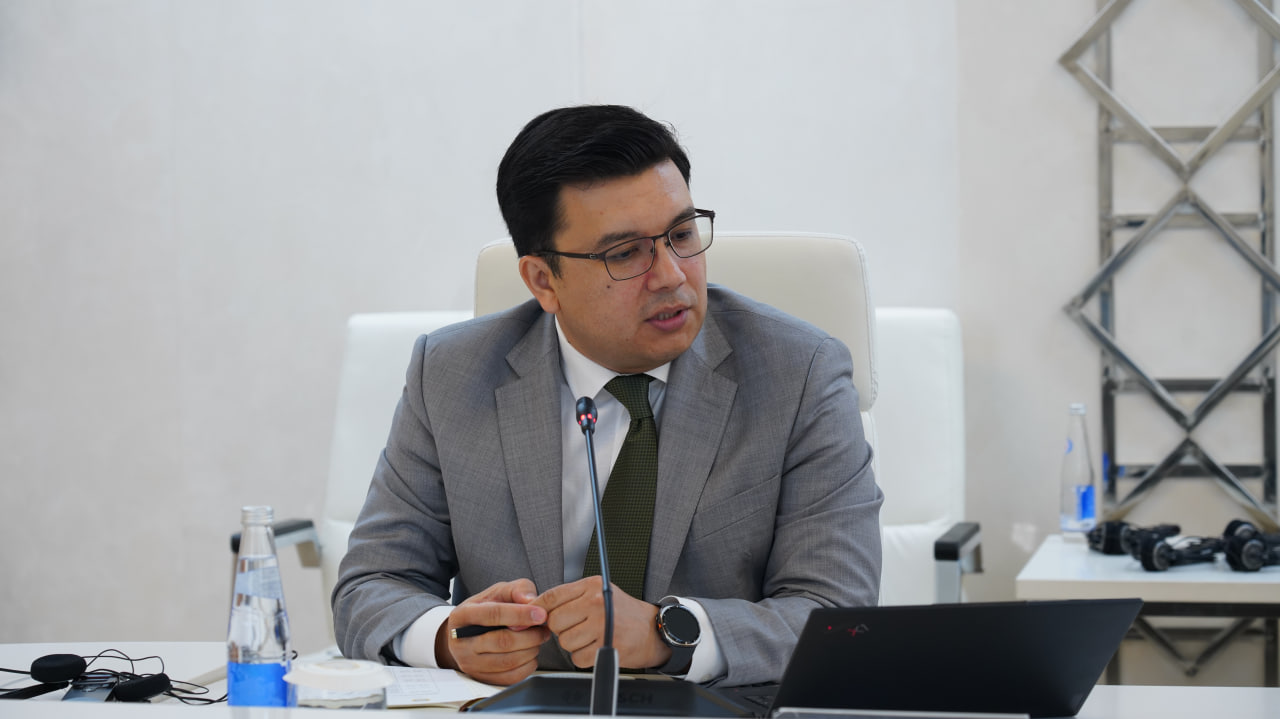
Mediation is emerging in Uzbekistan as one of the most effective tools for resolving disputes. It is not merely a substitute for court proceedings but a process that prioritizes dialogue over confrontation and agreement over judgment. How does mediation affect business, the investment climate, and social relations? These and other questions are discussed in an interview with international expert and director of the Tashkent Mediation Center, Diyorbek Kimsanov.

Diyorbek, thank you for your time. Let’s start simple: what is mediation?
Mediation is a dispute resolution process facilitated by a neutral third party – a mediator. It serves as an alternative to litigation but is faster, more amicable, and less costly. And most importantly, it is highly effective.
Why is mediation especially important for Uzbekistan right now?
Because the country is undergoing significant change. Reforms, business growth, an expanding economy, and a growing population all lead to an inevitable rise in disputes. Mediation offers a way to preserve – not destroy – relationships. This is particularly crucial for small businesses. For instance, in Italy, a country similar to Uzbekistan in terms of temperament, more than 175,000 cases were redirected from courts to mediation in 2023 alone. Most of them were resolved successfully, saving considerable resources: courts and enforcement bodies faced less strain, businesses resolved disputes more quickly, and life went on.
That’s impressive. And how is mediation developing in Uzbekistan?
The progress is tangible, even transformative. I would say we are on the verge of a quiet revolution in access to justice. We already have a law adopted in 2019, and reforms are underway to strengthen it. Many lawyers believe that mediation agreements should become binding and enforceable. Looking ahead, as in Turkey or Italy, certain categories of cases may even require a pre-court initial mediation session before going to court. Kazakhstan has already introduced such measures, and Kyrgyzstan is close – their Parliament has passed the first reading of an updated Mediation Law making agreements enforceable and setting categories of cases requiring mandatory first sessions.
But if we are talking about thousands of potential cases, will Uzbekistan have enough mediators?
This is one of our challenges. Today, mediators are trained by our center and by the Institute for Retraining and Professional Development of Legal Professionals under the Ministry of Justice. Educational programs on mediation are gradually entering universities and training institutions. So far, over 3,000 mediators have been trained, but just above 1,900 are registered as professionals. Clearly, the need is much greater.
How do you assess the quality of mediator training in Uzbekistan?
It is improving. Our center runs basic and advanced courses, supervision sessions, and develops international cooperation. But we still need standardization: unified curricula, evaluation criteria, ethical codes, and documentation for mediation centers and legal firms. Many business disputes involve international actors. Uzbekistan must have hundreds, if not thousands, of mediators at the international level to manage cross-border disputes and attract investment. If we won’t be able to build enough capacity, foreign professionals will fill the gap.
So, mediation also affects the investment climate?
Absolutely. One of the first questions foreign investors ask is: how are disputes resolved here? If a country offers effective, fast, and fair mechanisms, it’s a strong advantage. Mediation sends the message that Uzbekistan values dialogue and a culture of law. It reassures investors that they can operate securely, resolve disputes outside courts, and still stay within the legal framework.
Confidentiality and relationship preservation matter enormously to investors. Mediation guarantees confidentiality, unlike litigation, where everything is public. And speed matters: disputes can be resolved in a handful of sessions rather than dragging on for months or years.
And globally, how important is mediation in business?
It has become central. Take the Singapore Convention (formally, the “UN Convention on International Settlement Agreements Resulting from Mediation”), adopted in 2018. It is the first universal system for recognition and enforcement of mediation agreements on commercial disputes. Kazakhstan has already signed it, and Kyrgyzstan is preparing to do so. As of today, 56 countries are parties. UN Secretary-General António Guterres called the Convention “the dawn of a new era in the resolution of cross-border disputes,” enabling parties to shift conflicts into constructive channels and avoid court congestion.
More recently, in May 2025, the Chinese government spearheaded the creation of the International Organization for Mediation (IOMed), the first intergovernmental body devoted to solving disputes exclusively via mediation.
Let’s return to Uzbekistan. Are courts here referring cases to mediation?
Cooperation with the judiciary is growing. Judges now understand that mediation is not competition, but a complement. However, Uzbekistan still lacks a formal referral mechanism. Judges can encourage parties, but participation is voluntary. In 2024, more than 6,200 cases were withdrawn from courts after settlement through mediation agreements; in the past five years, the figure exceeded 24,000. The numbers are increasing annually. Importantly, when parties agree to mediation, courts grant up to 60 days for the process. If they succeed, the claim is withdrawn, and the state duty is fully refunded.
Mediation is built on the principle of party autonomy. The process is designed to avoid pressure: parties choose whether to engage, select their mediator, and define the scope of issues – even narrowing it to parts of a claim. And any party may withdraw unilaterally without legal consequences.
So, mediation and courts can work hand in hand? What are the benefits?
Exactly. A mediated settlement is not a verdict handed down “from above” but an agreement reached by both parties. It’s a win–win outcome. Imagine: one mediator resolving 100 disputes per year – that’s 100 cases kept out of court and enforcement agencies. With hundreds of mediators, the effect is huge. Courts then have more time to focus on truly complex matters. And there’s another distinction: courts and arbitral tribunals are bound strictly by the law, while mediation allows parties to design flexible but fair solutions that work for them. We often say: if you want a strictly legal ruling, go to court or arbitration; if you want a fair solution for both sides, choose mediation.
What are the biggest obstacles to developing mediation? Why don’t people embrace it readily?
First, lack of awareness – many people simply don’t know what mediation is or how it can help. We are running awareness campaigns, producing videos, and giving interviews. The goal is for mediation to become part of our culture. Any step toward informing the public is already progress. Second, distrust – especially among the older generation, who are used to courts. And third, some deliberately use courts as a tool of pressure, while intending to settle through negotiation anyway. Finally, there is still a shortage of professional mediators, especially in the regions. We, together with the mediation community, are addressing these issues. Political will is crucial here, and we have it. The Ministry of Justice is one of the driving forces, and the Supreme Court also supports mediation. I believe these efforts will lead to a real breakthrough soon.
We’ve spoken about business and investors. What about everyday people and personal disputes?
In Uzbekistan, personal relationships – between neighbors, within families, across generations – are highly valued, and reputation matters deeply. Mediation is therefore a powerful tool for ordinary people. Confidentiality and efficiency are key advantages. Our law explicitly provides for mediation in labor, family, and inheritance disputes. Inheritance conflicts, in particular, can be devastating. As a lawyer, I know too well how property division can tear families apart, sever ties between siblings, or poison relationships across generations. Court battles over inheritance drag on, drain resources, and cause lasting emotional harm. People forget the essential truth: no matter who inherits what, they are still your brother, your son, your kin. Mediation offers a different path – one where financial and emotional aspects are balanced together.
And how does the procedure itself look in practice?
Briefly, several stages can be identified. The parties contact the mediator and schedule meetings. First, the mediator explains the rules, then listens to both sides. The mediator has the right to bring the parties together or meet separately. Then, a joint search for a solution occurs. If an agreement is reached, a mediation agreement is drafted and signed.
How much does mediation cost? Is it affordable?
It is far more cost-effective than litigation. Fees are usually determined on a case-by-case basis. In Uzbekistan, mediation is significantly cheaper than court, though in some European countries the costs have leveled out. Business cases are more expensive, while socially significant disputes are cheaper.
Importantly, we have also launched pro bono mediation – free services for vulnerable groups. This year we signed a memorandum with the Yakkasaray district administration, allowing certain categories of residents to receive professional mediation services free of charge. It’s a key step in strengthening legal culture at the community level.
Let’s conclude with global practice. How developed is mediation worldwide?
In our region, only Tajikistan and Turkmenistan still lack dedicated mediation laws, though Tajik colleagues are already working on theirs. Kazakhstan, Azerbaijan, and Belarus are often cited among global leaders in mediation development. Russia, Moldova, Armenia, and Ukraine are also advancing their national frameworks. I closely follow developments in neighboring Kyrgyzstan as well.
Globally, countries such as Italy, Turkey, the UK, Singapore, China, and the US are seen as “trendsetters” in mediation. In these jurisdictions, the number of mediated cases is often equal to or greater than court cases. We work closely with colleagues from these and other countries – they lecture, provide technical assistance, and help us implement international standards. We also travel abroad, study systems firsthand, and adopt best practices. Uzbekistan learns quickly and, in some respects, is already becoming a model in its own right.
And finally, as a mediator, what is your personal dream?
It’s less of a dream and more of a goal: for every person in Uzbekistan to know what mediation is – and not confuse it with meditation. For people, when faced with conflict, not to say “let’s go to court,” but rather “let’s try to resolve this peacefully.” Because mediation is not only about resolving disputes – it’s about fostering a culture of dialogue and contributing to the development of our country.
That’s a beautiful vision, and we truly hope it becomes reality.
Allow me to end with this: mediation is a vital tool of alternative dispute resolution, but not the only one. Arbitration, private courts, and appellate chambers also play important roles. Arbitration, for example, is most often used in international commercial disputes where parties agree in advance to refer matters to an arbitral institution. Private courts (sometimes called arbitral tribunals) also deliver binding decisions outside the state judicial system. The difference is that arbitration and private courts involve decisions imposed “from above” by arbitrators or judges, whereas mediation allows parties themselves to craft a mutually acceptable solution. Mediation is therefore not a replacement for all other procedures but a crucial part of a broader dispute resolution ecosystem. The parties may choose any method, taking into account the specifics of the dispute that has arisen. That’s why our center has established a permanent arbitral tribunal and is preparing to launch an International Commercial Arbitration Court as well. But perhaps that’s a story for another day.
Interview by Shokhrukh Majidzoda

Related News
15:28 / 23.06.2026
Saida Mirziyoyeva urges Supreme Court to adopt global legal standards
11:33 / 09.06.2026
Uzbekistan to mandate income and asset declarations for judges and court staff
17:35 / 14.04.2026
Uzbekistan to slash business fines by half for early payment
16:40 / 18.11.2025