Green loss, grey skies – the price of Tashkent’s rapid growth
|19:14 / 28.10.20256,43212 min
Air pollution in Tashkent exceeds World Health Organization (WHO) standards sixfold. Green areas have shrunk from 34% to 13% in six years. About 26% of the city’s power grid is in an emergency state. Over the past eight years, the number of cars has nearly doubled, while the total road length has decreased. Around 60% of the water supply network is outdated. Of the 14.8 million tons of waste generated in 2024, only 6% was recycled. Can these problems be solved?
Photo: KUN.UZPhoto: KUN.UZ
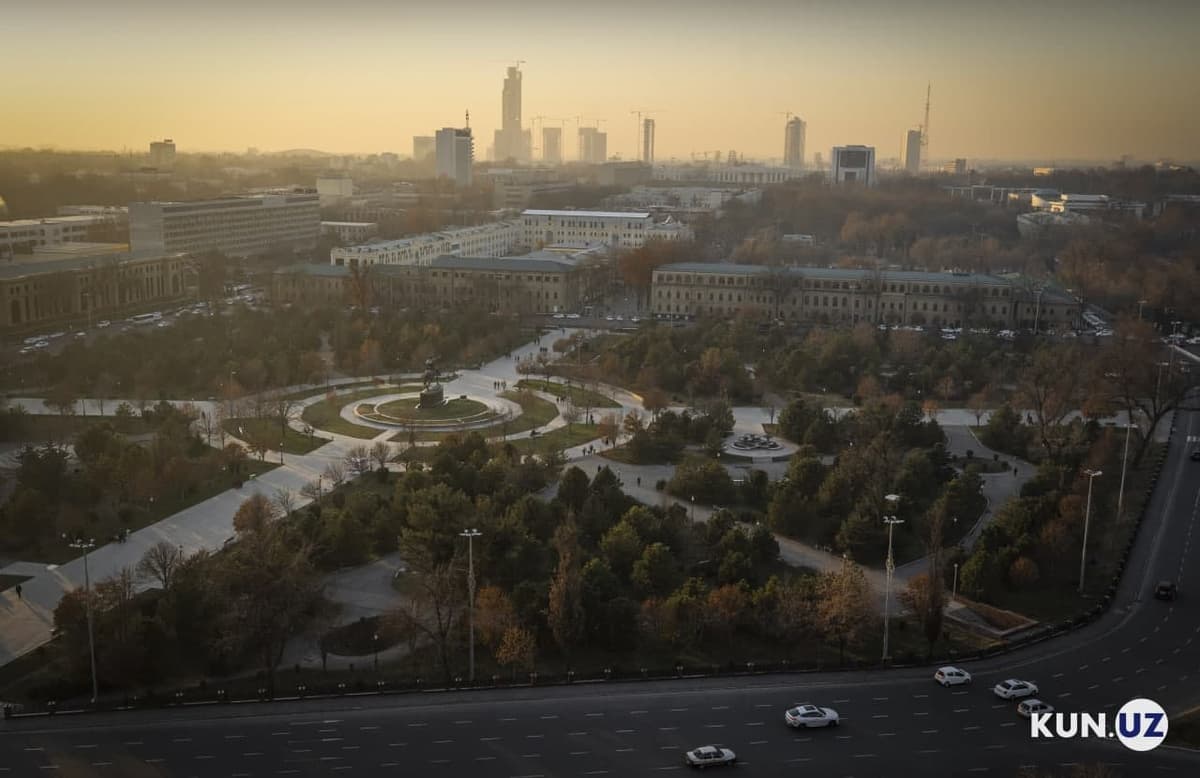
Uzbekistan is currently undergoing a period of rapid urbanization. This is particularly visible in the capital, which hosts key administrative institutions, universities, as well as industrial and cultural centers.
According to Jamshid Sharipov, an expert at the Center for Development Strategy, this trend naturally turns Tashkent into an “internal migration magnet,” intensifying demographic pressure and sharply increasing the demand for housing, transport, energy, and utilities. However, infrastructure is lagging behind population growth.
International studies note that cities facing such imbalances often experience chronic traffic congestion, power outages, environmental degradation, and declining quality of life.
Urban development in Uzbekistan
Urbanization remains a steady trend in Uzbekistan. As of 1 July 2025, more than 19.3 million people (about 51% of the population) live in cities, while 18.6 million reside in rural areas – a sign of sustained population growth and ongoing migration from villages. Officially, Tashkent’s population stands at 3.1 million, but when migrants and students are included, the real daily population could be 30–35% higher. This significantly strains the city’s transport, energy, and utility systems.
Education infrastructure also deserves attention, as 98 out of 222 higher education institutions in the country are located in Tashkent. This uneven distribution drives a massive influx of young people to the capital, further burdening housing, transport, and municipal services.
Another factor is the construction of numerous high-rise buildings without properly assessing the capacity of existing water, electricity, and gas networks. As a result, power and utility outages occur frequently, especially during peak consumption periods.
Key challenges
Transport. One of Tashkent’s most pressing problems is traffic congestion. During rush hours, the average travel time exceeds 50–60 minutes. Over the past eight years, the number of vehicles has nearly doubled, while the total road length has decreased by 0.5%. This imbalance leads to chronic overloads on main roads. The lack of parking spaces, underdeveloped public transport, and absence of integrated “last-mile” solutions further aggravate the situation.
Related topics
According to the UN, by 2040 around 60% of the global population will live in cities, the number of trucks, cars, and air transport will double, and the volume of waste will continue to grow. Consequently, millions of people will die directly (in accidents) and indirectly (due to pollution) from transport-related causes.
The World Bank’s Promoting Livable Cities by Investing in Urban Mobility report states that the growing use of private cars leads to more congestion, air pollution, and reduced access to jobs and public services.
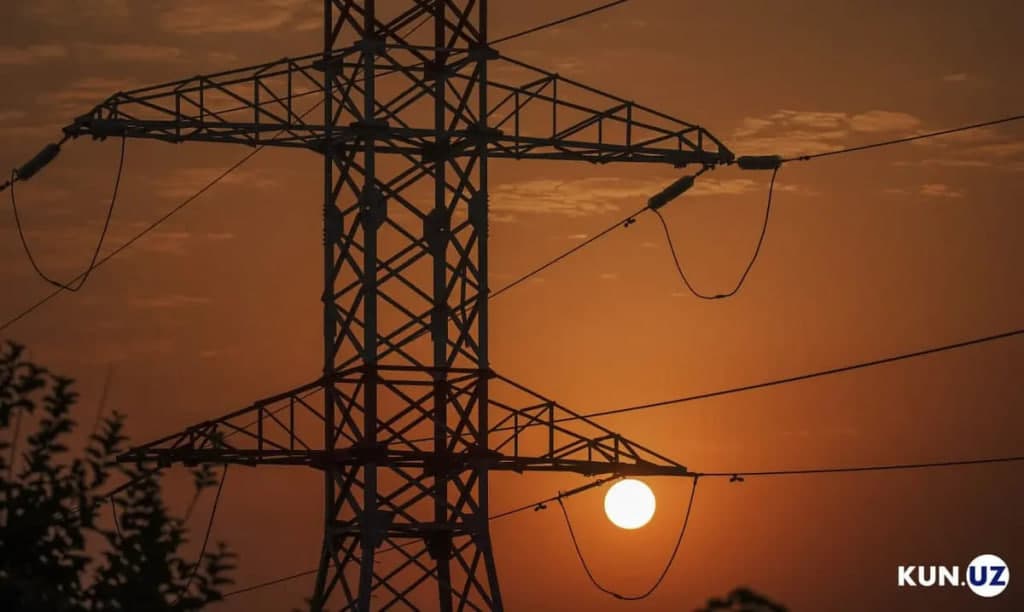
Energy. Power supply remains one of the most serious challenges. A 2025 inspection by the Prosecutor General’s Office revealed that more than 2,540 km – or 26% – of Tashkent’s power grid is in emergency condition, and several substations require modernization or capacity upgrades. The shortage of repair crews, outdated equipment, and high staff turnover exacerbate the issue: in the past three years, about 30% of personnel, including technical specialists, have left the system. This results in frequent power outages and reduced infrastructure resilience during peak demand.
The Asian Development Bank, in its report Harnessing Uzbekistan’s Potential of Urbanization: National Urban Assessment, notes that Uzbek cities are already facing infrastructure shortages, climate and environmental risks, and insufficient access to quality urban services – especially in small and medium-sized cities.
Environment. Environmental conditions in Tashkent are deteriorating year by year. The city’s annual average concentration of PM2.5 particles is six times higher than the WHO’s recommended level. The main sources of pollution are the heating system (≈28%), transport (≈16%), industry (≈13%), and transboundary dust carried by winds during the summer (≈36%).
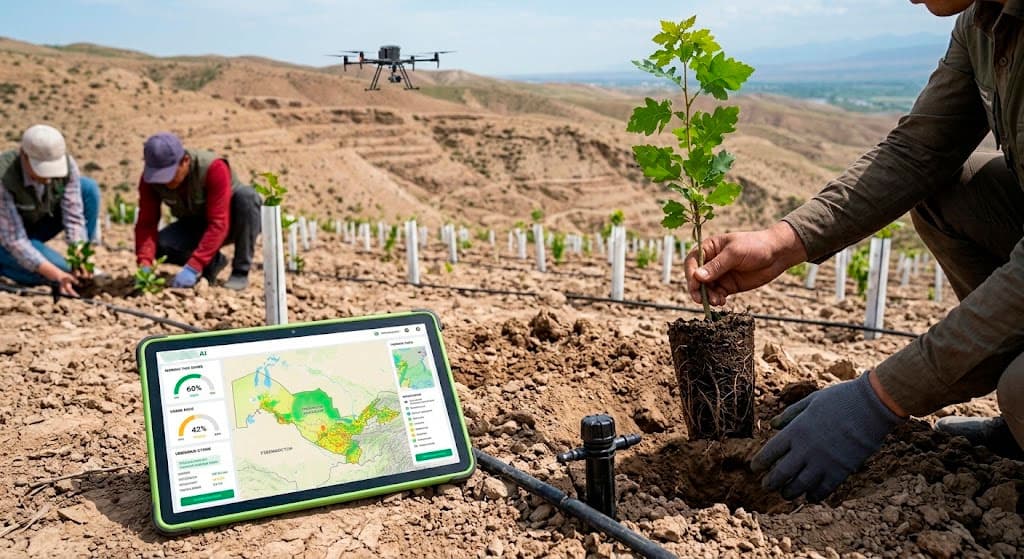
Uncontrolled construction and shrinking green spaces reduce the city’s ability to combat dust and heat islands. Satellite data (NDVI – Normalized Difference Vegetation Index) show that over the past six years, the share of vegetated areas in the city has dropped from 34.6% to 13.1%. According to international standards, green zones should cover at least 25% of urban land or provide 9 square meters of greenery per resident.
Water supply. Problems with water provision are becoming increasingly acute. Experts estimate that about 60% of Tashkent’s drinking water network is worn out, with many pipes having been in use for over 40–50 years. This leads to frequent breakdowns, leaks, and declining water quality.
The World Bank’s Uzbekistan Infrastructure Governance Assessment report states that a large portion of water losses stem from leaks, illegal connections, and weak metering systems. Insufficient funding for maintenance and upgrades increases the risk of accidents and reduces service quality. Persistent water losses, low pressure, and poor management undermine the stability of the system and threaten public health.
Waste management. The solid waste management system remains underdeveloped. In 2024, the volume of solid, liquid, and construction waste continued to grow, increasing the need for expanded collection and recycling capacities. Plastics now make up nearly 10% of total waste, but recycling facilities have limited capacity.
Of the 14.8 million tons of waste generated nationwide in 2024, only 900,500 tons – or 6.1% – were recycled. Paper, plastics, rubber, glass, and textiles account for about a quarter of all waste. In Tashkent, only 18% of the 700,000 tons of annual waste is recycled. Separate waste collection remains minimal, reducing recycling potential and overloading landfills.
Possible solutions
Based on the analysis of Tashkent’s key urban challenges and the Uzbekistan 2030 strategy’s goal to increase the urbanization rate from 51% to 60%, the Center for Development Strategy proposes a set of innovative measures adapted from global best practices. These recommendations combine digital technologies, decentralized management models, and “green” approaches to ensure a sustainable urban environment.
Transport. The chronic congestion problem in Tashkent could be addressed by introducing the Mobility-as-a-Service (MaaS) concept. This system, already successful in Helsinki, integrates metro, buses, taxis, car-sharing, and bicycles into a single digital platform. Within two years, it reduced private car usage by 12%.
Another solution is the introduction of intelligent traffic management systems that monitor and predict traffic flows in real time, control smart traffic lights, forecast congestion using AI, and provide smart parking solutions. In China’s densely populated cities such as Shanghai, AI-based traffic management reduced congestion by 18% and shortened average travel time by nine minutes.
Implementing similar systems in Tashkent could reduce congestion by 20–25% by 2030 and shorten average peak-hour travel time from 60 to 45 minutes.
Energy. To enhance energy resilience, Tashkent could adopt decentralized solutions such as virtual power plants (VPP) and microgrids. Germany’s Next Kraftwerke project, for example, integrates nearly 15,000 small energy sources into a single network, improving stability and enabling collective energy trading.
A similar VPP approach in Tashkent could reduce power outages by 30% and save up to 15% of energy through decentralized generation and load optimization.
Environment. Introducing a “digital twin” of the city could be an effective tool for improving environmental management. Such systems simulate transport, energy, and ecological processes, helping assess the consequences of different development scenarios.
The Virtual Singapore project serves as a clear example: government bodies use it for policy planning, businesses for developing urban service applications, and researchers for studying environmental and health impacts.
A similar platform for Tashkent could improve urban planning, monitor green zones, and manage air quality. It would allow authorities to forecast heat islands, identify areas for greening, and monitor pollution levels. Preliminary estimates suggest that such measures could increase green coverage by 15% and reduce heat island effects and PM2.5 levels by 10–12% by 2030.
Water supply. To address the aging infrastructure and water loss, Tashkent should transition to smart water management systems. International experience demonstrates the high effectiveness of such solutions. In Seosan, South Korea, the Smart Water Management system reduced water leakage by 21% and emergencies by 15% through pressure sensors and digital monitoring.
In Israel, centralized water monitoring ensures one of the world’s lowest water loss rates – below 3%, compared to the OECD average of 15%.
Adapting such systems to Tashkent could increase network efficiency, reduce leaks by 15–20%, cut breakdowns by 15%, and ensure equitable distribution in new housing areas.
Waste management. To increase recycling efficiency, modern processing facilities and a separate waste collection system are essential. Seoul aims to become a “zero waste” city by 2030. As a pilot, 112 recycling stations were installed across five districts, where residents sort materials themselves. As a result, household waste decreased by more than 20%, and recycling volumes increased.
In Stockholm, most household waste is converted into heat and electricity, covering about 20% of the city’s heating needs.
Adapting such practices could raise Tashkent’s recycling rate from the current 6–10% to 35–40% by 2030, reduce landfill pressure, and cut methane emissions.