Strategic location and market access
The SIZ is strategically positioned along the historical Silk Road corridor and is in close proximity to Tashkent, the country’s largest economic center. The capital region accounts for roughly half of domestic consumption and 87% of freight flows within Uzbekistan. The ongoing development of New Tashkent (20,000 hectares), along with the planned construction of a new international airport and the Tashkent–Samarkand highway, is expected to enhance regional connectivity significantly.
Residents highlight Uzbekistan’s predictable investment framework, supported by government incentives and a favorable geographic location between major regional markets. These factors reinforce the SIZ’s potential as a gateway for projects targeting broader Central Asia.

Infrastructure and operational readiness
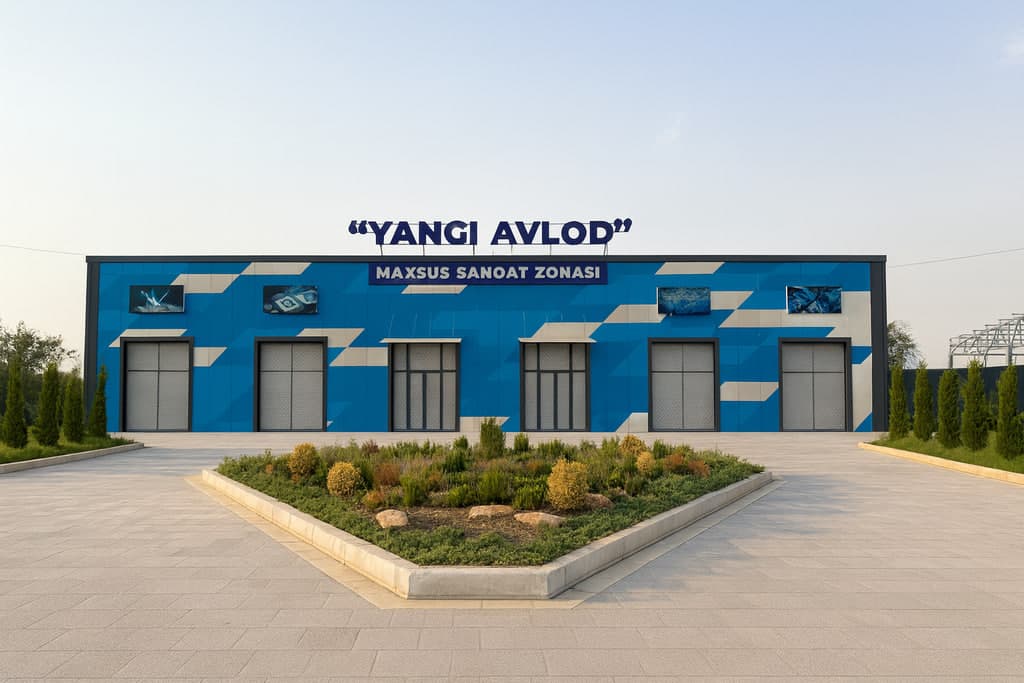
“Yangi Avlod” is designed as a fully integrated industrial ecosystem. Core utilities, including gas, electricity, water supply, road access, and sewage systems, are delivered directly to each plot. This approach reduces preparatory time and provides investors with clear expectations for project commissioning.
A centerpiece of the zone is Uzbekistan’s largest international transport and logistics hub, being developed jointly with the Tashkent city administration and DP World. Valued at over $288 million, the project includes a rail-linked terminal, Class A warehouse facilities, customs infrastructure, cross-docking operations, and dedicated vehicle storage. 4PL multimodal logistics will reduce residents’ costs for transporting and storing products and will provide full end-to-end supply chain support.
Part of the zone’s power demand will be met through solar energy generation, supporting operational stability and reducing long-term electricity costs.

Fiscal and customs incentives
Residents benefit from a preferential fiscal regime, including exemptions from four key taxes: corporate income tax, property tax, land tax, and water-use tax. In addition, customs incentives reduce the cost of importing equipment and materials. These measures help lower production costs and enhance pricing competitiveness, particularly for export-oriented enterprises.