Treasury registration to become mandatory for all budget contracts
In Uzbekistan, contracts with budget-funded organizations will take effect only after registration with the treasury. The measure is intended to eliminate a “corruption loophole” that has led to thousands of court cases over contracts concluded without secured funding. Authorities say the amendments will protect both the state budget and businesses from operating “on credit.”
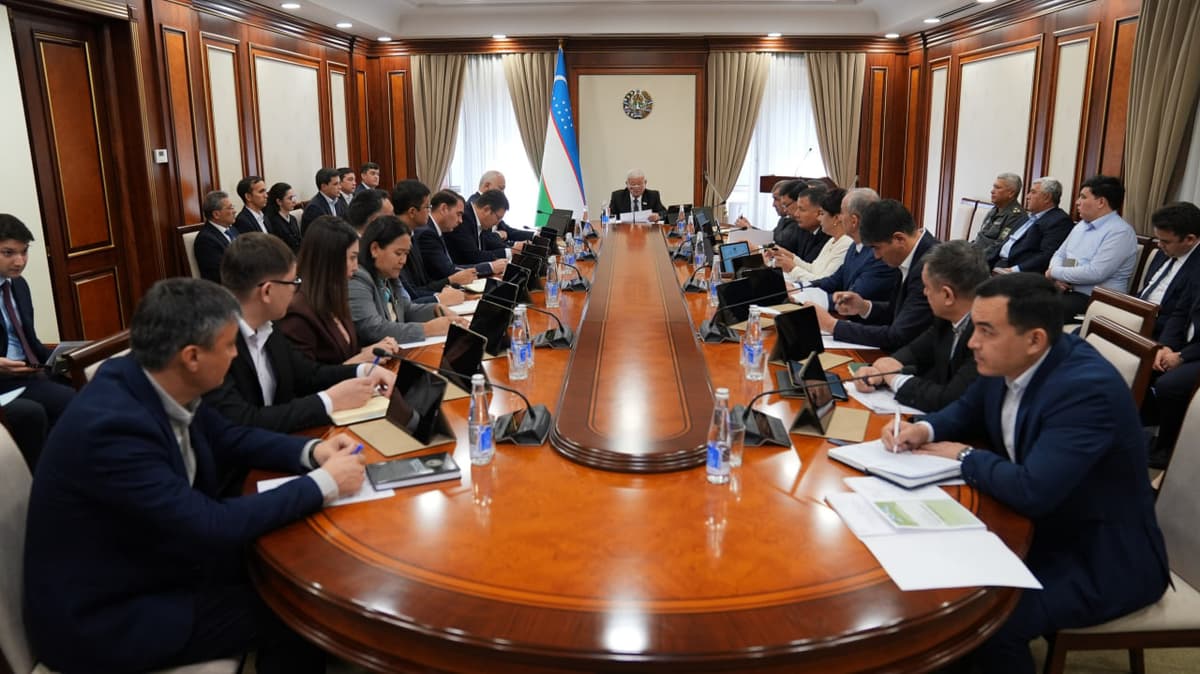
Photo: Senate of Oliy Majlis
Both chambers of the Oliy Majlis have approved a law stipulating that budget-funded contracts enter into force only after registration with the treasury. The document has been sent to the president for consideration.
The explanatory note to the bill says that in recent years there has been a growing number of cases in which budget customers accepted goods and services under contracts that were not registered with treasury bodies and lacked identified funding sources.
To address this, amendments are proposed to the Civil Code and the Law “On the contractual and legal framework for the activities of business entities,” establishing that contracts financed from the budget become valid only after registration with treasury divisions.
During the discussion of the amendments in the Legislative Chamber on December 3, MP Saydullo Azimov voiced concerns about the possible consequences of “centralizing” the registration of such contracts.
“I have one concern: what is the current volume of these contracts? If they are all sent for centralized registration tomorrow, could they get ‘stuck,’ remain unapproved for a long time, or face justified objections from the relevant treasury units?” Azimov said.
He warned that the additional time needed to address comments could conflict with strict deadlines set by decrees and laws.
“At the very least, this creates a risk of corruption. What measures are envisaged to prevent such situations?” the lawmaker asked.
Responding to the questions, Sherzod Mukhamedov, director of the Budget Policy Department at the Ministry of Economy and Finance, acknowledged that contract registration has been a systemic problem.
“Indeed, there are currently certain issues with registering contracts between business entities and budget organizations. The proposed amendments are aimed at eliminating them,” he said.
According to Mukhamedov, the volume of contracts paid in previous years based on court rulings has reached significant levels. In 2023–2024 and over the first nine months of 2025, courts issued 3,228 decisions on contracts concluded in violation of public procurement procedures and without registration with the Treasury Service. Nearly UZS 1.1 trillion was paid out from the budget under these rulings.
He emphasized that digitalization and regulatory requirements should rule out artificial delays.

“Today, all contracts are digitized as much as possible, with the system recording the date of submission and the date of registration. Under the rules, the treasury is required to register a contract within three days,” he said.
The ministry representative added that treasury staff will face accountability measures for unjustified returns of documents or delays.
Deputy Minister of Economy and Finance Akhadbek Khaydarov, for his part, explained the rationale behind the proposed changes. He said that the absence of a mandatory registration requirement currently leads to situations where work is carried out but no funds are available in the budget.
“This results in court disputes and forced payments from the budget,” he said.
“The contractor has already completed part of the work, files a lawsuit, wins it, and then the treasury is forced to register the contract after the fact – using funds that are not available in the budget,” Khaydarov noted.
He stressed that when registering a contract, the treasury checks two key aspects.
“First, whether there are sufficient funds in the budget to pay for the goods or services. If there is no money, the entrepreneur will not be misled, because the contract simply will not pass registration. Second, whether the contract complies with the Law on Public Procurement and other regulations,” he said.
If a contract is concluded in violation of the rules, the treasury can identify this before performance begins, rather than afterward, when only a court ruling remains to be enforced, the deputy minister added.
The new provision protects both entrepreneurs and the state by preventing unlawful and unfunded contracts, he said.
Related News
14:25 / 22.12.2025
Deputy PM Kuchkarov details which taxes will rise and which will stay unchanged in 2026
16:22 / 20.12.2025
Senate flags contradictions in draft Housing Code, returns it for revision
14:48 / 18.12.2025
Senate approves 2026 state budget
22:07 / 17.12.2025