





Additional features
-
Night mode

Uzbekistan to scrap direct contracts in public procurement from 2026
Starting in 2026, Uzbekistan will fully digitize its public procurement system, with initial prices formed using artificial intelligence. The list of goods, works, and services eligible for procurement through direct contracts will be abolished.
The share of locally produced goods in public procurement is set to increase to 85 percent, according to a presidential decree issued on December 26.
The government has also set a target to ensure that 98 percent of state procuring entities undergo professional training.
Electronic module
From March 1, 2026, an electronic module powered by artificial intelligence will be launched on the public procurement portal to calculate average market prices for goods and services.
State procuring entities will be required to set initial prices exclusively through this module.
If the difference between the initial or contract price and the average market price exceeds 10 percent or falls below 20 percent, the procurement will be classified as high risk. Such cases will be subject to priority inspections by state oversight bodies.
In addition, from January 1, 2026, certain categories of goods, works, and services will be procured on a competitive basis through requests for proposals.
Ending direct procurement
From January 1, 2026, the list of goods, works, and services eligible for procurement through direct contracts will be abolished. Purchases in these categories will shift to competitive procedures – tenders, electronic auctions, and other mechanisms envisaged by law.
When drafting new legislation allowing direct contracts, a specific contractor must be explicitly identified. If no contractor is specified, procurement must be conducted through a request for proposals.
Draft regulations permitting direct contracts will now be subject to mandatory anti-corruption review, as well as assessments of their impact on competition and business.
Supporting local producers
From January 1, 2026, once state procuring entities publish their procurement plans, the relevant information will be automatically sent online to local manufacturers.
The government is introducing local auction practices, to be held between budget-funded procuring entities and local producers with reduced initial prices. If only one business entity participates in such an auction, it will still be considered valid.
From July 1, 2026, the evaluation of procurement bids will be conducted exclusively in electronic form. For direct procurement, state procuring entities will be required to publish announcements at least three working days in advance.
The decree also instructs state bodies to inventory existing service vehicles within three months and enter the relevant data by June 1, 2026.
Digital monitoring
From March 1, 2026, only the head of a state procuring entity or their deputy will be eligible to chair a procurement commission.
A new monitoring page will appear on the public procurement portal, featuring a risk assessment system, digital ratings, and a classification of violations.
A separate element of the system will be the “KPI in procurement” digital rating, reflecting key performance indicators of state procuring entities’ procurement efficiency.
Reporting and training
From 2026, the Cabinet of Ministers of Uzbekistan will introduce quarterly critical reviews of reports submitted by heads of major state-owned enterprises and budget-funded procuring entities. These discussions will focus on transparency, procurement efficiency, and anti-corruption efforts.
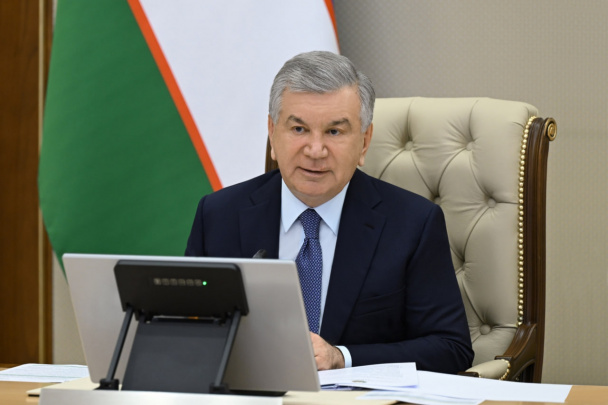
As a reminder, President Shavkat Mirziyoyev previously emphasized in his address to parliament and the people of Uzbekistan that an open, transparent, and fair public procurement system would be established in 2026.

Related News

11:24 / 02.07.2026
Businesses in Uzbekistan accelerate AI and cybersecurity investment to gain competitive edge
16:32 / 22.06.2026
China’s LinkWise plans cloud infrastructure development in Tashkent

13:39 / 01.06.2026
Kazakhstan leads Central Asia in AI adoption as Uzbekistan struggles with low usage rates
10:50 / 26.05.2026