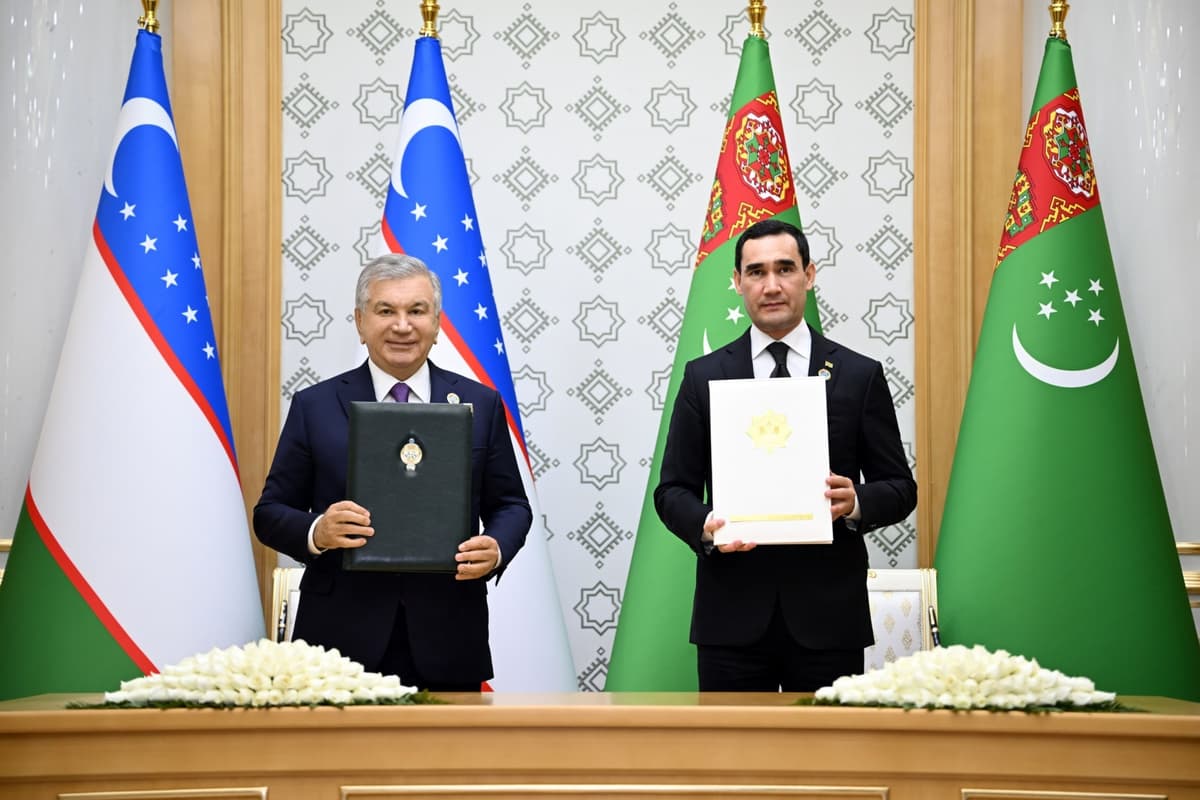
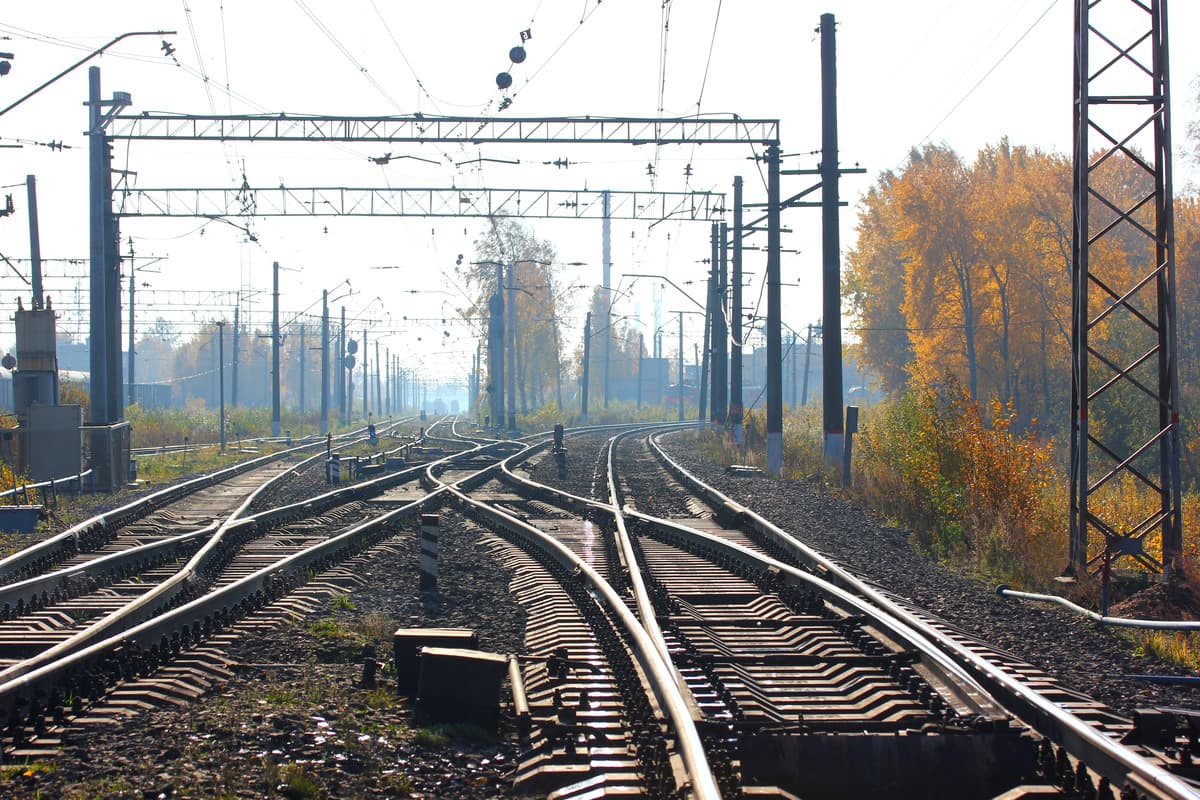
The president signed a decree approving an intergovernmental framework agreement between Uzbekistan’s Ministry of Transport, Afghanistan’s Ministry of Public Works, and Pakistan’s Ministry of Railways. The agreement provides for the joint development of a technical and economic feasibility study for a railway line running from Naibabad to Kharlachi.
Uzbekistan’s Ministry of Transport has been designated as the competent authority responsible for implementing the agreement. The Ministry of Foreign Affairs has been instructed to notify the Afghan and Pakistani sides of the completion of Uzbekistan’s internal procedures required for the agreement to enter into force, as well as to formally communicate the designation of the responsible authority.
The framework agreement was originally signed on 17 July 2025 by Uzbekistan, Afghanistan, and Pakistan and covers the preparation of a feasibility study for a broader railway project connecting Termez and Kharlachi. The planned route is expected to pass through Termez, Naibabad, Maidanshahr, Logar, and Kharlachi.
The customer for the feasibility study will be the trilateral project office for the development strategy of international transport corridors under Uzbekistan Railways. The office was established in Tashkent in May 2023 and operates branches in Kabul and Islamabad.
The Trans-Afghan railway initiative was first proposed in 2018. At the time, the project, designed to carry up to 20 million tons of cargo annually, was estimated to cost around $5 billion.
In July 2022, Uzbekistan Railways shared updated calculations prepared by the Boshtransloyiha Institute, which put the indicative cost of the railway at $4.6 billion and estimated a construction period of up to five years. However, in December last year, Pakistan’s Ministry of Railways assessed the cost at $8.2 billion – nearly 80% higher than the estimate of Uzbekistan.
In autumn 2023, the overall cost of the Trans-Afghan railway project was revised to approximately $7 billion. One of the potential implementation models under consideration is a public-private partnership based on a Build-Operate-Transfer (BOT) framework.