



Additional features
-
Night mode

Uzbekistan’s public debt rises 16.5% year on year to $46.8bn
Uzbekistan’s public debt stood at $46.8bn as of January 1, 2026, according to a report by the Ministry of Economy and Finance. The figure marks a $6.6bn increase, or 16.5%, compared to the same period a year earlier.
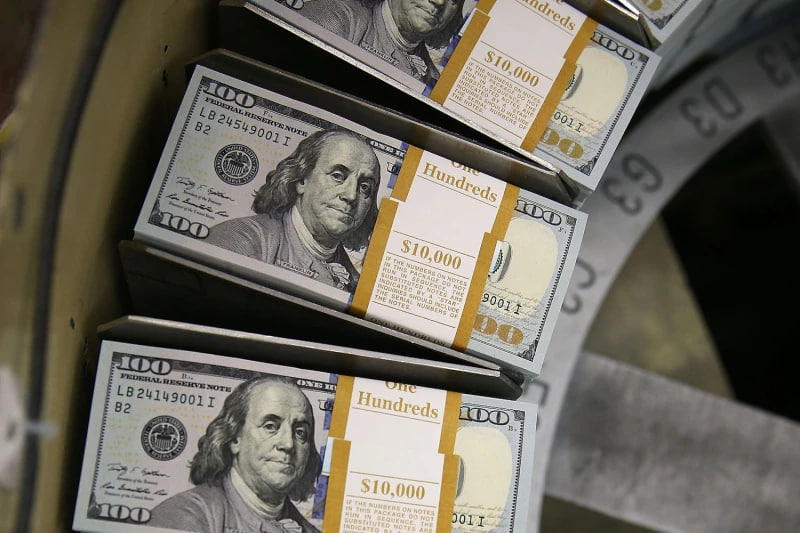
Of the total amount, $39.8bn accounted for external debt, while $7bn represented domestic debt.
Over the course of 2025, external public debt rose by $6.1bn, while domestic public debt increased by $542m.
Public debt has expanded consistently in recent years:
- 2019 – $17.8bn, up 19.4%
- 2020 – $23.4bn, up 31%
- 2021 – $26.3bn, up 12.6%
- 2022 – $29.2bn, up 11%
- 2023 – $34.5bn, up 19.5%
- 2024 – $40.2bn, up 15.1%
- 2025 – $46.8bn, up 16.5%
At the end of last year, public debt per capita amounted to $1,225.
As of the reporting date, 50% of total external public debt, or $19.8bn, was directed toward budget support.
Other major allocations included:
- Fuel and energy sector – 14% or $5.6bn
- Agriculture and water management – 8% or $3.3bn
- Transport and transport infrastructure – 8% or $3bn
- Housing and communal services – 8% or $3.1bn
Major creditors
As of January 1, 2026, the largest external public debt creditors were:
- World Bank – $8.9bn
- Asian Development Bank – $8.3bn
- International investors through eurobonds – $5.8bn
- Chinese financial institutions – $3.9bn
- Japanese financial institutions – $3bn
- Asian Infrastructure Investment Bank – $2.3bn
- French financial institutions – $1.3bn
- Islamic Development Bank – $1bn
- KfW – $739m
- Korean financial institutions – $722m
- International Monetary Fund – $628m
- European Bank for Reconstruction and Development – $457m
- Other financial institutions – $2.5bn
The currency composition of external debt was as follows: 64% in US dollars, 12% in UZS, 9% in euros, 6% in Japanese yen, and 3% in Chinese yuan.
Minister comments on debt debate
Economy and Finance Minister Jamshid Kuchkarov previously addressed public discussions surrounding the country’s external debt, noting that the issue has been widely debated.
“Public debt is being discussed on social networks. Our growing economy requires significant funding. External investments and projects implemented under public private partnership mechanisms are also bringing in funds. Part of the expenditures related to fulfilling state functions, including drinking water supply, roads, infrastructure, as well as defense capability and border security, has to be covered through external borrowing,” the minister said.
He also pointed to mortgage financing as a contributing factor. According to Kuchkarov, commercial banks rely on long term external borrowing to fund mortgage lending, which in turn supports housing construction across the country.
Under the 2025 state budget law, the ceiling for newly attracted external debt was set at $5.5bn, of which $3bn was intended to finance the state budget deficit and the remainder to fund investment projects.
Total external debt reaches $75.4bn
External debt consists of two components – public debt and private or corporate debt. While public debt stood at nearly $47bn as of January 2026, entities registered in Uzbekistan may also borrow externally without state guarantees, which is classified as private external debt.
However, a significant portion of such “private” debt is attributable to state owned or state controlled enterprises and banks. Even when borrowing is undertaken without an official state guarantee, liabilities of state owned institutions may still affect overall financial stability if repayment difficulties arise.
As of October 1, 2025, Uzbekistan’s total external debt, including both public and private components, amounted to $75.4bn.

Related News
18:28 / 16.07.2026
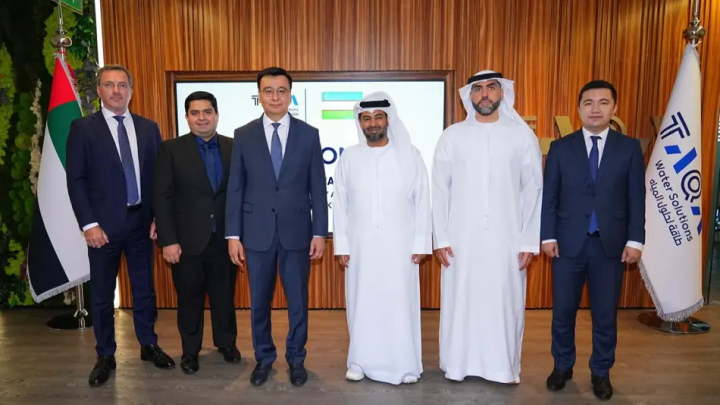
UAE's TAQA Water Solutions considers participation in Uzbekistan's water infrastructure upgrades
21:40 / 15.07.2026
Central Bank survey finds 61% of borrowers struggle to repay debts on time
12:30 / 15.07.2026
Inflation perceptions in Uzbekistan fall to record low in June – Central Bank

12:21 / 14.07.2026